🔥
Contracting
Explore the new contractor management module
🔥
Contracting
Explore the new contractor management module
🔥
Contracting
Explore the new contractor management module
🔥
Contracting
Explore the new contractor management module

Last updated:
Lead/Candidate Scoring: How to Use Scoring in Recruitment and Recruitment Marketing

EB | Recruitment Marketing
Acquiring Talent

Iwo Paliszewski
Would you like to be able to identify candidates who are most likely to convert into placements?
By assigning scores based on the behavior and characteristics of candidates, recruitment teams can prioritize their actions, ensuring the efficient use of time and resources.
Today, I'll describe how well-known and proven mechanisms in marketing and sales can be successfully applied in recruitment marketing and actual recruitment. Simply put, we will substitute candidates for clients, but the tools and mechanisms will remain the same. In our example, when I mention a lead, I mean a candidate, and “purchase” refers to applying for a project, though, of course, the process can also apply to clients.
Lead scoring is a methodology known from marketing and sales, used by companies to classify or evaluate potential clients based on their perceived value or likelihood of becoming a customer. It involves assigning numerical values to so-called leads based on various attributes, behaviors, and characteristics, allowing sales and marketing teams to prioritize and focus on leads who are most likely to convert.
Of course, it is most convenient to implement lead scoring with appropriate software such as HubSpot, Marketo, Pardot, SalesManago – it's very possible that your marketing department already has such tools, but does not apply them within recruitment marketing.
Here’s how lead/candidate scoring usually works:
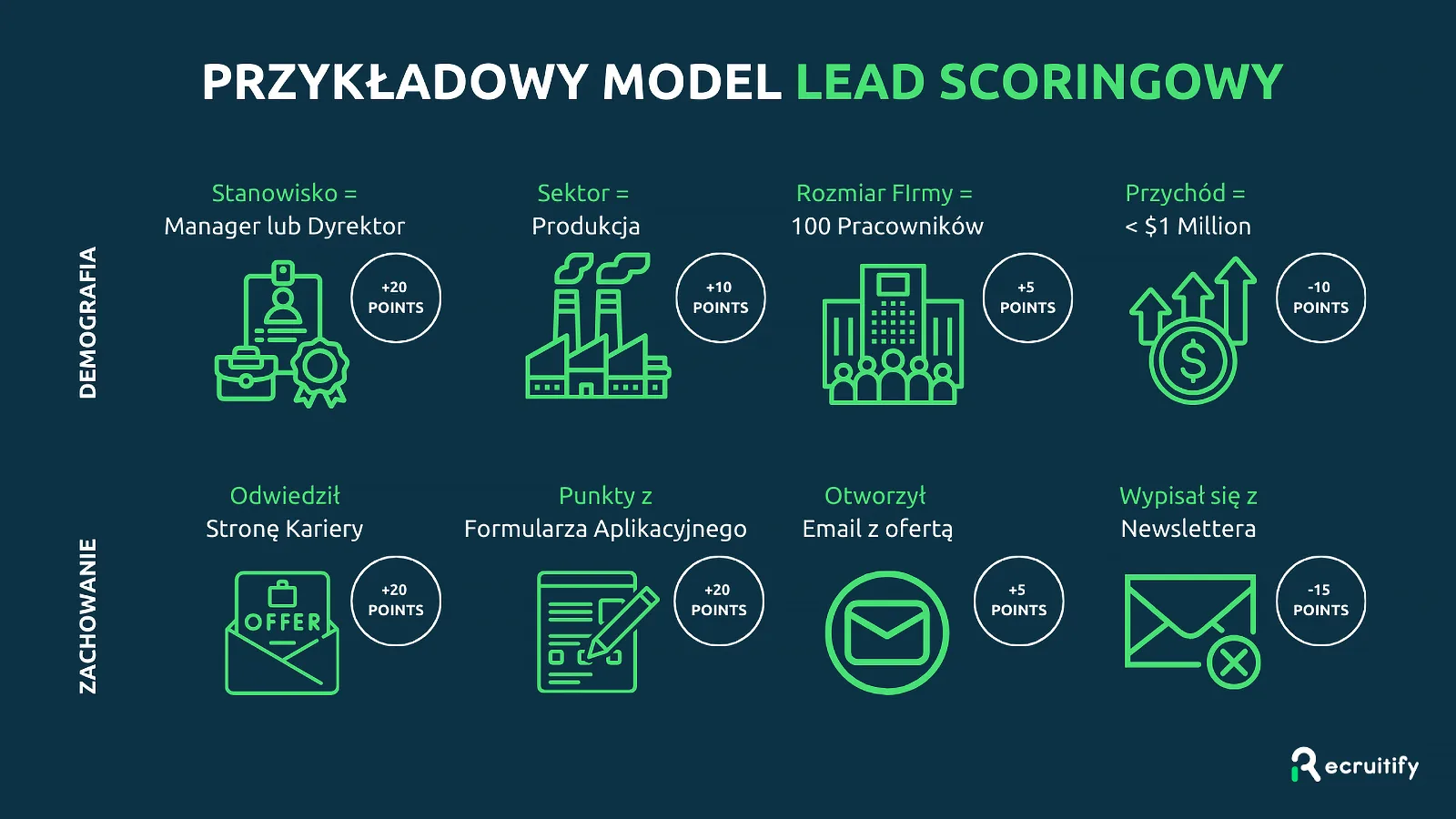
Define the criteria: Start by defining the criteria or attributes that indicate a lead’s potential value or readiness to “purchase,” aka apply for a project. These may include demographic information (e.g., position, company size), firmographic data (e.g., industry, revenue), engagement with marketing content (e.g., visits to the career site, opening job offer emails), and behaviors indicating an intent to apply for a project (e.g., requesting more information, downloading a report, visiting a job posting page).
Assign scores: Assign numerical scores to each criterion based on its significance or predictive value. For example, leads from larger companies or specific industries might receive higher scores, while leads that engage with multiple pieces of marketing content could earn additional points.
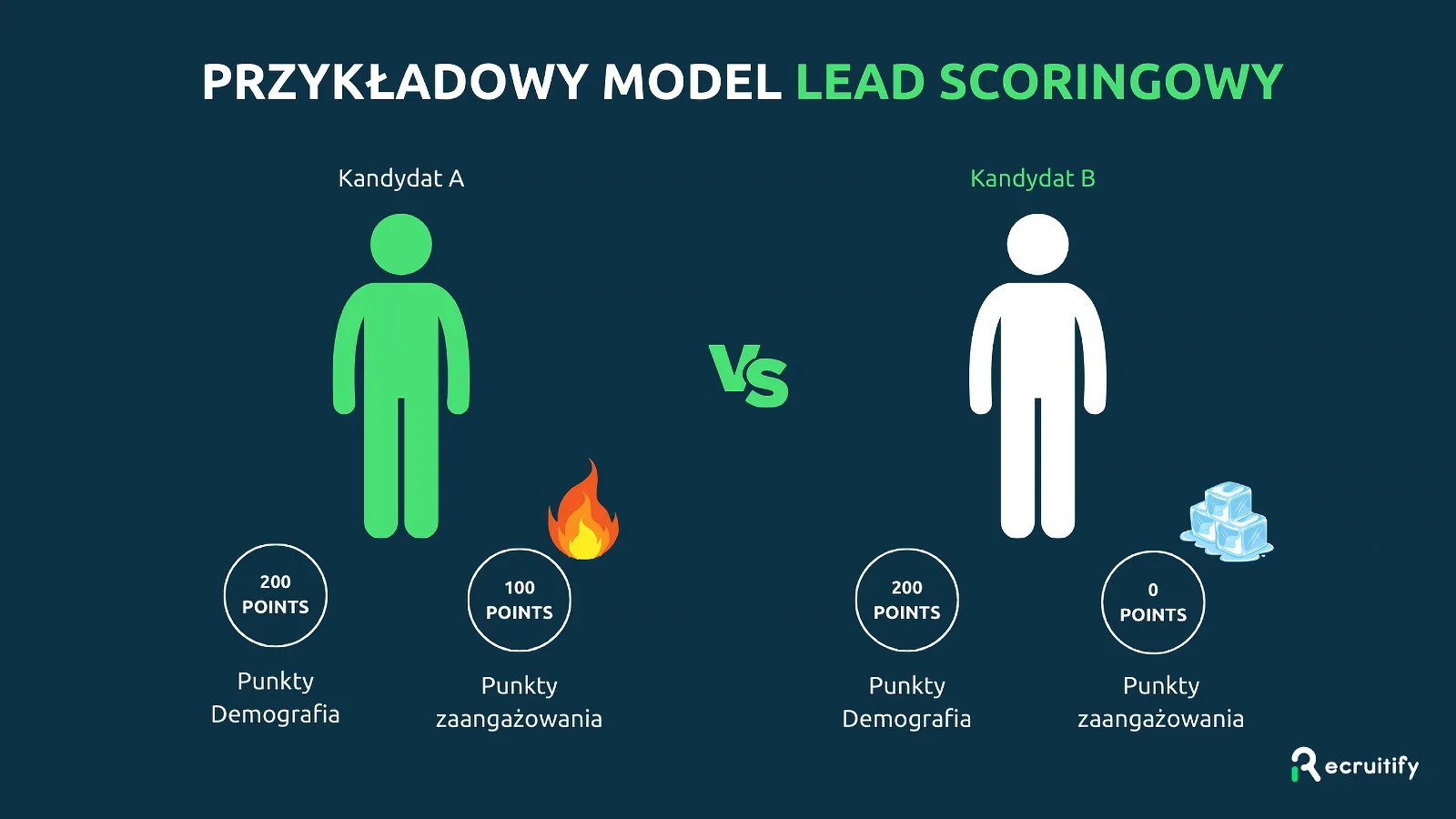
Calculate total score: Calculate the total score for each prospective candidate by summing scores from all criteria. This provides a quantitative measure of overall potential value or readiness to, for example, change jobs and apply for a project.
Set thresholds: Set thresholds or cutoff points to segment potential candidates into different tiers or levels based on their scores. For instance, leads with scores above a certain threshold might be considered "hot" and prioritized for immediate action by the sales team, while leads with lower scores could be further nurtured through marketing campaigns.
Refine and adjust: Continuously monitor and analyze the effectiveness of your lead scoring model. Refine criteria and scoring weights as needed based on feedback from recruitment teams, performance metrics, and changes in market dynamics.
Integrate with CRM and marketing automation: Integrate your lead scoring model with a Customer Relationship Management (CRM) system and marketing automation platform to automate the scoring process and ensure seamless communication between sales and marketing teams – in our example, marketing and recruitment.
The benefits of lead/candidate scoring include:
Increased recruitment efficiency: Recruitment teams can prioritize leads - candidates with the highest potential value, leading to higher conversion rates and shorter recruitment cycles.
Better return on investment in recruitment marketing: Marketing teams can focus their resources on nurturing and engaging potential candidates with the greatest likelihood of conversion, resulting in a higher return on investment in recruitment marketing and more efficient budget use.
Enhanced collaboration: Lead scoring fosters alignment between recruitment and marketing teams by providing a common framework for assessing the quality of leads - candidates and determining the best course of action.
Overall, lead/candidate scoring is a valuable tool for companies and can serve as an inspiration for recruitment marketing and HR departments looking to optimize their candidate management processes and thus improve recruitment marketing outcomes.
Want to learn more? Contact us :) Use the contact form! or schedule a meeting with us in the calendar, don't hesitate 😊


News & Updates
Stay up-to-date with the latest innovations, features, and tips about Recruitify!
By providing your email address within the newsletter sign-up form, you confirm its processing to send marketing information regarding the Administrator’s products and services. The Administrator of your personal data processed for the abovementioned purposes is Recruitify Spółka z o.o., based in Warsaw, Poland (KRS 0000709889). For more information on the principles of personal data processing and the rights of data subjects, please check the Privacy Policy.

Last updated:
Lead/Candidate Scoring: How to Use Scoring in Recruitment and Recruitment Marketing
EB | Recruitment Marketing
Acquiring Talent
Iwo Paliszewski
Would you like to be able to identify candidates who are most likely to convert into placements?
By assigning scores based on the behavior and characteristics of candidates, recruitment teams can prioritize their actions, ensuring the efficient use of time and resources.
Today, I'll describe how well-known and proven mechanisms in marketing and sales can be successfully applied in recruitment marketing and actual recruitment. Simply put, we will substitute candidates for clients, but the tools and mechanisms will remain the same. In our example, when I mention a lead, I mean a candidate, and “purchase” refers to applying for a project, though, of course, the process can also apply to clients.
Lead scoring is a methodology known from marketing and sales, used by companies to classify or evaluate potential clients based on their perceived value or likelihood of becoming a customer. It involves assigning numerical values to so-called leads based on various attributes, behaviors, and characteristics, allowing sales and marketing teams to prioritize and focus on leads who are most likely to convert.
Of course, it is most convenient to implement lead scoring with appropriate software such as HubSpot, Marketo, Pardot, SalesManago – it's very possible that your marketing department already has such tools, but does not apply them within recruitment marketing.
Here’s how lead/candidate scoring usually works:
Define the criteria: Start by defining the criteria or attributes that indicate a lead’s potential value or readiness to “purchase,” aka apply for a project. These may include demographic information (e.g., position, company size), firmographic data (e.g., industry, revenue), engagement with marketing content (e.g., visits to the career site, opening job offer emails), and behaviors indicating an intent to apply for a project (e.g., requesting more information, downloading a report, visiting a job posting page).
Assign scores: Assign numerical scores to each criterion based on its significance or predictive value. For example, leads from larger companies or specific industries might receive higher scores, while leads that engage with multiple pieces of marketing content could earn additional points.
Calculate total score: Calculate the total score for each prospective candidate by summing scores from all criteria. This provides a quantitative measure of overall potential value or readiness to, for example, change jobs and apply for a project.
Set thresholds: Set thresholds or cutoff points to segment potential candidates into different tiers or levels based on their scores. For instance, leads with scores above a certain threshold might be considered "hot" and prioritized for immediate action by the sales team, while leads with lower scores could be further nurtured through marketing campaigns.
Refine and adjust: Continuously monitor and analyze the effectiveness of your lead scoring model. Refine criteria and scoring weights as needed based on feedback from recruitment teams, performance metrics, and changes in market dynamics.
Integrate with CRM and marketing automation: Integrate your lead scoring model with a Customer Relationship Management (CRM) system and marketing automation platform to automate the scoring process and ensure seamless communication between sales and marketing teams – in our example, marketing and recruitment.
The benefits of lead/candidate scoring include:
Increased recruitment efficiency: Recruitment teams can prioritize leads - candidates with the highest potential value, leading to higher conversion rates and shorter recruitment cycles.
Better return on investment in recruitment marketing: Marketing teams can focus their resources on nurturing and engaging potential candidates with the greatest likelihood of conversion, resulting in a higher return on investment in recruitment marketing and more efficient budget use.
Enhanced collaboration: Lead scoring fosters alignment between recruitment and marketing teams by providing a common framework for assessing the quality of leads - candidates and determining the best course of action.
Overall, lead/candidate scoring is a valuable tool for companies and can serve as an inspiration for recruitment marketing and HR departments looking to optimize their candidate management processes and thus improve recruitment marketing outcomes.
Want to learn more? Contact us :) Use the contact form! or schedule a meeting with us in the calendar, don't hesitate 😊
News & Updates
Stay up-to-date with the latest innovations, features, and tips about Recruitify!
By providing your email address within the newsletter sign-up form, you confirm its processing to send marketing information regarding the Administrator’s products and services. The Administrator of your personal data processed for the abovementioned purposes is Recruitify Spółka z o.o., based in Warsaw, Poland (KRS 0000709889). For more information on the principles of personal data processing and the rights of data subjects, please check the Privacy Policy.
Last updated:
Lead/Candidate Scoring: How to Use Scoring in Recruitment and Recruitment Marketing
EB | Recruitment Marketing
Acquiring Talent
Iwo Paliszewski
Would you like to be able to identify candidates who are most likely to convert into placements?
By assigning scores based on the behavior and characteristics of candidates, recruitment teams can prioritize their actions, ensuring the efficient use of time and resources.
Today, I'll describe how well-known and proven mechanisms in marketing and sales can be successfully applied in recruitment marketing and actual recruitment. Simply put, we will substitute candidates for clients, but the tools and mechanisms will remain the same. In our example, when I mention a lead, I mean a candidate, and “purchase” refers to applying for a project, though, of course, the process can also apply to clients.
Lead scoring is a methodology known from marketing and sales, used by companies to classify or evaluate potential clients based on their perceived value or likelihood of becoming a customer. It involves assigning numerical values to so-called leads based on various attributes, behaviors, and characteristics, allowing sales and marketing teams to prioritize and focus on leads who are most likely to convert.
Of course, it is most convenient to implement lead scoring with appropriate software such as HubSpot, Marketo, Pardot, SalesManago – it's very possible that your marketing department already has such tools, but does not apply them within recruitment marketing.
Here’s how lead/candidate scoring usually works:
Define the criteria: Start by defining the criteria or attributes that indicate a lead’s potential value or readiness to “purchase,” aka apply for a project. These may include demographic information (e.g., position, company size), firmographic data (e.g., industry, revenue), engagement with marketing content (e.g., visits to the career site, opening job offer emails), and behaviors indicating an intent to apply for a project (e.g., requesting more information, downloading a report, visiting a job posting page).
Assign scores: Assign numerical scores to each criterion based on its significance or predictive value. For example, leads from larger companies or specific industries might receive higher scores, while leads that engage with multiple pieces of marketing content could earn additional points.
Calculate total score: Calculate the total score for each prospective candidate by summing scores from all criteria. This provides a quantitative measure of overall potential value or readiness to, for example, change jobs and apply for a project.
Set thresholds: Set thresholds or cutoff points to segment potential candidates into different tiers or levels based on their scores. For instance, leads with scores above a certain threshold might be considered "hot" and prioritized for immediate action by the sales team, while leads with lower scores could be further nurtured through marketing campaigns.
Refine and adjust: Continuously monitor and analyze the effectiveness of your lead scoring model. Refine criteria and scoring weights as needed based on feedback from recruitment teams, performance metrics, and changes in market dynamics.
Integrate with CRM and marketing automation: Integrate your lead scoring model with a Customer Relationship Management (CRM) system and marketing automation platform to automate the scoring process and ensure seamless communication between sales and marketing teams – in our example, marketing and recruitment.
The benefits of lead/candidate scoring include:
Increased recruitment efficiency: Recruitment teams can prioritize leads - candidates with the highest potential value, leading to higher conversion rates and shorter recruitment cycles.
Better return on investment in recruitment marketing: Marketing teams can focus their resources on nurturing and engaging potential candidates with the greatest likelihood of conversion, resulting in a higher return on investment in recruitment marketing and more efficient budget use.
Enhanced collaboration: Lead scoring fosters alignment between recruitment and marketing teams by providing a common framework for assessing the quality of leads - candidates and determining the best course of action.
Overall, lead/candidate scoring is a valuable tool for companies and can serve as an inspiration for recruitment marketing and HR departments looking to optimize their candidate management processes and thus improve recruitment marketing outcomes.
Want to learn more? Contact us :) Use the contact form! or schedule a meeting with us in the calendar, don't hesitate 😊
News & Updates
Stay up-to-date with the latest innovations, features, and tips about Recruitify!
By providing your email address within the newsletter sign-up form, you confirm its processing to send marketing information regarding the Administrator’s products and services. The Administrator of your personal data processed for the abovementioned purposes is Recruitify Spółka z o.o., based in Warsaw, Poland (KRS 0000709889). For more information on the principles of personal data processing and the rights of data subjects, please check the Privacy Policy.

Discover More

Recruitment Process
27 Mar 2026
A Fresh Challenge in Recruitment: From Sourcing to Verification
How can you find more candidates? How can you reach passive talent? How can you increase the number of applications?
Discover More

Recruitment Process
26 Mar 2026
Recruiters are no longer searching for candidates. They're seeking signals, which means true alignment.
Not long ago, one of the main challenges in recruitment was reaching candidates. Companies invested in advertisements, sourcing, and building talent pools, striving to increase the number of applications and expand the pool of potential hires.
Discover More

Innovations
24 Mar 2026
In your recruitment process, it's all about the numbers, not the authenticity.
Most contemporary recruitment processes are crafted with one goal in mind: scale. More applications. Faster selection. Reduced time to hire.
Discover More
Recruitment Process
27 Mar 2026
A Fresh Challenge in Recruitment: From Sourcing to Verification
How can you find more candidates? How can you reach passive talent? How can you increase the number of applications?
Discover More
Recruitment Process
26 Mar 2026
Recruiters are no longer searching for candidates. They're seeking signals, which means true alignment.
Not long ago, one of the main challenges in recruitment was reaching candidates. Companies invested in advertisements, sourcing, and building talent pools, striving to increase the number of applications and expand the pool of potential hires.
Discover More