🔥
Contracting
Explore the new contractor management module
🔥
Contracting
Explore the new contractor management module
🔥
Contracting
Explore the new contractor management module
🔥
Contracting
Explore the new contractor management module


Last updated:
The Art of Recruitment: Key Performance Indicators (KPIs) Every HR Professional Should Measure

HR Analytics

Iwo Paliszewski
In the dynamic world of recruitment, understanding and optimising key performance indicators (KPIs) is crucial for enhancing the efficiency and effectiveness of hiring processes. Whether you are part of a recruitment agency or manage internal recruitment for your company, leveraging the right KPIs can significantly strengthen your recruitment strategy and outcomes.
KPIs serve as a compass guiding recruitment professionals through the complexities of talent acquisition, offering measurable benchmarks that evaluate the 'health' and success of recruitment activities.
These indicators provide insights into various aspects of the recruitment process—from speed of filling roles and costs, to hire quality and satisfaction levels of hiring managers and candidates. By monitoring and analysing these KPIs, recruiters can make informed decisions that optimise resources, enhance candidate experience, and align recruitment practices with organisational goals.
Our comprehensive guide on recruitment KPIs not only defines each metric but also discusses its significance and details methods for effective measurement. Whether you aim to improve candidate sourcing, streamline communication, or boost overall recruitment productivity, these KPIs are fundamental tools you need to elevate your recruitment processes. Here, we delve into key KPIs for both agency and in-house recruiters, ensuring you have metrics at your disposal that not only meet but exceed your recruitment targets.
KPIs for Agency and In-house Recruitment
Time to Hire (Time to Hire)
Definition: The number of days from the moment a candidate is introduced into the recruitment process to the moment they accept the job offer.
Significance: A shorter time to hire indicates an efficient recruitment process, reducing the risk of losing top candidates to competitors.
How to Measure: Track the days between a candidate's application or sourcing and the acceptance of the job offer. Most ATS systems automatically track and report these figures.
Time to Fill (Time to Fill)
Definition: The total number of days from opening the requisition to accepting the offer.
Significance: Reducing the time to fill minimises the impact of vacancies on team productivity and lowers overall recruitment costs.
How to Measure: Record the number of days from requisition opening to offer acceptance using your ATS, breaking down the data by role, department, or manager.
Cost per Hire (Cost per Hire)
Definition: The total cost incurred to fill a position, including job ads, recruitment fees, software and onboarding.
Significance: Helps control recruitment budgets and ensures resources are efficiently used to attract the best talent.
How to Measure: Sum all hiring-related expenditures and divide by the number of hires in a given period. Your HR software can assist in tracking and categorising these expenses.
Quality of Hire (Quality of Hire)
Definition: A measure of how well new employees perform their duties and contribute to the organisation, often assessed through performance reviews and retention metrics.
Significance: High-quality placements are likely to perform well, stay longer and positively contribute to the company's growth.
How to Measure: Use performance appraisals, retention rates, and feedback from hiring managers within the first 3 to 12 months. Combine these data points to evaluate hiring effectiveness.
Candidate Experience (Candidate Experience)
Definition: The overall perception and satisfaction of a candidate with the recruitment process from application to offer.
Significance: Positive candidate experiences strengthen employer branding and increase the likelihood of offer acceptance.
How to Measure: Use post-interview surveys or automated satisfaction forms to gather candidate feedback on communication, application process, and their overall experience.
Offer Acceptance Rate (Offer Acceptance Rate)
Definition: The percentage of offered job positions that are accepted by candidates.
Significance: A higher acceptance rate indicates that the recruitment process aligns with candidate expectations regarding job role, company culture, and compensation.
How to Measure: Divide the number of accepted offers by the total number of job offers made.
Source of Hire (Source of Hire)
Definition: Sources of candidate applications such as job portals, referrals, direct applications, or recruitment agencies.
Significance: Identifying the most effective sources helps optimise recruitment strategies by focusing on channels that deliver the best talent.
How to Measure: Track where each placement comes from using your ATS.
This can be broken down by channel, recruiter, or role for more detailed insights.
Diversity Metrics (Diversity Metrics)
Definition: Distribution of the recruitment pool and hired candidates by gender, ethnicity, age, and other diversity indicators.
Significance: Ensuring diversity in hires promotes a more inclusive workforce, leading to improved team performance and innovation.
How to Measure: Collect demographic data throughout the recruitment process and use your HR software to track and report diversity metrics.
Specific KPIs for Recruitment Agencies
For recruitment agencies, tracking specific KPIs is essential to demonstrate value to clients, optimise performance, and ensure client satisfaction. These metrics provide insight into how effectively the agency fills roles, manages costs, and maintains client relationships, helping stay competitive in a fast-paced market. Here are key KPIs every recruitment agency should prioritise to achieve success.
Placement Ratio (Placement Ratio)
Definition: The ratio of successful hires to the recruitment projects or clients served.
Significance: A high placement ratio reflects the recruitment agency's effectiveness in meeting client needs and successfully placing candidates.
How to Measure: Track successful hires against acquired projects using ATS to assess performance over time.
Submittal to Placement Ratio (Submittal to Placement Ratio)
Definition: The ratio of candidates presented (or CV Sent) to successful hires for each recruitment project.
Significance: This KPI helps measure the accuracy and effectiveness of presented candidates, ensuring only qualified candidates are submitted for open roles.
How to Measure: Track the number of candidates presented and hires for each role in ATS to identify trends and areas for improvement.
Revenue per Placement (Revenue per Placement)
Definition: The average revenue generated per successful hire made by the recruitment agency.
Significance: Provides insight into the agency's financial effectiveness and helps determine the return on investment (ROI) for recruitment activities.
How to Measure: Divide total revenue by the number of successful hires within a specified period.
Use financial reporting tools to track this metric.
Client Retention Rate (Client Retention Rate)
Definition: The percentage of clients who return for services within a set period, e.g., within a year.
Significance: A high client retention rate indicates strong relationships and satisfaction with the recruitment agency's services.
How to Measure: Track the number of returning clients using CRM and divide by the total number of clients served within the period to calculate the retention rate.
Fill Rate (Fill Rate)
Definition: The percentage of recruitment projects successfully filled by the recruitment agency.
Significance: A higher fill rate reflects the agency's ability to meet client expectations and effectively deliver on tasks.
How to Measure: Divide the number of completed recruitment projects by the total number of orders received and track the percentage using ATS or CRM.
Specific KPIs for In-house Recruitment Teams
For in-house recruitment teams, mastering specific KPIs is critical to aligning hiring processes with organisational goals and workforce planning. These metrics help HR departments measure their effectiveness, improve hiring strategies and demonstrate their impact on the company's overall success. Here is a breakdown of essential KPIs that internal recruitment teams should monitor to effectively contribute to their organisation's growth and operational excellence.
New Hire Retention Rate (New Hire Retention Rate)
Definition: The percentage of new employees who remain with the company for a specified time, such as 6 months or 1 year.
Significance: High retention rates indicate effective recruitment and onboarding processes that align with candidate expectations and job satisfaction.
How to Measure: Track retention using HRIS systems and calculate the percentage of new hires that stay beyond key milestones, such as 6 or 12 months.
Internal Mobility Rate (Internal Mobility Rate)
Definition: The percentage of positions filled by internal candidates, including promotions and lateral moves.
Significance: Promoting internal mobility boosts employee engagement, loyalty, and retention, reducing overall hiring costs.
How to Measure: Track internal hires using ATS or HRIS and calculate the percentage of internal versus external hires.
Employee Referral Rate (Employee Referral Rate)
Definition: The percentage of new employees derived from other employees' referrals.
Significance: Employee referrals often lead to higher quality hires and faster time to hire, reducing time to hire and cost per hire.
How to Measure: Track the number of referrals that result in hires using ATS and divide by the total number of hires to calculate the referral rate.
Vacancy Rate (Vacancy Rate)
Definition: The percentage of open positions that remain unfilled for a specified time.
Significance: High vacancy rates can lead to productivity issues and increased costs associated with overtime or reduced performance.
How to Measure: Track the number of unfilled positions using ATS and calculate the vacancy rate as a percentage of total positions.
Hiring Manager Satisfaction (Hiring Manager Satisfaction)
Definition: A measure of how satisfied hiring managers are with the recruitment process and candidate quality.
Significance: Satisfied managers lead to stronger collaboration, better team alignment, and enhanced hiring results.
How to Measure: Gather feedback through post-hire surveys and meetings with hiring managers and analyse satisfaction levels across different recruitment campaigns.
Additional KPIs Worth Considering
In addition to essential metrics tailored for recruitment agencies and in-house recruitment teams, there are additional KPIs that provide deeper insights into the recruitment process. These supplementary metrics can be key in refining recruitment strategies, enhancing candidate engagement, and optimising overall hiring practices. Here's a look at some key additional KPIs that can elevate the effectiveness of any recruitment function.
Application Completion Rate (Application Completion Rate)
Definition: The percentage of candidates who complete the application process out of those who started it.
Significance: A higher completion rate indicates that the application process is user-friendly and engaging, reducing dropout rates.
How to Measure: Use your ATS to track the number of completed applications compared to the number of candidates who started the process.
Pipeline Conversion Rate (Pipeline Conversion Rate)
Definition: The percentage of candidates who move from one stage of the recruitment process to the next.
Significance: This KPI helps identify bottlenecks in the recruitment process and ensures smooth candidate experiences.
How to Measure: Track candidate progress using ATS and calculate conversion rates between stages (e.g., from application to interview, interview to offer).
Cost of Vacancy (Cost of Vacancy)
Definition: The estimated cost of leaving a position unfilled for a specified time, including lost productivity and increased operational expenses.
Significance: Understanding the cost of vacancy highlights the importance of efficient recruitment processes to avoid productivity losses.
How to Measure: Estimate daily lost productivity value for the role and multiply by the number of days the position remains vacant.
Interviewer Efficiency (Interviewer Efficiency)
Definition: The speed and effectiveness of recruiters in conducting interviews and providing timely feedback or decisions.
Significance: Efficient recruiters help speed up the hiring process, reduce time to hire, and improve candidate experiences.
How to Measure: Track the time taken to conduct interviews and make decisions using scheduling tools and feedback tracking systems. Compare recruiter performance against benchmarks to identify areas for improvement.
Summary
Mastering the art of measuring and interpreting recruitment KPIs is fundamental for any recruitment professional aiming to refine hiring practices and demonstrate their value. Continually tracking these KPIs allows recruiters to identify areas for improvement, celebrate successes, and make strategic adjustments to their recruitment strategies. This not only enhances the efficiency and effectiveness of the recruitment process but also contributes to a stronger and more competitive position in the crowded job market. Whether managing internal recruitment or servicing a group of clients, diligent application of these KPIs will ensure that your recruitment efforts are both informative and effective, leading to better hiring decisions and ultimately a stronger organisational workforce.


News & Updates
Stay up-to-date with the latest innovations, features, and tips about Recruitify!
By providing your email address within the newsletter sign-up form, you confirm its processing to send marketing information regarding the Administrator’s products and services. The Administrator of your personal data processed for the abovementioned purposes is Recruitify Spółka z o.o., based in Warsaw, Poland (KRS 0000709889). For more information on the principles of personal data processing and the rights of data subjects, please check the Privacy Policy.

Last updated:
The Art of Recruitment: Key Performance Indicators (KPIs) Every HR Professional Should Measure
HR Analytics
Iwo Paliszewski
In the dynamic world of recruitment, understanding and optimising key performance indicators (KPIs) is crucial for enhancing the efficiency and effectiveness of hiring processes. Whether you are part of a recruitment agency or manage internal recruitment for your company, leveraging the right KPIs can significantly strengthen your recruitment strategy and outcomes.
KPIs serve as a compass guiding recruitment professionals through the complexities of talent acquisition, offering measurable benchmarks that evaluate the 'health' and success of recruitment activities.
These indicators provide insights into various aspects of the recruitment process—from speed of filling roles and costs, to hire quality and satisfaction levels of hiring managers and candidates. By monitoring and analysing these KPIs, recruiters can make informed decisions that optimise resources, enhance candidate experience, and align recruitment practices with organisational goals.
Our comprehensive guide on recruitment KPIs not only defines each metric but also discusses its significance and details methods for effective measurement. Whether you aim to improve candidate sourcing, streamline communication, or boost overall recruitment productivity, these KPIs are fundamental tools you need to elevate your recruitment processes. Here, we delve into key KPIs for both agency and in-house recruiters, ensuring you have metrics at your disposal that not only meet but exceed your recruitment targets.
KPIs for Agency and In-house Recruitment
Time to Hire (Time to Hire)
Definition: The number of days from the moment a candidate is introduced into the recruitment process to the moment they accept the job offer.
Significance: A shorter time to hire indicates an efficient recruitment process, reducing the risk of losing top candidates to competitors.
How to Measure: Track the days between a candidate's application or sourcing and the acceptance of the job offer. Most ATS systems automatically track and report these figures.
Time to Fill (Time to Fill)
Definition: The total number of days from opening the requisition to accepting the offer.
Significance: Reducing the time to fill minimises the impact of vacancies on team productivity and lowers overall recruitment costs.
How to Measure: Record the number of days from requisition opening to offer acceptance using your ATS, breaking down the data by role, department, or manager.
Cost per Hire (Cost per Hire)
Definition: The total cost incurred to fill a position, including job ads, recruitment fees, software and onboarding.
Significance: Helps control recruitment budgets and ensures resources are efficiently used to attract the best talent.
How to Measure: Sum all hiring-related expenditures and divide by the number of hires in a given period. Your HR software can assist in tracking and categorising these expenses.
Quality of Hire (Quality of Hire)
Definition: A measure of how well new employees perform their duties and contribute to the organisation, often assessed through performance reviews and retention metrics.
Significance: High-quality placements are likely to perform well, stay longer and positively contribute to the company's growth.
How to Measure: Use performance appraisals, retention rates, and feedback from hiring managers within the first 3 to 12 months. Combine these data points to evaluate hiring effectiveness.
Candidate Experience (Candidate Experience)
Definition: The overall perception and satisfaction of a candidate with the recruitment process from application to offer.
Significance: Positive candidate experiences strengthen employer branding and increase the likelihood of offer acceptance.
How to Measure: Use post-interview surveys or automated satisfaction forms to gather candidate feedback on communication, application process, and their overall experience.
Offer Acceptance Rate (Offer Acceptance Rate)
Definition: The percentage of offered job positions that are accepted by candidates.
Significance: A higher acceptance rate indicates that the recruitment process aligns with candidate expectations regarding job role, company culture, and compensation.
How to Measure: Divide the number of accepted offers by the total number of job offers made.
Source of Hire (Source of Hire)
Definition: Sources of candidate applications such as job portals, referrals, direct applications, or recruitment agencies.
Significance: Identifying the most effective sources helps optimise recruitment strategies by focusing on channels that deliver the best talent.
How to Measure: Track where each placement comes from using your ATS.
This can be broken down by channel, recruiter, or role for more detailed insights.
Diversity Metrics (Diversity Metrics)
Definition: Distribution of the recruitment pool and hired candidates by gender, ethnicity, age, and other diversity indicators.
Significance: Ensuring diversity in hires promotes a more inclusive workforce, leading to improved team performance and innovation.
How to Measure: Collect demographic data throughout the recruitment process and use your HR software to track and report diversity metrics.
Specific KPIs for Recruitment Agencies
For recruitment agencies, tracking specific KPIs is essential to demonstrate value to clients, optimise performance, and ensure client satisfaction. These metrics provide insight into how effectively the agency fills roles, manages costs, and maintains client relationships, helping stay competitive in a fast-paced market. Here are key KPIs every recruitment agency should prioritise to achieve success.
Placement Ratio (Placement Ratio)
Definition: The ratio of successful hires to the recruitment projects or clients served.
Significance: A high placement ratio reflects the recruitment agency's effectiveness in meeting client needs and successfully placing candidates.
How to Measure: Track successful hires against acquired projects using ATS to assess performance over time.
Submittal to Placement Ratio (Submittal to Placement Ratio)
Definition: The ratio of candidates presented (or CV Sent) to successful hires for each recruitment project.
Significance: This KPI helps measure the accuracy and effectiveness of presented candidates, ensuring only qualified candidates are submitted for open roles.
How to Measure: Track the number of candidates presented and hires for each role in ATS to identify trends and areas for improvement.
Revenue per Placement (Revenue per Placement)
Definition: The average revenue generated per successful hire made by the recruitment agency.
Significance: Provides insight into the agency's financial effectiveness and helps determine the return on investment (ROI) for recruitment activities.
How to Measure: Divide total revenue by the number of successful hires within a specified period.
Use financial reporting tools to track this metric.
Client Retention Rate (Client Retention Rate)
Definition: The percentage of clients who return for services within a set period, e.g., within a year.
Significance: A high client retention rate indicates strong relationships and satisfaction with the recruitment agency's services.
How to Measure: Track the number of returning clients using CRM and divide by the total number of clients served within the period to calculate the retention rate.
Fill Rate (Fill Rate)
Definition: The percentage of recruitment projects successfully filled by the recruitment agency.
Significance: A higher fill rate reflects the agency's ability to meet client expectations and effectively deliver on tasks.
How to Measure: Divide the number of completed recruitment projects by the total number of orders received and track the percentage using ATS or CRM.
Specific KPIs for In-house Recruitment Teams
For in-house recruitment teams, mastering specific KPIs is critical to aligning hiring processes with organisational goals and workforce planning. These metrics help HR departments measure their effectiveness, improve hiring strategies and demonstrate their impact on the company's overall success. Here is a breakdown of essential KPIs that internal recruitment teams should monitor to effectively contribute to their organisation's growth and operational excellence.
New Hire Retention Rate (New Hire Retention Rate)
Definition: The percentage of new employees who remain with the company for a specified time, such as 6 months or 1 year.
Significance: High retention rates indicate effective recruitment and onboarding processes that align with candidate expectations and job satisfaction.
How to Measure: Track retention using HRIS systems and calculate the percentage of new hires that stay beyond key milestones, such as 6 or 12 months.
Internal Mobility Rate (Internal Mobility Rate)
Definition: The percentage of positions filled by internal candidates, including promotions and lateral moves.
Significance: Promoting internal mobility boosts employee engagement, loyalty, and retention, reducing overall hiring costs.
How to Measure: Track internal hires using ATS or HRIS and calculate the percentage of internal versus external hires.
Employee Referral Rate (Employee Referral Rate)
Definition: The percentage of new employees derived from other employees' referrals.
Significance: Employee referrals often lead to higher quality hires and faster time to hire, reducing time to hire and cost per hire.
How to Measure: Track the number of referrals that result in hires using ATS and divide by the total number of hires to calculate the referral rate.
Vacancy Rate (Vacancy Rate)
Definition: The percentage of open positions that remain unfilled for a specified time.
Significance: High vacancy rates can lead to productivity issues and increased costs associated with overtime or reduced performance.
How to Measure: Track the number of unfilled positions using ATS and calculate the vacancy rate as a percentage of total positions.
Hiring Manager Satisfaction (Hiring Manager Satisfaction)
Definition: A measure of how satisfied hiring managers are with the recruitment process and candidate quality.
Significance: Satisfied managers lead to stronger collaboration, better team alignment, and enhanced hiring results.
How to Measure: Gather feedback through post-hire surveys and meetings with hiring managers and analyse satisfaction levels across different recruitment campaigns.
Additional KPIs Worth Considering
In addition to essential metrics tailored for recruitment agencies and in-house recruitment teams, there are additional KPIs that provide deeper insights into the recruitment process. These supplementary metrics can be key in refining recruitment strategies, enhancing candidate engagement, and optimising overall hiring practices. Here's a look at some key additional KPIs that can elevate the effectiveness of any recruitment function.
Application Completion Rate (Application Completion Rate)
Definition: The percentage of candidates who complete the application process out of those who started it.
Significance: A higher completion rate indicates that the application process is user-friendly and engaging, reducing dropout rates.
How to Measure: Use your ATS to track the number of completed applications compared to the number of candidates who started the process.
Pipeline Conversion Rate (Pipeline Conversion Rate)
Definition: The percentage of candidates who move from one stage of the recruitment process to the next.
Significance: This KPI helps identify bottlenecks in the recruitment process and ensures smooth candidate experiences.
How to Measure: Track candidate progress using ATS and calculate conversion rates between stages (e.g., from application to interview, interview to offer).
Cost of Vacancy (Cost of Vacancy)
Definition: The estimated cost of leaving a position unfilled for a specified time, including lost productivity and increased operational expenses.
Significance: Understanding the cost of vacancy highlights the importance of efficient recruitment processes to avoid productivity losses.
How to Measure: Estimate daily lost productivity value for the role and multiply by the number of days the position remains vacant.
Interviewer Efficiency (Interviewer Efficiency)
Definition: The speed and effectiveness of recruiters in conducting interviews and providing timely feedback or decisions.
Significance: Efficient recruiters help speed up the hiring process, reduce time to hire, and improve candidate experiences.
How to Measure: Track the time taken to conduct interviews and make decisions using scheduling tools and feedback tracking systems. Compare recruiter performance against benchmarks to identify areas for improvement.
Summary
Mastering the art of measuring and interpreting recruitment KPIs is fundamental for any recruitment professional aiming to refine hiring practices and demonstrate their value. Continually tracking these KPIs allows recruiters to identify areas for improvement, celebrate successes, and make strategic adjustments to their recruitment strategies. This not only enhances the efficiency and effectiveness of the recruitment process but also contributes to a stronger and more competitive position in the crowded job market. Whether managing internal recruitment or servicing a group of clients, diligent application of these KPIs will ensure that your recruitment efforts are both informative and effective, leading to better hiring decisions and ultimately a stronger organisational workforce.
News & Updates
Stay up-to-date with the latest innovations, features, and tips about Recruitify!
By providing your email address within the newsletter sign-up form, you confirm its processing to send marketing information regarding the Administrator’s products and services. The Administrator of your personal data processed for the abovementioned purposes is Recruitify Spółka z o.o., based in Warsaw, Poland (KRS 0000709889). For more information on the principles of personal data processing and the rights of data subjects, please check the Privacy Policy.
Last updated:
The Art of Recruitment: Key Performance Indicators (KPIs) Every HR Professional Should Measure
HR Analytics
Iwo Paliszewski
In the dynamic world of recruitment, understanding and optimising key performance indicators (KPIs) is crucial for enhancing the efficiency and effectiveness of hiring processes. Whether you are part of a recruitment agency or manage internal recruitment for your company, leveraging the right KPIs can significantly strengthen your recruitment strategy and outcomes.
KPIs serve as a compass guiding recruitment professionals through the complexities of talent acquisition, offering measurable benchmarks that evaluate the 'health' and success of recruitment activities.
These indicators provide insights into various aspects of the recruitment process—from speed of filling roles and costs, to hire quality and satisfaction levels of hiring managers and candidates. By monitoring and analysing these KPIs, recruiters can make informed decisions that optimise resources, enhance candidate experience, and align recruitment practices with organisational goals.
Our comprehensive guide on recruitment KPIs not only defines each metric but also discusses its significance and details methods for effective measurement. Whether you aim to improve candidate sourcing, streamline communication, or boost overall recruitment productivity, these KPIs are fundamental tools you need to elevate your recruitment processes. Here, we delve into key KPIs for both agency and in-house recruiters, ensuring you have metrics at your disposal that not only meet but exceed your recruitment targets.
KPIs for Agency and In-house Recruitment
Time to Hire (Time to Hire)
Definition: The number of days from the moment a candidate is introduced into the recruitment process to the moment they accept the job offer.
Significance: A shorter time to hire indicates an efficient recruitment process, reducing the risk of losing top candidates to competitors.
How to Measure: Track the days between a candidate's application or sourcing and the acceptance of the job offer. Most ATS systems automatically track and report these figures.
Time to Fill (Time to Fill)
Definition: The total number of days from opening the requisition to accepting the offer.
Significance: Reducing the time to fill minimises the impact of vacancies on team productivity and lowers overall recruitment costs.
How to Measure: Record the number of days from requisition opening to offer acceptance using your ATS, breaking down the data by role, department, or manager.
Cost per Hire (Cost per Hire)
Definition: The total cost incurred to fill a position, including job ads, recruitment fees, software and onboarding.
Significance: Helps control recruitment budgets and ensures resources are efficiently used to attract the best talent.
How to Measure: Sum all hiring-related expenditures and divide by the number of hires in a given period. Your HR software can assist in tracking and categorising these expenses.
Quality of Hire (Quality of Hire)
Definition: A measure of how well new employees perform their duties and contribute to the organisation, often assessed through performance reviews and retention metrics.
Significance: High-quality placements are likely to perform well, stay longer and positively contribute to the company's growth.
How to Measure: Use performance appraisals, retention rates, and feedback from hiring managers within the first 3 to 12 months. Combine these data points to evaluate hiring effectiveness.
Candidate Experience (Candidate Experience)
Definition: The overall perception and satisfaction of a candidate with the recruitment process from application to offer.
Significance: Positive candidate experiences strengthen employer branding and increase the likelihood of offer acceptance.
How to Measure: Use post-interview surveys or automated satisfaction forms to gather candidate feedback on communication, application process, and their overall experience.
Offer Acceptance Rate (Offer Acceptance Rate)
Definition: The percentage of offered job positions that are accepted by candidates.
Significance: A higher acceptance rate indicates that the recruitment process aligns with candidate expectations regarding job role, company culture, and compensation.
How to Measure: Divide the number of accepted offers by the total number of job offers made.
Source of Hire (Source of Hire)
Definition: Sources of candidate applications such as job portals, referrals, direct applications, or recruitment agencies.
Significance: Identifying the most effective sources helps optimise recruitment strategies by focusing on channels that deliver the best talent.
How to Measure: Track where each placement comes from using your ATS.
This can be broken down by channel, recruiter, or role for more detailed insights.
Diversity Metrics (Diversity Metrics)
Definition: Distribution of the recruitment pool and hired candidates by gender, ethnicity, age, and other diversity indicators.
Significance: Ensuring diversity in hires promotes a more inclusive workforce, leading to improved team performance and innovation.
How to Measure: Collect demographic data throughout the recruitment process and use your HR software to track and report diversity metrics.
Specific KPIs for Recruitment Agencies
For recruitment agencies, tracking specific KPIs is essential to demonstrate value to clients, optimise performance, and ensure client satisfaction. These metrics provide insight into how effectively the agency fills roles, manages costs, and maintains client relationships, helping stay competitive in a fast-paced market. Here are key KPIs every recruitment agency should prioritise to achieve success.
Placement Ratio (Placement Ratio)
Definition: The ratio of successful hires to the recruitment projects or clients served.
Significance: A high placement ratio reflects the recruitment agency's effectiveness in meeting client needs and successfully placing candidates.
How to Measure: Track successful hires against acquired projects using ATS to assess performance over time.
Submittal to Placement Ratio (Submittal to Placement Ratio)
Definition: The ratio of candidates presented (or CV Sent) to successful hires for each recruitment project.
Significance: This KPI helps measure the accuracy and effectiveness of presented candidates, ensuring only qualified candidates are submitted for open roles.
How to Measure: Track the number of candidates presented and hires for each role in ATS to identify trends and areas for improvement.
Revenue per Placement (Revenue per Placement)
Definition: The average revenue generated per successful hire made by the recruitment agency.
Significance: Provides insight into the agency's financial effectiveness and helps determine the return on investment (ROI) for recruitment activities.
How to Measure: Divide total revenue by the number of successful hires within a specified period.
Use financial reporting tools to track this metric.
Client Retention Rate (Client Retention Rate)
Definition: The percentage of clients who return for services within a set period, e.g., within a year.
Significance: A high client retention rate indicates strong relationships and satisfaction with the recruitment agency's services.
How to Measure: Track the number of returning clients using CRM and divide by the total number of clients served within the period to calculate the retention rate.
Fill Rate (Fill Rate)
Definition: The percentage of recruitment projects successfully filled by the recruitment agency.
Significance: A higher fill rate reflects the agency's ability to meet client expectations and effectively deliver on tasks.
How to Measure: Divide the number of completed recruitment projects by the total number of orders received and track the percentage using ATS or CRM.
Specific KPIs for In-house Recruitment Teams
For in-house recruitment teams, mastering specific KPIs is critical to aligning hiring processes with organisational goals and workforce planning. These metrics help HR departments measure their effectiveness, improve hiring strategies and demonstrate their impact on the company's overall success. Here is a breakdown of essential KPIs that internal recruitment teams should monitor to effectively contribute to their organisation's growth and operational excellence.
New Hire Retention Rate (New Hire Retention Rate)
Definition: The percentage of new employees who remain with the company for a specified time, such as 6 months or 1 year.
Significance: High retention rates indicate effective recruitment and onboarding processes that align with candidate expectations and job satisfaction.
How to Measure: Track retention using HRIS systems and calculate the percentage of new hires that stay beyond key milestones, such as 6 or 12 months.
Internal Mobility Rate (Internal Mobility Rate)
Definition: The percentage of positions filled by internal candidates, including promotions and lateral moves.
Significance: Promoting internal mobility boosts employee engagement, loyalty, and retention, reducing overall hiring costs.
How to Measure: Track internal hires using ATS or HRIS and calculate the percentage of internal versus external hires.
Employee Referral Rate (Employee Referral Rate)
Definition: The percentage of new employees derived from other employees' referrals.
Significance: Employee referrals often lead to higher quality hires and faster time to hire, reducing time to hire and cost per hire.
How to Measure: Track the number of referrals that result in hires using ATS and divide by the total number of hires to calculate the referral rate.
Vacancy Rate (Vacancy Rate)
Definition: The percentage of open positions that remain unfilled for a specified time.
Significance: High vacancy rates can lead to productivity issues and increased costs associated with overtime or reduced performance.
How to Measure: Track the number of unfilled positions using ATS and calculate the vacancy rate as a percentage of total positions.
Hiring Manager Satisfaction (Hiring Manager Satisfaction)
Definition: A measure of how satisfied hiring managers are with the recruitment process and candidate quality.
Significance: Satisfied managers lead to stronger collaboration, better team alignment, and enhanced hiring results.
How to Measure: Gather feedback through post-hire surveys and meetings with hiring managers and analyse satisfaction levels across different recruitment campaigns.
Additional KPIs Worth Considering
In addition to essential metrics tailored for recruitment agencies and in-house recruitment teams, there are additional KPIs that provide deeper insights into the recruitment process. These supplementary metrics can be key in refining recruitment strategies, enhancing candidate engagement, and optimising overall hiring practices. Here's a look at some key additional KPIs that can elevate the effectiveness of any recruitment function.
Application Completion Rate (Application Completion Rate)
Definition: The percentage of candidates who complete the application process out of those who started it.
Significance: A higher completion rate indicates that the application process is user-friendly and engaging, reducing dropout rates.
How to Measure: Use your ATS to track the number of completed applications compared to the number of candidates who started the process.
Pipeline Conversion Rate (Pipeline Conversion Rate)
Definition: The percentage of candidates who move from one stage of the recruitment process to the next.
Significance: This KPI helps identify bottlenecks in the recruitment process and ensures smooth candidate experiences.
How to Measure: Track candidate progress using ATS and calculate conversion rates between stages (e.g., from application to interview, interview to offer).
Cost of Vacancy (Cost of Vacancy)
Definition: The estimated cost of leaving a position unfilled for a specified time, including lost productivity and increased operational expenses.
Significance: Understanding the cost of vacancy highlights the importance of efficient recruitment processes to avoid productivity losses.
How to Measure: Estimate daily lost productivity value for the role and multiply by the number of days the position remains vacant.
Interviewer Efficiency (Interviewer Efficiency)
Definition: The speed and effectiveness of recruiters in conducting interviews and providing timely feedback or decisions.
Significance: Efficient recruiters help speed up the hiring process, reduce time to hire, and improve candidate experiences.
How to Measure: Track the time taken to conduct interviews and make decisions using scheduling tools and feedback tracking systems. Compare recruiter performance against benchmarks to identify areas for improvement.
Summary
Mastering the art of measuring and interpreting recruitment KPIs is fundamental for any recruitment professional aiming to refine hiring practices and demonstrate their value. Continually tracking these KPIs allows recruiters to identify areas for improvement, celebrate successes, and make strategic adjustments to their recruitment strategies. This not only enhances the efficiency and effectiveness of the recruitment process but also contributes to a stronger and more competitive position in the crowded job market. Whether managing internal recruitment or servicing a group of clients, diligent application of these KPIs will ensure that your recruitment efforts are both informative and effective, leading to better hiring decisions and ultimately a stronger organisational workforce.
News & Updates
Stay up-to-date with the latest innovations, features, and tips about Recruitify!
By providing your email address within the newsletter sign-up form, you confirm its processing to send marketing information regarding the Administrator’s products and services. The Administrator of your personal data processed for the abovementioned purposes is Recruitify Spółka z o.o., based in Warsaw, Poland (KRS 0000709889). For more information on the principles of personal data processing and the rights of data subjects, please check the Privacy Policy.

Discover More

Recruitment Process
11 Mar 2026
Why does the top candidate often get eliminated during the screening process?
Screening is the stage where a recruiter must swiftly assess whether an individual has the potential to move forward to an interview.
Discover More
Applicant Tracking System
5 Mar 2026
From A to Z: Architecting Talent Acquisition, Distinguishing HRM from Recruitment Software, and Selecting High-Performance Systems.
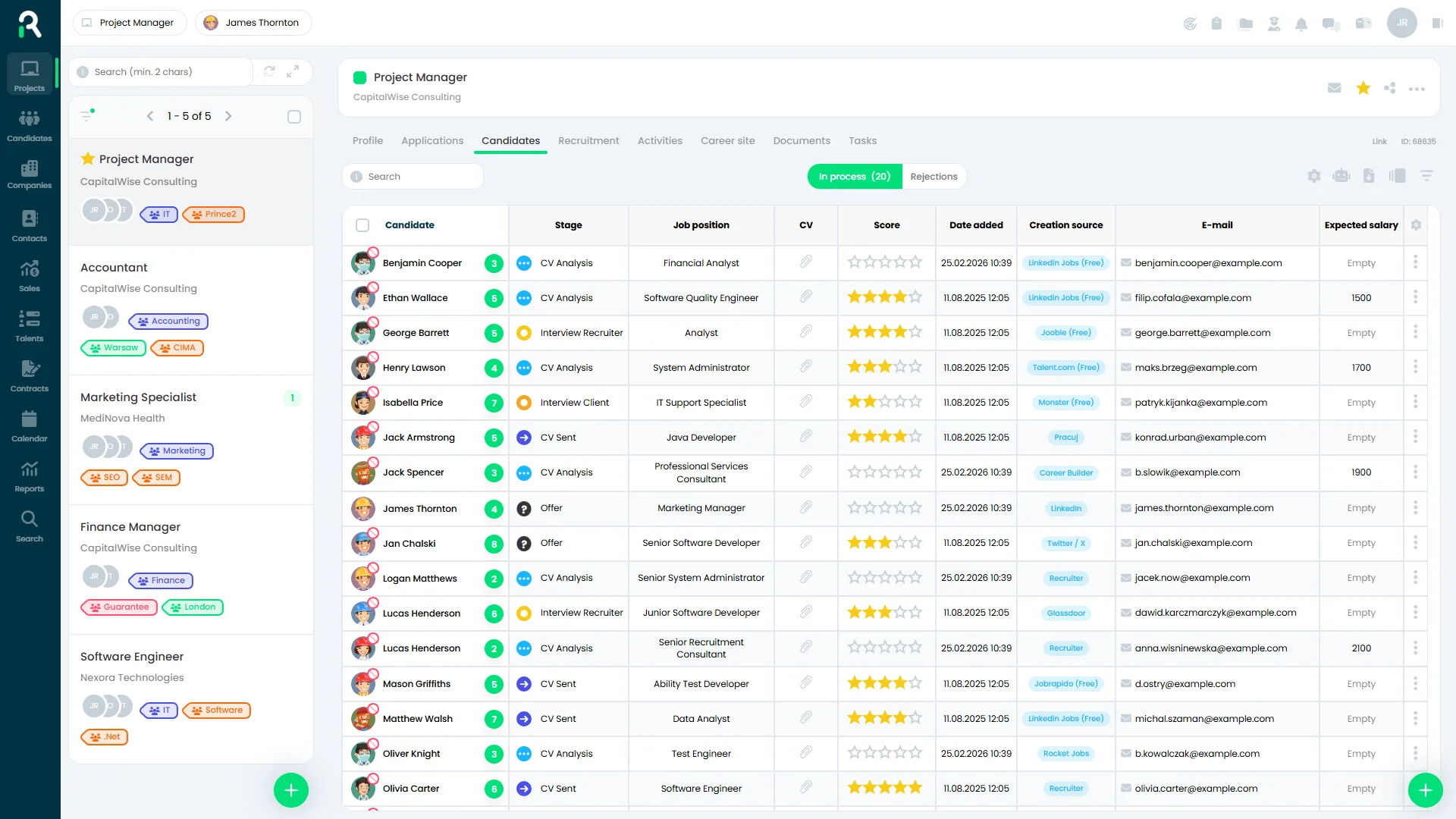
Recruitment has evolved from being merely an administrative task to becoming a vital component of business strategy. In this comprehensive guide, we elucidate what an Applicant Tracking System (ATS) is, how it differs from recruitment and HRM systems, its operation within HR models, agencies, and contracting, and the secure transition process. We delve into the role of AI in recruitment, integrations, implementation costs, and the most common pitfalls when selecting software. This is a practical compendium for companies seeking to manage recruitment in an organised, measurable, and scalable manner.
Discover More

Acquiring Talent
27 Feb 2026
Have recruiters ever truly trusted candidates?
In recent months, there's been a growing sentiment that recruitment is entering a 'trust crisis.'
Discover More
Recruitment Process
11 Mar 2026
Why does the top candidate often get eliminated during the screening process?
Screening is the stage where a recruiter must swiftly assess whether an individual has the potential to move forward to an interview.
Discover More
Applicant Tracking System
5 Mar 2026
From A to Z: Architecting Talent Acquisition, Distinguishing HRM from Recruitment Software, and Selecting High-Performance Systems.
Recruitment has evolved from being merely an administrative task to becoming a vital component of business strategy. In this comprehensive guide, we elucidate what an Applicant Tracking System (ATS) is, how it differs from recruitment and HRM systems, its operation within HR models, agencies, and contracting, and the secure transition process. We delve into the role of AI in recruitment, integrations, implementation costs, and the most common pitfalls when selecting software. This is a practical compendium for companies seeking to manage recruitment in an organised, measurable, and scalable manner.
Discover More