🔥
Contracting
Explore the new contractor management module
🔥
Contracting
Explore the new contractor management module
🔥
Contracting
Explore the new contractor management module
🔥
Contracting
Explore the new contractor management module
Last updated:
Operational HR vs Strategic HR - What Really Makes a Difference

HR Analytics

Iwo Paliszewski
In recent years, many HR teams have been operating in survival mode.
Reductions, frozen budgets, more responsibilities falling on a smaller number of people. For many HR professionals, daily life boiled down to one goal: managing current topics and preventing anything from 'falling apart'.
This naturally strengthened the operational HR model. One that responds to the needs of the organization here and now. Recruits when a vacancy arises. Puts out fires. Answers immediate questions. Oversees processes, deadlines, and documents. This model was - and still is in many companies - absolutely essential.
The problem arises when HR remains in this role permanently.
As the job market becomes more complex, it's increasingly evident that mere operational capability is no longer sufficient. Recruitment takes longer, candidates are less inclined to change jobs, teams expect better matches, and businesses increasingly ask not just 'will we hire', but 'will we hire the right people'.
And this is where the real difference between operational HR and strategic HR begins.
What we often call strategic HR today rarely boils down solely to HR's presence 'at the management table'. Increasingly, it signifies a systemic approach - based on data, process continuity, and conscious decision management over time.
Systematic HR doesn't work faster because it works more. It operates more effectively because it bases decisions on a coherent picture of the situation. It sees recruitment not as a series of isolated processes but as a sequence of interconnected actions over time. It can return to data from months or even years ago and draw conclusions that matter today.
It's a significant shift in perspective.
In the operational model, HR often focuses on task execution. In the strategic model - based on a system approach - it starts managing dependencies. Instead of solely answering the question 'who are we looking for now', it asks questions about where the organization faces the greatest risk, what competencies will be needed in the coming months, and what the existing processes say about the quality of decisions made.
Importantly, strategic HR based on systematization is not 'less human'. On the contrary. It's the organization of data, processes, and tools that allows HR teams to regain space for conversation, feedback, and real support for people. Operational chaos quickly takes away the time and energy that were meant for working with people.
Many organizations today declare that they want HR to be a business partner. But partnership isn't based on intuition and goodwill. It's based on the ability to analyze, predict, and consistently act. Without a systemic approach, HR gets caught up in the day-to-day, even if it formally has the ambition to do more.
That's why the difference between operational HR and strategic HR comes not from the scope of duties but from whether HR is positioned to view the organization more broadly than through the lens of the next task at hand.
In 2026, this ability will make the biggest difference. Not the number of tools, not trendy phrases, not declarations about HR's strategic role. Only the real skill of working on data, processes, and decisions that go beyond 'here and now'.
Becoming strategic HR rarely starts with a grand strategy or revolutionary decision.
It usually starts with a very simple, yet challenging change: the shift from acting solely 'from process to process' to building continuity and organizational memory. From the moment where HR stops treating each hiring as a separate project and starts seeing it as part of a larger picture.
This requires a change in the way of working. Instead of focusing solely on immediate tasks, HR begins to revisit data, the history of decisions, and the outcomes of previous processes. It starts asking questions not just about what happened, but why it happened and what it means for the future. Without this, even the best intentions quickly lose to daily operational demands.
The second element is consciously reducing improvisation. Strategic HR doesn't rely on firefighting but on creating conditions where fires appear less frequently. This means organizing the way of working, tools, and data so that decisions don't have to start from scratch each time. Not to stiffen the organization, but to give teams more space for what truly requires human attention.
Operational HR is needed. Strategic HR - based on a system approach - is indispensable if the organization wants to consciously grow.


News & Updates
Stay up-to-date with the latest innovations, features, and tips about Recruitify!
By providing your email address within the newsletter sign-up form, you confirm its processing to send marketing information regarding the Administrator’s products and services. The Administrator of your personal data processed for the abovementioned purposes is Recruitify Spółka z o.o., based in Warsaw, Poland (KRS 0000709889). For more information on the principles of personal data processing and the rights of data subjects, please check the Privacy Policy.

Last updated:
Operational HR vs Strategic HR - What Really Makes a Difference
HR Analytics
Iwo Paliszewski
In recent years, many HR teams have been operating in survival mode.
Reductions, frozen budgets, more responsibilities falling on a smaller number of people. For many HR professionals, daily life boiled down to one goal: managing current topics and preventing anything from 'falling apart'.
This naturally strengthened the operational HR model. One that responds to the needs of the organization here and now. Recruits when a vacancy arises. Puts out fires. Answers immediate questions. Oversees processes, deadlines, and documents. This model was - and still is in many companies - absolutely essential.
The problem arises when HR remains in this role permanently.
As the job market becomes more complex, it's increasingly evident that mere operational capability is no longer sufficient. Recruitment takes longer, candidates are less inclined to change jobs, teams expect better matches, and businesses increasingly ask not just 'will we hire', but 'will we hire the right people'.
And this is where the real difference between operational HR and strategic HR begins.
What we often call strategic HR today rarely boils down solely to HR's presence 'at the management table'. Increasingly, it signifies a systemic approach - based on data, process continuity, and conscious decision management over time.
Systematic HR doesn't work faster because it works more. It operates more effectively because it bases decisions on a coherent picture of the situation. It sees recruitment not as a series of isolated processes but as a sequence of interconnected actions over time. It can return to data from months or even years ago and draw conclusions that matter today.
It's a significant shift in perspective.
In the operational model, HR often focuses on task execution. In the strategic model - based on a system approach - it starts managing dependencies. Instead of solely answering the question 'who are we looking for now', it asks questions about where the organization faces the greatest risk, what competencies will be needed in the coming months, and what the existing processes say about the quality of decisions made.
Importantly, strategic HR based on systematization is not 'less human'. On the contrary. It's the organization of data, processes, and tools that allows HR teams to regain space for conversation, feedback, and real support for people. Operational chaos quickly takes away the time and energy that were meant for working with people.
Many organizations today declare that they want HR to be a business partner. But partnership isn't based on intuition and goodwill. It's based on the ability to analyze, predict, and consistently act. Without a systemic approach, HR gets caught up in the day-to-day, even if it formally has the ambition to do more.
That's why the difference between operational HR and strategic HR comes not from the scope of duties but from whether HR is positioned to view the organization more broadly than through the lens of the next task at hand.
In 2026, this ability will make the biggest difference. Not the number of tools, not trendy phrases, not declarations about HR's strategic role. Only the real skill of working on data, processes, and decisions that go beyond 'here and now'.
Becoming strategic HR rarely starts with a grand strategy or revolutionary decision.
It usually starts with a very simple, yet challenging change: the shift from acting solely 'from process to process' to building continuity and organizational memory. From the moment where HR stops treating each hiring as a separate project and starts seeing it as part of a larger picture.
This requires a change in the way of working. Instead of focusing solely on immediate tasks, HR begins to revisit data, the history of decisions, and the outcomes of previous processes. It starts asking questions not just about what happened, but why it happened and what it means for the future. Without this, even the best intentions quickly lose to daily operational demands.
The second element is consciously reducing improvisation. Strategic HR doesn't rely on firefighting but on creating conditions where fires appear less frequently. This means organizing the way of working, tools, and data so that decisions don't have to start from scratch each time. Not to stiffen the organization, but to give teams more space for what truly requires human attention.
Operational HR is needed. Strategic HR - based on a system approach - is indispensable if the organization wants to consciously grow.
News & Updates
Stay up-to-date with the latest innovations, features, and tips about Recruitify!
By providing your email address within the newsletter sign-up form, you confirm its processing to send marketing information regarding the Administrator’s products and services. The Administrator of your personal data processed for the abovementioned purposes is Recruitify Spółka z o.o., based in Warsaw, Poland (KRS 0000709889). For more information on the principles of personal data processing and the rights of data subjects, please check the Privacy Policy.
Last updated:
Operational HR vs Strategic HR - What Really Makes a Difference
HR Analytics
Iwo Paliszewski
In recent years, many HR teams have been operating in survival mode.
Reductions, frozen budgets, more responsibilities falling on a smaller number of people. For many HR professionals, daily life boiled down to one goal: managing current topics and preventing anything from 'falling apart'.
This naturally strengthened the operational HR model. One that responds to the needs of the organization here and now. Recruits when a vacancy arises. Puts out fires. Answers immediate questions. Oversees processes, deadlines, and documents. This model was - and still is in many companies - absolutely essential.
The problem arises when HR remains in this role permanently.
As the job market becomes more complex, it's increasingly evident that mere operational capability is no longer sufficient. Recruitment takes longer, candidates are less inclined to change jobs, teams expect better matches, and businesses increasingly ask not just 'will we hire', but 'will we hire the right people'.
And this is where the real difference between operational HR and strategic HR begins.
What we often call strategic HR today rarely boils down solely to HR's presence 'at the management table'. Increasingly, it signifies a systemic approach - based on data, process continuity, and conscious decision management over time.
Systematic HR doesn't work faster because it works more. It operates more effectively because it bases decisions on a coherent picture of the situation. It sees recruitment not as a series of isolated processes but as a sequence of interconnected actions over time. It can return to data from months or even years ago and draw conclusions that matter today.
It's a significant shift in perspective.
In the operational model, HR often focuses on task execution. In the strategic model - based on a system approach - it starts managing dependencies. Instead of solely answering the question 'who are we looking for now', it asks questions about where the organization faces the greatest risk, what competencies will be needed in the coming months, and what the existing processes say about the quality of decisions made.
Importantly, strategic HR based on systematization is not 'less human'. On the contrary. It's the organization of data, processes, and tools that allows HR teams to regain space for conversation, feedback, and real support for people. Operational chaos quickly takes away the time and energy that were meant for working with people.
Many organizations today declare that they want HR to be a business partner. But partnership isn't based on intuition and goodwill. It's based on the ability to analyze, predict, and consistently act. Without a systemic approach, HR gets caught up in the day-to-day, even if it formally has the ambition to do more.
That's why the difference between operational HR and strategic HR comes not from the scope of duties but from whether HR is positioned to view the organization more broadly than through the lens of the next task at hand.
In 2026, this ability will make the biggest difference. Not the number of tools, not trendy phrases, not declarations about HR's strategic role. Only the real skill of working on data, processes, and decisions that go beyond 'here and now'.
Becoming strategic HR rarely starts with a grand strategy or revolutionary decision.
It usually starts with a very simple, yet challenging change: the shift from acting solely 'from process to process' to building continuity and organizational memory. From the moment where HR stops treating each hiring as a separate project and starts seeing it as part of a larger picture.
This requires a change in the way of working. Instead of focusing solely on immediate tasks, HR begins to revisit data, the history of decisions, and the outcomes of previous processes. It starts asking questions not just about what happened, but why it happened and what it means for the future. Without this, even the best intentions quickly lose to daily operational demands.
The second element is consciously reducing improvisation. Strategic HR doesn't rely on firefighting but on creating conditions where fires appear less frequently. This means organizing the way of working, tools, and data so that decisions don't have to start from scratch each time. Not to stiffen the organization, but to give teams more space for what truly requires human attention.
Operational HR is needed. Strategic HR - based on a system approach - is indispensable if the organization wants to consciously grow.
News & Updates
Stay up-to-date with the latest innovations, features, and tips about Recruitify!
By providing your email address within the newsletter sign-up form, you confirm its processing to send marketing information regarding the Administrator’s products and services. The Administrator of your personal data processed for the abovementioned purposes is Recruitify Spółka z o.o., based in Warsaw, Poland (KRS 0000709889). For more information on the principles of personal data processing and the rights of data subjects, please check the Privacy Policy.

Discover More
Applicant Tracking System
5 Mar 2026
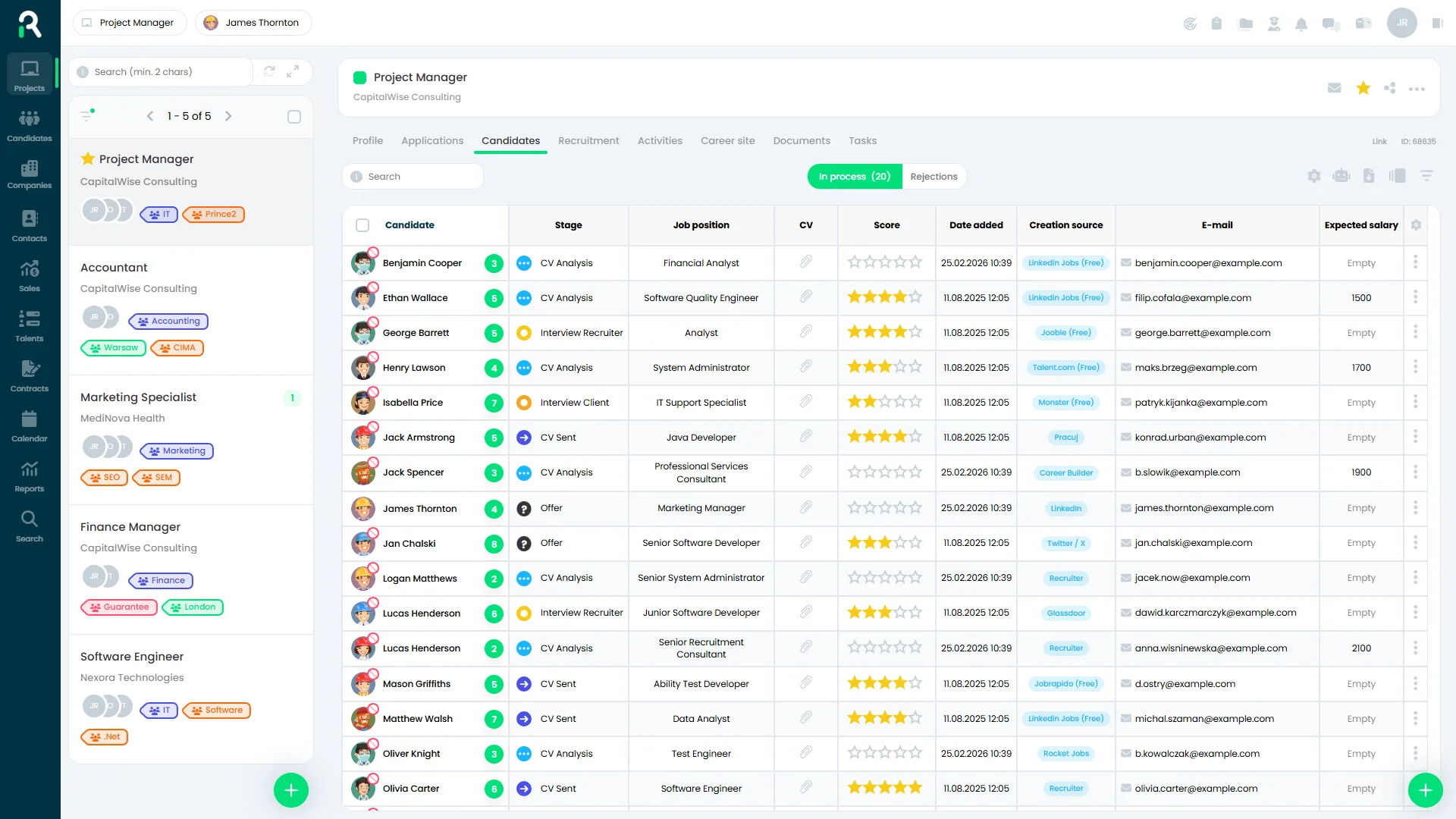
From A to Z: Architecting Talent Acquisition, Distinguishing HRM from Recruitment Software, and Selecting High-Performance Systems.
Recruitment has evolved from being merely an administrative task to becoming a vital component of business strategy. In this comprehensive guide, we elucidate what an Applicant Tracking System (ATS) is, how it differs from recruitment and HRM systems, its operation within HR models, agencies, and contracting, and the secure transition process. We delve into the role of AI in recruitment, integrations, implementation costs, and the most common pitfalls when selecting software. This is a practical compendium for companies seeking to manage recruitment in an organised, measurable, and scalable manner.
Discover More
Acquiring Talent
27 Feb 2026
Have recruiters ever truly trusted candidates?
In recent months, there's been a growing sentiment that recruitment is entering a 'trust crisis.'
Discover More

Recruitment Process
1 Dec 2025
Even in a weaker market, contracting should be your most predictable revenue stream - so why is it still being managed in Excel?
Even in a weaker market, contracting should be your most predictable revenue stream - so why is it still being managed in Excel?
Discover More
Applicant Tracking System
5 Mar 2026
From A to Z: Architecting Talent Acquisition, Distinguishing HRM from Recruitment Software, and Selecting High-Performance Systems.
Recruitment has evolved from being merely an administrative task to becoming a vital component of business strategy. In this comprehensive guide, we elucidate what an Applicant Tracking System (ATS) is, how it differs from recruitment and HRM systems, its operation within HR models, agencies, and contracting, and the secure transition process. We delve into the role of AI in recruitment, integrations, implementation costs, and the most common pitfalls when selecting software. This is a practical compendium for companies seeking to manage recruitment in an organised, measurable, and scalable manner.
Discover More
Acquiring Talent
27 Feb 2026
Have recruiters ever truly trusted candidates?
In recent months, there's been a growing sentiment that recruitment is entering a 'trust crisis.'
Discover More