🔥
Contracting
Explore the new contractor management module
🔥
Contracting
Explore the new contractor management module
🔥
Contracting
Explore the new contractor management module
🔥
Contracting
Explore the new contractor management module

Last updated:
Recruitment Database. How to nurture the most crucial element of a recruitment agency?

HR Analytics

Iwo Paliszewski
What is the most important asset of a recruitment agency or an HR department? You might think it's people, technology, or perhaps client relationships. However, for many, the heart of their operation is the candidate database. This talent repository is often what distinguishes one agency from another. Imagine having a candidate ready for a role as soon as a client describes their ideal employee - that's the power of a great database.
Our top 3 assets for any recruitment agency:
Candidate Database: A well-curated, up-to-date, and extensive database of qualified candidates is crucial for quickly matching talent to client needs. It enables agencies to respond swiftly to client inquiries and fill positions faster.
Technology: Advanced tools and systems, such as Applicant Tracking Systems (ATS) and CRM software, are essential for managing and optimising recruitment processes, tracking candidate activities, and streamlining operations.
Skilled Recruiters: The skills, experience, and network of your recruitment team are of fundamental importance. Skilled recruiters can identify talent, understand client needs, and effectively navigate the complexities of the recruitment process.
In summary, while skilled staff, technology, client relationships, and market knowledge are important, it is the candidate database that is the key resource driving the success and effectiveness of a recruitment agency.
In today's article, we will focus on data quality and how to maintain and update it. This investment could be a critical factor for your business strategy.
Data quality and accuracy can be challenging and time-consuming to achieve and maintain. Fortunately, there are many data quality tools and techniques that can help automate, simplify, and enhance the processes of maintaining data quality and accuracy. Data quality techniques are methods that can help improve outcomes regarding data quality. By utilising data quality techniques, you can leverage technology and best practices to ensure data quality and accuracy in HR software.
Data is crucial for recruitment agencies for several reasons:
Streamlined sourcing: It helps identify the best candidate search channels and provides insights into the market to effectively focus efforts.
Better Match: Analyzing candidates' skills and experience ensures a better match to job requirements and predicts candidate success.
Process Efficiency: Data enables task automation and workflow optimization, speeding up recruitment.
Client Management: Data insights allow for personalised solutions and tracking client collaborations.
Candidate Experience: Data personalisation and feedback gathering enhance the candidate experience.
Strategic Decision Making: Trend analysis and forecasting support strategic planning and resource allocation.
Regulatory Compliance: Ensures recruitment practices align with regulatory standards and reduces legal risks.
Performance Metrics: Tracks KPI indicators such as time-to-hire and cost-per-hire, providing transparency and accountability.
Competitive Edge: Data-driven insights help agencies understand their market position and innovate.
Cost-effectiveness: Optimises resource allocation and budget management by identifying effective strategies and channels.
Maintaining high data quality in Customer Relationship Management (CRM) and/or Applicant Tracking Systems (ATS) is crucial for effective decision-making and efficient business operations.
Here are the key actions to ensure high data quality in CRM/ATS:
1. Data Entry Standards
Establish data entry guidelines. Define and document comprehensive data entry guidelines covering standards for formatting names, addresses, phone numbers, and email addresses. These guidelines should address common scenarios and exceptions, ensuring all users conform to a uniform standard. For example, specify handling of international phone numbers, address format differences, and name prefixes and suffixes. This consistency minimizes errors and improves data reliability.
Mandatory Fields. Configure your CRM/ATS to include mandatory fields for critical data points such as contact names, job titles, email addresses, phone numbers, and company information. This practice ensures that important information is always captured during data entry, reducing the likelihood of incomplete records. Additionally, consider using conditional mandatory fields that adapt based on previous data inputs, ensuring only relevant fields are required, thereby streamlining the data entry process.
2. Regular Data Cleaning
Periodic data audits and duplicate management. Implement a schedule for conducting comprehensive data audits to systematically identify and correct inaccurate, duplicated, incomplete, or outdated information. Use advanced data profiling tools to assess data quality, uncover hidden issues, and generate detailed reports. Engage cross-functional teams to review audit results, prioritize corrections, and implement changes. Such a proactive approach ensures CRM/ATS data remains accurate, reliable, and relevant, ultimately enhancing decision-making processes and operational efficiency.
There are several tools available to facilitate the data cleaning process, providing automated and user-friendly solutions. Some popular data cleansing tools include
Trifacta: Known for its data preparation and cleansing capabilities.
OpenRefine: A powerful tool for working with messy data, including cleansing and transformation.
Informatica Data Quality: Provides comprehensive data cleansing, profiling, and validation features.
Talend Data Preparation: Offers an easy-to-use interface for data cleaning and preparation.
Data Ladder: Focuses on data matching, deduplication, and cleansing processes.
By implementing data cleaning practices, organisations can significantly improve the quality of their data, ensuring it is fit for purpose and capable of supporting accurate analysis and decision-making.
3. User Training and Access Control
Comprehensive training. Develop and deliver a continuous training programme for all CRM users, focusing on data entry best practices, the importance of maintaining data quality, and the proper use of CRM/ATS features. Use various training methods, such as interactive workshops, webinars, e-learning modules, and hands-on sessions, to cater to different learning styles. Incorporate real-life scenarios and examples to illustrate the impact of poor data quality and emphasize the benefits of accurate data management. Regularly update training materials to reflect new features, updates, and emerging best practices, ensuring that users remain proficient and informed.
Access control. Implement robust access control measures in the CRM/ATS to restrict data entry and editing rights to authorized personnel only. Define user roles and permissions based on job functions and responsibilities, ensuring users have the appropriate level of access required for their tasks. Regularly review and update access rights to reflect changes in team structures or job roles. Additionally, implement audit trails to monitor user activity, providing insight into who accessed or modified data and when. This helps mitigate data corruption risks, enhances security, and maintains data integrity.
4. Data Enrichment
Data enrichment. Regularly enrich your CRM/ATS data by integrating additional information from credible external sources. This could include demographic data, social media profiles, company information, and industry data to provide a more comprehensive view of contacts and accounts. By enriching your data, you can gain deeper insights into customer behaviours, preferences, and potential needs, enabling more personalized and effective marketing and sales strategies. Partner with trusted data providers to ensure the accuracy and relevance of enriched information.
Automated data enrichment. Utilize automated data enrichment tools to continually update and augment CRM/ATS data with new and pertinent information. These tools can automatically pull fresh data from various sources, such as social media platforms, business directories, and financial databases. Implement real-time enrichment processes that update records as new data becomes available, ensuring CRM/ATS accuracy and currency. Automated data enrichment reduces the manual effort required to maintain data and ensures that your team always has access to the latest and most comprehensive insights for informed decision-making.
Popular data enrichment tools:
Clearbit: Enriches customer data with detailed company information and contact details.
ZoomInfo: Provides extensive B2B data for sales and marketing enrichment.
Data.com: Offers business and contact data to enrich CRM systems.
Experian Data Quality: Enriches data with demographic, firmographic, and geospatial information.
InsideView: Provides enriched data for market analysis and sales enablement.
Data enrichment is crucial for organisations looking to maximize the value of their data. By integrating additional information, businesses can gain deeper insights, improve decision-making, and execute more effective strategies.
5. Monitoring and Reporting
Data quality metrics. Establish and monitor key data quality metrics to ensure the integrity of CRM/ATS data. These metrics should include accuracy, completeness, consistency, timeliness, and validity. Accuracy measures how correctly data reflects actual values; completeness assesses whether all required information is present; consistency checks for uniformity across different data sets; timeliness ensures data is up to date; and validity confirms data conforms to defined formats and standards. Regularly reviewing these metrics helps identify discrepancies and areas requiring attention, maintaining high standards of data quality.
Regular reporting. Generate and review regular data quality reports to track the status of CRM/ATS data. These reports should provide insights into data quality trends, highlight any anomalies, and indicate areas needing improvement. Use visualizations, such as charts and graphs, to make data easily understandable for stakeholders. Share these reports with relevant teams to support accountability and promote a data quality culture. Additionally, set up automated alerts for significant data quality issues to enable prompt remedial action, ensuring continuous improvement in data management practices.
6. User Feedback and Continuous Improvement
User feedback. Establish a robust feedback loop that allows users to easily report data quality issues and suggest improvements. Implement user-friendly channels such as online forms, dedicated email addresses, and feedback widgets within the CRM/ATS to capture this information. Encourage users to share their experiences and challenges with data entry, accuracy, and usability. Actively engage with users to understand their pain points and gather actionable insights, fostering a collaborative environment where continuous feedback is valued and used to improve data quality.
Continuous improvement. Regularly review and update your data quality strategies based on user feedback, technological advancements, and evolving business needs. Conduct periodic assessments to evaluate the effectiveness of current data management practices and identify areas for enhancement. Integrate feedback into your data governance framework and prioritize updates that address the most pressing issues reported by users. Stay informed about industry best practices and new technologies that can further enhance data quality. By committing to a cycle of continuous improvement, you ensure CRM data remains accurate, reliable, and aligned with organizational goals.
7. Data Governance and Stewardship
Data governance policies. Develop and enforce comprehensive data governance policies that clearly define how data should be managed, accessed, and shared within the organization. These policies should cover data classification, security protocols, access control, data lifecycle management, and compliance with relevant regulations such as GDPR or CCPA. Establish clear roles and responsibilities for data governance, ensuring everyone on the team understands their role in maintaining data integrity. Regularly review and update these policies to align with changing regulatory requirements, technological advancements, and business objectives, ensuring data governance remains effective and relevant.
Data stewardship. Assign dedicated data stewards responsible for overseeing data quality and ensuring compliance with established standards. Data stewards should act as data custodians, monitoring data accuracy, consistency, and completeness. They should facilitate cross-departmental communication to resolve data-related issues, provide training on data management best practices, and support data quality initiatives. By having accountable data stewards, you create a structured approach to managing data quality, fostering a culture of accountability and continuous improvement within the organisation.
Implementing the proposed data quality techniques ensures that organisations have reliable, accurate, and relevant data for decision-making, analysis, and reporting. By the way, transitioning to a new recruitment system is also a great opportunity to cleanse and organise your data.
Want to know more about this? Write to us :) Use the contact form! or schedule a meeting in our calendar, don't wait 😊


News & Updates
Stay up-to-date with the latest innovations, features, and tips about Recruitify!
By providing your email address within the newsletter sign-up form, you confirm its processing to send marketing information regarding the Administrator’s products and services. The Administrator of your personal data processed for the abovementioned purposes is Recruitify Spółka z o.o., based in Warsaw, Poland (KRS 0000709889). For more information on the principles of personal data processing and the rights of data subjects, please check the Privacy Policy.

Last updated:
Recruitment Database. How to nurture the most crucial element of a recruitment agency?
HR Analytics
Iwo Paliszewski
What is the most important asset of a recruitment agency or an HR department? You might think it's people, technology, or perhaps client relationships. However, for many, the heart of their operation is the candidate database. This talent repository is often what distinguishes one agency from another. Imagine having a candidate ready for a role as soon as a client describes their ideal employee - that's the power of a great database.
Our top 3 assets for any recruitment agency:
Candidate Database: A well-curated, up-to-date, and extensive database of qualified candidates is crucial for quickly matching talent to client needs. It enables agencies to respond swiftly to client inquiries and fill positions faster.
Technology: Advanced tools and systems, such as Applicant Tracking Systems (ATS) and CRM software, are essential for managing and optimising recruitment processes, tracking candidate activities, and streamlining operations.
Skilled Recruiters: The skills, experience, and network of your recruitment team are of fundamental importance. Skilled recruiters can identify talent, understand client needs, and effectively navigate the complexities of the recruitment process.
In summary, while skilled staff, technology, client relationships, and market knowledge are important, it is the candidate database that is the key resource driving the success and effectiveness of a recruitment agency.
In today's article, we will focus on data quality and how to maintain and update it. This investment could be a critical factor for your business strategy.
Data quality and accuracy can be challenging and time-consuming to achieve and maintain. Fortunately, there are many data quality tools and techniques that can help automate, simplify, and enhance the processes of maintaining data quality and accuracy. Data quality techniques are methods that can help improve outcomes regarding data quality. By utilising data quality techniques, you can leverage technology and best practices to ensure data quality and accuracy in HR software.
Data is crucial for recruitment agencies for several reasons:
Streamlined sourcing: It helps identify the best candidate search channels and provides insights into the market to effectively focus efforts.
Better Match: Analyzing candidates' skills and experience ensures a better match to job requirements and predicts candidate success.
Process Efficiency: Data enables task automation and workflow optimization, speeding up recruitment.
Client Management: Data insights allow for personalised solutions and tracking client collaborations.
Candidate Experience: Data personalisation and feedback gathering enhance the candidate experience.
Strategic Decision Making: Trend analysis and forecasting support strategic planning and resource allocation.
Regulatory Compliance: Ensures recruitment practices align with regulatory standards and reduces legal risks.
Performance Metrics: Tracks KPI indicators such as time-to-hire and cost-per-hire, providing transparency and accountability.
Competitive Edge: Data-driven insights help agencies understand their market position and innovate.
Cost-effectiveness: Optimises resource allocation and budget management by identifying effective strategies and channels.
Maintaining high data quality in Customer Relationship Management (CRM) and/or Applicant Tracking Systems (ATS) is crucial for effective decision-making and efficient business operations.
Here are the key actions to ensure high data quality in CRM/ATS:
1. Data Entry Standards
Establish data entry guidelines. Define and document comprehensive data entry guidelines covering standards for formatting names, addresses, phone numbers, and email addresses. These guidelines should address common scenarios and exceptions, ensuring all users conform to a uniform standard. For example, specify handling of international phone numbers, address format differences, and name prefixes and suffixes. This consistency minimizes errors and improves data reliability.
Mandatory Fields. Configure your CRM/ATS to include mandatory fields for critical data points such as contact names, job titles, email addresses, phone numbers, and company information. This practice ensures that important information is always captured during data entry, reducing the likelihood of incomplete records. Additionally, consider using conditional mandatory fields that adapt based on previous data inputs, ensuring only relevant fields are required, thereby streamlining the data entry process.
2. Regular Data Cleaning
Periodic data audits and duplicate management. Implement a schedule for conducting comprehensive data audits to systematically identify and correct inaccurate, duplicated, incomplete, or outdated information. Use advanced data profiling tools to assess data quality, uncover hidden issues, and generate detailed reports. Engage cross-functional teams to review audit results, prioritize corrections, and implement changes. Such a proactive approach ensures CRM/ATS data remains accurate, reliable, and relevant, ultimately enhancing decision-making processes and operational efficiency.
There are several tools available to facilitate the data cleaning process, providing automated and user-friendly solutions. Some popular data cleansing tools include
Trifacta: Known for its data preparation and cleansing capabilities.
OpenRefine: A powerful tool for working with messy data, including cleansing and transformation.
Informatica Data Quality: Provides comprehensive data cleansing, profiling, and validation features.
Talend Data Preparation: Offers an easy-to-use interface for data cleaning and preparation.
Data Ladder: Focuses on data matching, deduplication, and cleansing processes.
By implementing data cleaning practices, organisations can significantly improve the quality of their data, ensuring it is fit for purpose and capable of supporting accurate analysis and decision-making.
3. User Training and Access Control
Comprehensive training. Develop and deliver a continuous training programme for all CRM users, focusing on data entry best practices, the importance of maintaining data quality, and the proper use of CRM/ATS features. Use various training methods, such as interactive workshops, webinars, e-learning modules, and hands-on sessions, to cater to different learning styles. Incorporate real-life scenarios and examples to illustrate the impact of poor data quality and emphasize the benefits of accurate data management. Regularly update training materials to reflect new features, updates, and emerging best practices, ensuring that users remain proficient and informed.
Access control. Implement robust access control measures in the CRM/ATS to restrict data entry and editing rights to authorized personnel only. Define user roles and permissions based on job functions and responsibilities, ensuring users have the appropriate level of access required for their tasks. Regularly review and update access rights to reflect changes in team structures or job roles. Additionally, implement audit trails to monitor user activity, providing insight into who accessed or modified data and when. This helps mitigate data corruption risks, enhances security, and maintains data integrity.
4. Data Enrichment
Data enrichment. Regularly enrich your CRM/ATS data by integrating additional information from credible external sources. This could include demographic data, social media profiles, company information, and industry data to provide a more comprehensive view of contacts and accounts. By enriching your data, you can gain deeper insights into customer behaviours, preferences, and potential needs, enabling more personalized and effective marketing and sales strategies. Partner with trusted data providers to ensure the accuracy and relevance of enriched information.
Automated data enrichment. Utilize automated data enrichment tools to continually update and augment CRM/ATS data with new and pertinent information. These tools can automatically pull fresh data from various sources, such as social media platforms, business directories, and financial databases. Implement real-time enrichment processes that update records as new data becomes available, ensuring CRM/ATS accuracy and currency. Automated data enrichment reduces the manual effort required to maintain data and ensures that your team always has access to the latest and most comprehensive insights for informed decision-making.
Popular data enrichment tools:
Clearbit: Enriches customer data with detailed company information and contact details.
ZoomInfo: Provides extensive B2B data for sales and marketing enrichment.
Data.com: Offers business and contact data to enrich CRM systems.
Experian Data Quality: Enriches data with demographic, firmographic, and geospatial information.
InsideView: Provides enriched data for market analysis and sales enablement.
Data enrichment is crucial for organisations looking to maximize the value of their data. By integrating additional information, businesses can gain deeper insights, improve decision-making, and execute more effective strategies.
5. Monitoring and Reporting
Data quality metrics. Establish and monitor key data quality metrics to ensure the integrity of CRM/ATS data. These metrics should include accuracy, completeness, consistency, timeliness, and validity. Accuracy measures how correctly data reflects actual values; completeness assesses whether all required information is present; consistency checks for uniformity across different data sets; timeliness ensures data is up to date; and validity confirms data conforms to defined formats and standards. Regularly reviewing these metrics helps identify discrepancies and areas requiring attention, maintaining high standards of data quality.
Regular reporting. Generate and review regular data quality reports to track the status of CRM/ATS data. These reports should provide insights into data quality trends, highlight any anomalies, and indicate areas needing improvement. Use visualizations, such as charts and graphs, to make data easily understandable for stakeholders. Share these reports with relevant teams to support accountability and promote a data quality culture. Additionally, set up automated alerts for significant data quality issues to enable prompt remedial action, ensuring continuous improvement in data management practices.
6. User Feedback and Continuous Improvement
User feedback. Establish a robust feedback loop that allows users to easily report data quality issues and suggest improvements. Implement user-friendly channels such as online forms, dedicated email addresses, and feedback widgets within the CRM/ATS to capture this information. Encourage users to share their experiences and challenges with data entry, accuracy, and usability. Actively engage with users to understand their pain points and gather actionable insights, fostering a collaborative environment where continuous feedback is valued and used to improve data quality.
Continuous improvement. Regularly review and update your data quality strategies based on user feedback, technological advancements, and evolving business needs. Conduct periodic assessments to evaluate the effectiveness of current data management practices and identify areas for enhancement. Integrate feedback into your data governance framework and prioritize updates that address the most pressing issues reported by users. Stay informed about industry best practices and new technologies that can further enhance data quality. By committing to a cycle of continuous improvement, you ensure CRM data remains accurate, reliable, and aligned with organizational goals.
7. Data Governance and Stewardship
Data governance policies. Develop and enforce comprehensive data governance policies that clearly define how data should be managed, accessed, and shared within the organization. These policies should cover data classification, security protocols, access control, data lifecycle management, and compliance with relevant regulations such as GDPR or CCPA. Establish clear roles and responsibilities for data governance, ensuring everyone on the team understands their role in maintaining data integrity. Regularly review and update these policies to align with changing regulatory requirements, technological advancements, and business objectives, ensuring data governance remains effective and relevant.
Data stewardship. Assign dedicated data stewards responsible for overseeing data quality and ensuring compliance with established standards. Data stewards should act as data custodians, monitoring data accuracy, consistency, and completeness. They should facilitate cross-departmental communication to resolve data-related issues, provide training on data management best practices, and support data quality initiatives. By having accountable data stewards, you create a structured approach to managing data quality, fostering a culture of accountability and continuous improvement within the organisation.
Implementing the proposed data quality techniques ensures that organisations have reliable, accurate, and relevant data for decision-making, analysis, and reporting. By the way, transitioning to a new recruitment system is also a great opportunity to cleanse and organise your data.
Want to know more about this? Write to us :) Use the contact form! or schedule a meeting in our calendar, don't wait 😊
News & Updates
Stay up-to-date with the latest innovations, features, and tips about Recruitify!
By providing your email address within the newsletter sign-up form, you confirm its processing to send marketing information regarding the Administrator’s products and services. The Administrator of your personal data processed for the abovementioned purposes is Recruitify Spółka z o.o., based in Warsaw, Poland (KRS 0000709889). For more information on the principles of personal data processing and the rights of data subjects, please check the Privacy Policy.
Last updated:
Recruitment Database. How to nurture the most crucial element of a recruitment agency?
HR Analytics
Iwo Paliszewski
What is the most important asset of a recruitment agency or an HR department? You might think it's people, technology, or perhaps client relationships. However, for many, the heart of their operation is the candidate database. This talent repository is often what distinguishes one agency from another. Imagine having a candidate ready for a role as soon as a client describes their ideal employee - that's the power of a great database.
Our top 3 assets for any recruitment agency:
Candidate Database: A well-curated, up-to-date, and extensive database of qualified candidates is crucial for quickly matching talent to client needs. It enables agencies to respond swiftly to client inquiries and fill positions faster.
Technology: Advanced tools and systems, such as Applicant Tracking Systems (ATS) and CRM software, are essential for managing and optimising recruitment processes, tracking candidate activities, and streamlining operations.
Skilled Recruiters: The skills, experience, and network of your recruitment team are of fundamental importance. Skilled recruiters can identify talent, understand client needs, and effectively navigate the complexities of the recruitment process.
In summary, while skilled staff, technology, client relationships, and market knowledge are important, it is the candidate database that is the key resource driving the success and effectiveness of a recruitment agency.
In today's article, we will focus on data quality and how to maintain and update it. This investment could be a critical factor for your business strategy.
Data quality and accuracy can be challenging and time-consuming to achieve and maintain. Fortunately, there are many data quality tools and techniques that can help automate, simplify, and enhance the processes of maintaining data quality and accuracy. Data quality techniques are methods that can help improve outcomes regarding data quality. By utilising data quality techniques, you can leverage technology and best practices to ensure data quality and accuracy in HR software.
Data is crucial for recruitment agencies for several reasons:
Streamlined sourcing: It helps identify the best candidate search channels and provides insights into the market to effectively focus efforts.
Better Match: Analyzing candidates' skills and experience ensures a better match to job requirements and predicts candidate success.
Process Efficiency: Data enables task automation and workflow optimization, speeding up recruitment.
Client Management: Data insights allow for personalised solutions and tracking client collaborations.
Candidate Experience: Data personalisation and feedback gathering enhance the candidate experience.
Strategic Decision Making: Trend analysis and forecasting support strategic planning and resource allocation.
Regulatory Compliance: Ensures recruitment practices align with regulatory standards and reduces legal risks.
Performance Metrics: Tracks KPI indicators such as time-to-hire and cost-per-hire, providing transparency and accountability.
Competitive Edge: Data-driven insights help agencies understand their market position and innovate.
Cost-effectiveness: Optimises resource allocation and budget management by identifying effective strategies and channels.
Maintaining high data quality in Customer Relationship Management (CRM) and/or Applicant Tracking Systems (ATS) is crucial for effective decision-making and efficient business operations.
Here are the key actions to ensure high data quality in CRM/ATS:
1. Data Entry Standards
Establish data entry guidelines. Define and document comprehensive data entry guidelines covering standards for formatting names, addresses, phone numbers, and email addresses. These guidelines should address common scenarios and exceptions, ensuring all users conform to a uniform standard. For example, specify handling of international phone numbers, address format differences, and name prefixes and suffixes. This consistency minimizes errors and improves data reliability.
Mandatory Fields. Configure your CRM/ATS to include mandatory fields for critical data points such as contact names, job titles, email addresses, phone numbers, and company information. This practice ensures that important information is always captured during data entry, reducing the likelihood of incomplete records. Additionally, consider using conditional mandatory fields that adapt based on previous data inputs, ensuring only relevant fields are required, thereby streamlining the data entry process.
2. Regular Data Cleaning
Periodic data audits and duplicate management. Implement a schedule for conducting comprehensive data audits to systematically identify and correct inaccurate, duplicated, incomplete, or outdated information. Use advanced data profiling tools to assess data quality, uncover hidden issues, and generate detailed reports. Engage cross-functional teams to review audit results, prioritize corrections, and implement changes. Such a proactive approach ensures CRM/ATS data remains accurate, reliable, and relevant, ultimately enhancing decision-making processes and operational efficiency.
There are several tools available to facilitate the data cleaning process, providing automated and user-friendly solutions. Some popular data cleansing tools include
Trifacta: Known for its data preparation and cleansing capabilities.
OpenRefine: A powerful tool for working with messy data, including cleansing and transformation.
Informatica Data Quality: Provides comprehensive data cleansing, profiling, and validation features.
Talend Data Preparation: Offers an easy-to-use interface for data cleaning and preparation.
Data Ladder: Focuses on data matching, deduplication, and cleansing processes.
By implementing data cleaning practices, organisations can significantly improve the quality of their data, ensuring it is fit for purpose and capable of supporting accurate analysis and decision-making.
3. User Training and Access Control
Comprehensive training. Develop and deliver a continuous training programme for all CRM users, focusing on data entry best practices, the importance of maintaining data quality, and the proper use of CRM/ATS features. Use various training methods, such as interactive workshops, webinars, e-learning modules, and hands-on sessions, to cater to different learning styles. Incorporate real-life scenarios and examples to illustrate the impact of poor data quality and emphasize the benefits of accurate data management. Regularly update training materials to reflect new features, updates, and emerging best practices, ensuring that users remain proficient and informed.
Access control. Implement robust access control measures in the CRM/ATS to restrict data entry and editing rights to authorized personnel only. Define user roles and permissions based on job functions and responsibilities, ensuring users have the appropriate level of access required for their tasks. Regularly review and update access rights to reflect changes in team structures or job roles. Additionally, implement audit trails to monitor user activity, providing insight into who accessed or modified data and when. This helps mitigate data corruption risks, enhances security, and maintains data integrity.
4. Data Enrichment
Data enrichment. Regularly enrich your CRM/ATS data by integrating additional information from credible external sources. This could include demographic data, social media profiles, company information, and industry data to provide a more comprehensive view of contacts and accounts. By enriching your data, you can gain deeper insights into customer behaviours, preferences, and potential needs, enabling more personalized and effective marketing and sales strategies. Partner with trusted data providers to ensure the accuracy and relevance of enriched information.
Automated data enrichment. Utilize automated data enrichment tools to continually update and augment CRM/ATS data with new and pertinent information. These tools can automatically pull fresh data from various sources, such as social media platforms, business directories, and financial databases. Implement real-time enrichment processes that update records as new data becomes available, ensuring CRM/ATS accuracy and currency. Automated data enrichment reduces the manual effort required to maintain data and ensures that your team always has access to the latest and most comprehensive insights for informed decision-making.
Popular data enrichment tools:
Clearbit: Enriches customer data with detailed company information and contact details.
ZoomInfo: Provides extensive B2B data for sales and marketing enrichment.
Data.com: Offers business and contact data to enrich CRM systems.
Experian Data Quality: Enriches data with demographic, firmographic, and geospatial information.
InsideView: Provides enriched data for market analysis and sales enablement.
Data enrichment is crucial for organisations looking to maximize the value of their data. By integrating additional information, businesses can gain deeper insights, improve decision-making, and execute more effective strategies.
5. Monitoring and Reporting
Data quality metrics. Establish and monitor key data quality metrics to ensure the integrity of CRM/ATS data. These metrics should include accuracy, completeness, consistency, timeliness, and validity. Accuracy measures how correctly data reflects actual values; completeness assesses whether all required information is present; consistency checks for uniformity across different data sets; timeliness ensures data is up to date; and validity confirms data conforms to defined formats and standards. Regularly reviewing these metrics helps identify discrepancies and areas requiring attention, maintaining high standards of data quality.
Regular reporting. Generate and review regular data quality reports to track the status of CRM/ATS data. These reports should provide insights into data quality trends, highlight any anomalies, and indicate areas needing improvement. Use visualizations, such as charts and graphs, to make data easily understandable for stakeholders. Share these reports with relevant teams to support accountability and promote a data quality culture. Additionally, set up automated alerts for significant data quality issues to enable prompt remedial action, ensuring continuous improvement in data management practices.
6. User Feedback and Continuous Improvement
User feedback. Establish a robust feedback loop that allows users to easily report data quality issues and suggest improvements. Implement user-friendly channels such as online forms, dedicated email addresses, and feedback widgets within the CRM/ATS to capture this information. Encourage users to share their experiences and challenges with data entry, accuracy, and usability. Actively engage with users to understand their pain points and gather actionable insights, fostering a collaborative environment where continuous feedback is valued and used to improve data quality.
Continuous improvement. Regularly review and update your data quality strategies based on user feedback, technological advancements, and evolving business needs. Conduct periodic assessments to evaluate the effectiveness of current data management practices and identify areas for enhancement. Integrate feedback into your data governance framework and prioritize updates that address the most pressing issues reported by users. Stay informed about industry best practices and new technologies that can further enhance data quality. By committing to a cycle of continuous improvement, you ensure CRM data remains accurate, reliable, and aligned with organizational goals.
7. Data Governance and Stewardship
Data governance policies. Develop and enforce comprehensive data governance policies that clearly define how data should be managed, accessed, and shared within the organization. These policies should cover data classification, security protocols, access control, data lifecycle management, and compliance with relevant regulations such as GDPR or CCPA. Establish clear roles and responsibilities for data governance, ensuring everyone on the team understands their role in maintaining data integrity. Regularly review and update these policies to align with changing regulatory requirements, technological advancements, and business objectives, ensuring data governance remains effective and relevant.
Data stewardship. Assign dedicated data stewards responsible for overseeing data quality and ensuring compliance with established standards. Data stewards should act as data custodians, monitoring data accuracy, consistency, and completeness. They should facilitate cross-departmental communication to resolve data-related issues, provide training on data management best practices, and support data quality initiatives. By having accountable data stewards, you create a structured approach to managing data quality, fostering a culture of accountability and continuous improvement within the organisation.
Implementing the proposed data quality techniques ensures that organisations have reliable, accurate, and relevant data for decision-making, analysis, and reporting. By the way, transitioning to a new recruitment system is also a great opportunity to cleanse and organise your data.
Want to know more about this? Write to us :) Use the contact form! or schedule a meeting in our calendar, don't wait 😊
News & Updates
Stay up-to-date with the latest innovations, features, and tips about Recruitify!
By providing your email address within the newsletter sign-up form, you confirm its processing to send marketing information regarding the Administrator’s products and services. The Administrator of your personal data processed for the abovementioned purposes is Recruitify Spółka z o.o., based in Warsaw, Poland (KRS 0000709889). For more information on the principles of personal data processing and the rights of data subjects, please check the Privacy Policy.

Discover More

Recruitment Process
11 Mar 2026
Why does the top candidate often get eliminated during the screening process?
Screening is the stage where a recruiter must swiftly assess whether an individual has the potential to move forward to an interview.
Discover More
Applicant Tracking System
5 Mar 2026
From A to Z: Architecting Talent Acquisition, Distinguishing HRM from Recruitment Software, and Selecting High-Performance Systems.
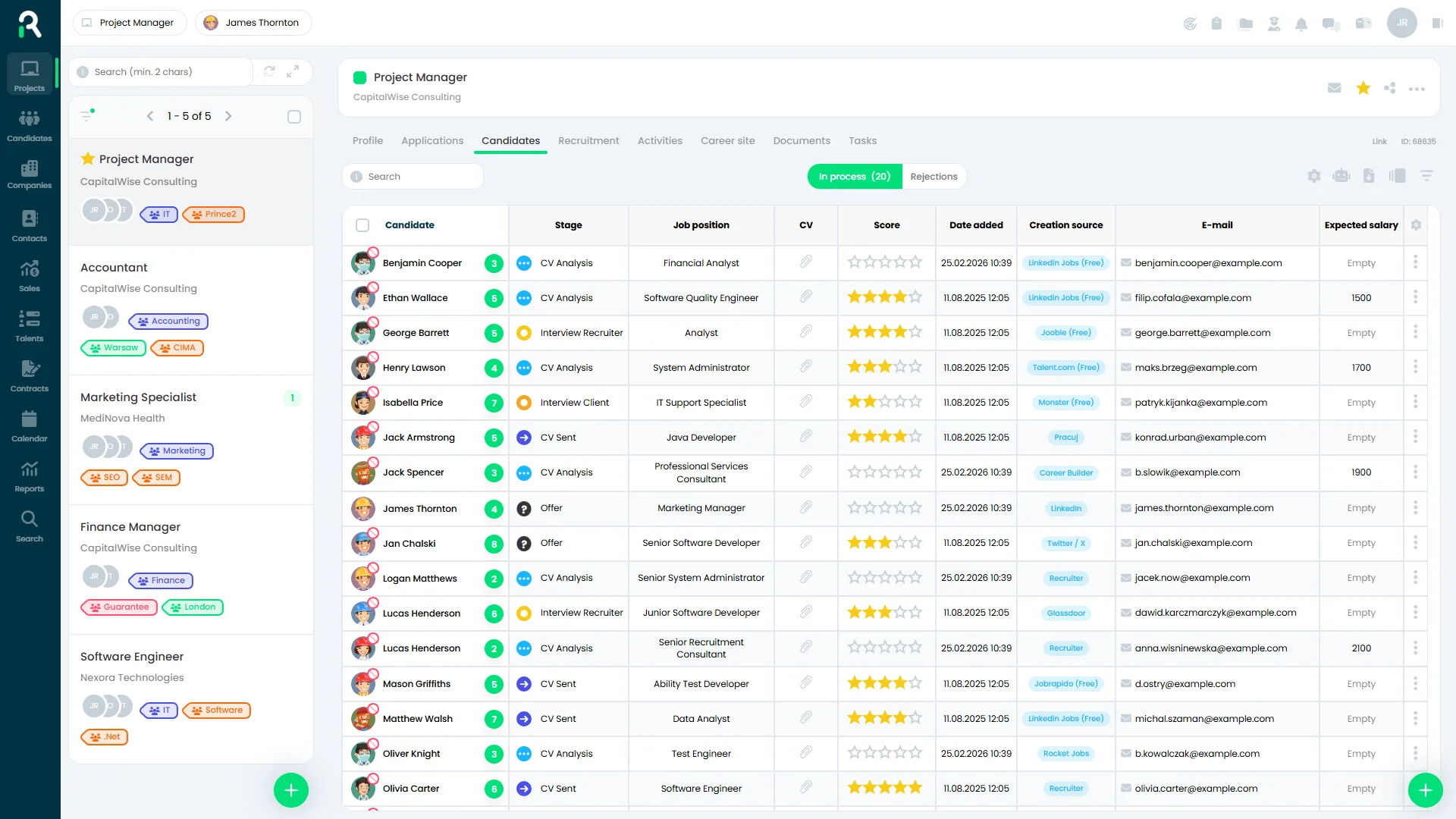
Recruitment has evolved from being merely an administrative task to becoming a vital component of business strategy. In this comprehensive guide, we elucidate what an Applicant Tracking System (ATS) is, how it differs from recruitment and HRM systems, its operation within HR models, agencies, and contracting, and the secure transition process. We delve into the role of AI in recruitment, integrations, implementation costs, and the most common pitfalls when selecting software. This is a practical compendium for companies seeking to manage recruitment in an organised, measurable, and scalable manner.
Discover More

Acquiring Talent
27 Feb 2026
Have recruiters ever truly trusted candidates?
In recent months, there's been a growing sentiment that recruitment is entering a 'trust crisis.'
Discover More
Recruitment Process
11 Mar 2026
Why does the top candidate often get eliminated during the screening process?
Screening is the stage where a recruiter must swiftly assess whether an individual has the potential to move forward to an interview.
Discover More
Applicant Tracking System
5 Mar 2026
From A to Z: Architecting Talent Acquisition, Distinguishing HRM from Recruitment Software, and Selecting High-Performance Systems.
Recruitment has evolved from being merely an administrative task to becoming a vital component of business strategy. In this comprehensive guide, we elucidate what an Applicant Tracking System (ATS) is, how it differs from recruitment and HRM systems, its operation within HR models, agencies, and contracting, and the secure transition process. We delve into the role of AI in recruitment, integrations, implementation costs, and the most common pitfalls when selecting software. This is a practical compendium for companies seeking to manage recruitment in an organised, measurable, and scalable manner.
Discover More