Last updated:
3.4M Applicants Show AI Recruiting Bias: HR Per Job Audit Plan

Innovations

The Recruitify Team
AI screening tools can and do produce measurable bias against protected groups, according to large-scale research from Stanford HAI, and both the National Institute of Standards and Technology and the Equal Employment Opportunity Commission treat this as an active compliance risk rather than a hypothetical one. HR teams should not wait for a complaint to test their systems. The immediate action is straightforward: run per-job audits of AI outputs and keep a human reviewer in the decision loop before any automated screen becomes the final word.
TL;DR:
AI screening tools can produce bias against protected groups that magnifies at scale, leading to thousands of unfair rejections across millions of applications.
Bias often results from training data gaps, proxy variables, shortcut learning, human-AI configuration issues, and interface accessibility failures.
Employers must validate AI models with per-job impact tests, keep detailed records, and maintain human oversight in every hiring stage to stay compliant and reduce bias risks.
Regular audits using metrics like selection rates and disparate impact ratios are essential since pooled statistics can mask role-specific disparities.
Implementing bias mitigation practices, such as anonymized reviews, explainable scoring, and continuous testing, helps build fair and responsible AI-driven hiring workflows.
RecruitifyBuild More Auditable Recruiting WorkflowsRecruitify brings anonymized profiles, GDPR consent management, and a total audit trail into one recruitment platform.Explore Recruitify
Table of Contents
What the Evidence Shows About Scale and Impact
How Bias Arises in AI Recruiting Systems
Legal and Compliance Implications HR Must Consider
A Practical Mitigation Checklist for HR Teams
Measuring and Auditing Bias: Metrics and Method
How Recruitment Platforms Can Reduce Bias in Practice
Where the Industry Still Gets This Wrong
Building Bias-Aware Workflows With Recruitify
Sources
FAQ
What the Evidence Shows About Scale and Impact
The clearest data point comes from a Stanford HAI study tracking 3.4 million people submitting 4 million applications, which applied the EEOC’s four-fifths rule to flag adverse impact across AI screening systems.
A significant proportion of Black and Asian applicants applied to positions where the system discriminated against their group, and researchers estimate that many additional applications would have advanced had under-recommended groups been treated the same as the most-favored group.
Separate experimental simulations reinforce the pattern. Two findings matter operationally for HR:
Pooled, company-wide averages can look acceptable while individual job postings hide serious adverse impact.
The effect compounds at scale: a small per-application bias multiplies into thousands of rejected candidates once a system screens millions of resumes, a pattern researchers describe as algorithmic monoculture.
The downstream cost is not abstract. Lost candidate flow shrinks the applicant pool for a role, and repeated disparities damage both diversity outcomes and an employer’s reputation with the exact talent pools it is trying to reach.
How Bias Arises in AI Recruiting Systems
Bias rarely enters a hiring pipeline through one obvious flaw. It usually comes from several smaller mechanisms stacking together, each traceable if HR knows where to look.
Training-data gaps: models trained on a company’s historical hires inherit whatever demographic skew existed in those past decisions.
Proxy variables: features like zip code, college name, or employment gaps correlate with race, gender, or disability status even when no protected category is used directly.
Shortcut learning: models latch onto spurious patterns, such as a name format or a resume template, instead of job-relevant skills.
Human-AI configuration risks: recruiters who see an AI score before forming their own judgment are prone to automation bias, where they defer to the machine even when their own read of the candidate differs.
Accessibility failure modes: chatbots and video-based assessments can penalize candidates with speech differences, visual impairments, or motor disabilities who cannot interact with the interface as designed.
The NIST AI Risk Management Framework categorizes this range of failure points as systemic, computational, and human-cognitive bias, and recommends managing all three rather than treating bias as a single fixable bug in the model.
Pro Tip: Run an “automation bias drill”: give reviewers a batch of AI-scored resumes and ask them to score independently first, then compare how often their judgment shifted after seeing the AI recommendation.
Legal and Compliance Implications HR Must Consider
Automated screening does not get a pass from anti-discrimination law simply because a vendor built the model. The EEOC’s guidance on AI and automated systems makes job-relatedness the central test: any feature the model relies on must connect to the actual tasks of the role, or the employer risks a disparate-impact claim.
Several obligations follow directly from that principle:
Validate that any AI-derived score or ranking predicts job performance for that specific role, not a generic proxy for “fit.”
Apply the four-fifths rule per job posting, since a system can pass in aggregate while failing for a specific opening.
Provide reasonable accommodations throughout automated stages, since the Americans with Disabilities Act applies to chatbots and video assessments the same way it applies to in-person interviews.
Retain records of model versions, scoring criteria, and audit results, since documentation is what turns a compliance policy into a defensible one.
Employers operating in the European Union face an added layer under the EU’s high-risk AI classification for employment tools, which requires documentation of the system’s logic and human oversight measures before deployment.
A Practical Mitigation Checklist for HR Teams
Reducing bias is not a one-time fix. It is a sequence of checks built into vendor selection, deployment, and daily operations.
Ask vendors for validation evidence before signing: request adverse-impact test results broken down by job category, not company-wide averages.
Require explainability, meaning the vendor can show which features drove a candidate’s score and why.
Keep a human in the loop at every stage where the AI narrows the pool, and give that reviewer authority to override the score.
Use anonymized or blind shortlisting so reviewers see qualifications before names, photos, or other identifying details.
Set and recalibrate score thresholds per role instead of applying one cutoff across every job.
Standardize interview rubrics so human judgment downstream does not reintroduce the same bias the AI was meant to remove.
Log every model version and configuration change, since a silent vendor update can shift outcomes without anyone noticing.
Assign a named owner for bias audits and put a recurring date on the calendar rather than leaving it to whoever remembers.
Pro Tip: Treat every new job requisition as a fresh audit trigger. A model that passed testing for a software engineering role can behave differently once applied to a sales or support posting with a different applicant mix.
Measuring and Auditing Bias: Metrics and Method
Aggregate statistics flatter almost every hiring system. The Stanford HAI research makes this explicit: pooled averages across many job postings can mask adverse impact that shows up clearly once you isolate a single role, which is why per-job evaluation, not company-wide reporting, is the standard HR teams should hold vendors to.
A few metrics do most of the work:
Selection rate by demographic group for each specific job posting.
Disparate impact ratio, comparing the selection rate of one group against the most-favored group, with anything below 80% flagging a four-fifths rule concern.
Equal opportunity and demographic parity, which measure whether qualified candidates from different groups have comparable odds of advancing, though each metric has limits and none captures fairness completely on its own.
A workable audit cycle looks like this: define the sample for the role, establish a baseline selection rate, run the statistical test, remediate any flagged gap, then retest before the next hiring cycle. When an internal audit repeatedly flags the same role or vendor, escalate to an independent third-party review rather than relying solely on internal sign-off.
How Recruitment Platforms Can Reduce Bias in Practice
Platform design choices affect how much bias survives into a shortlist. Blind review features that strip names and photos before human evaluation, paired with contextual matching that evaluates a candidate’s actual tech stack instead of keyword proxies, reduce two of the mechanisms described earlier: proxy-variable leakage and shortcut learning.
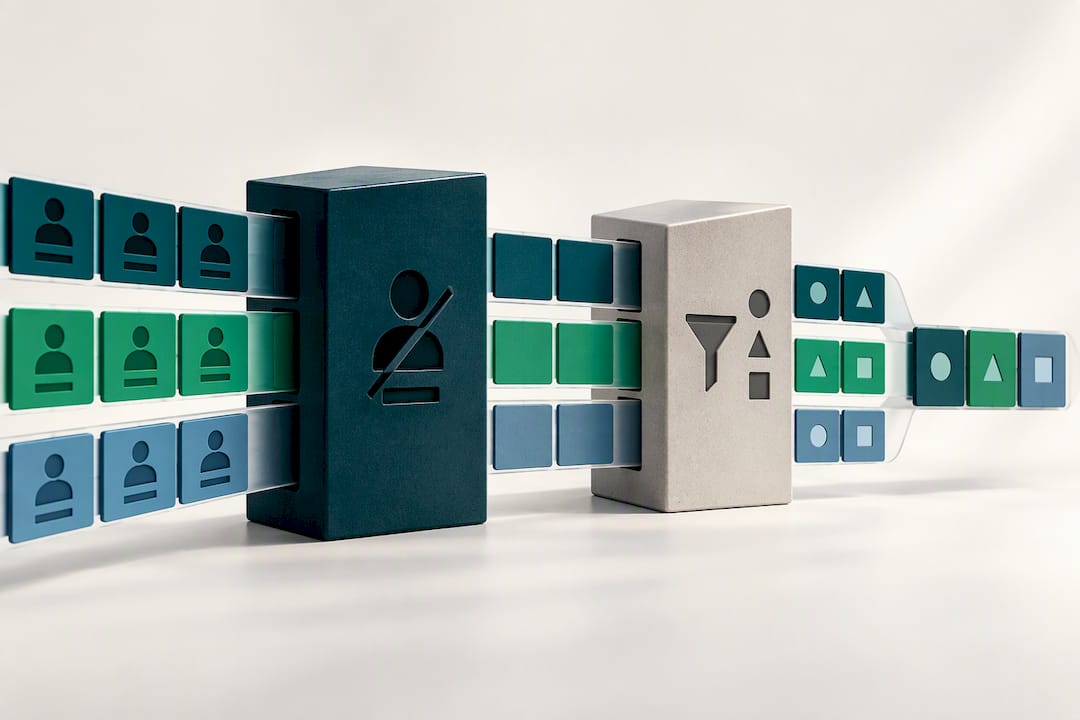
Audit logs and consent management matter for a different reason: they create the documentation trail regulators and internal auditors ask for after the fact. Integrating applicant tracking, sourcing, and workflow automation into one system also lowers the odds of the kind of human error, a missed override, an inconsistent rubric, a lost record, that quietly compounds algorithmic bias.
When evaluating any vendor, ask for anonymized profile options, a clear explanation of scoring logic, and exportable audit trails before signing a contract.
Where the Industry Still Gets This Wrong
The comfortable assumption is that AI removes human bias from hiring. The evidence points the other way: research from the University of Washington found that human reviewers often mirror the biases an AI system already shows, which means an unaudited tool does not neutralize human bias, it launders it. The bigger blind spot is companies that treat a single vendor certification as proof of fairness, when the same tool can pass a general audit and still fail badly on one specific job posting. Fairness in hiring AI is not a fixed property of the software. It is a per-role, ongoing measurement, and the moment HR stops testing is the moment risk starts accumulating quietly.
- Recruitify Team
Building Bias-Aware Workflows With Recruitify
Recruitify gives HR and agency teams the operational pieces this article describes, in one system rather than several disconnected tools.
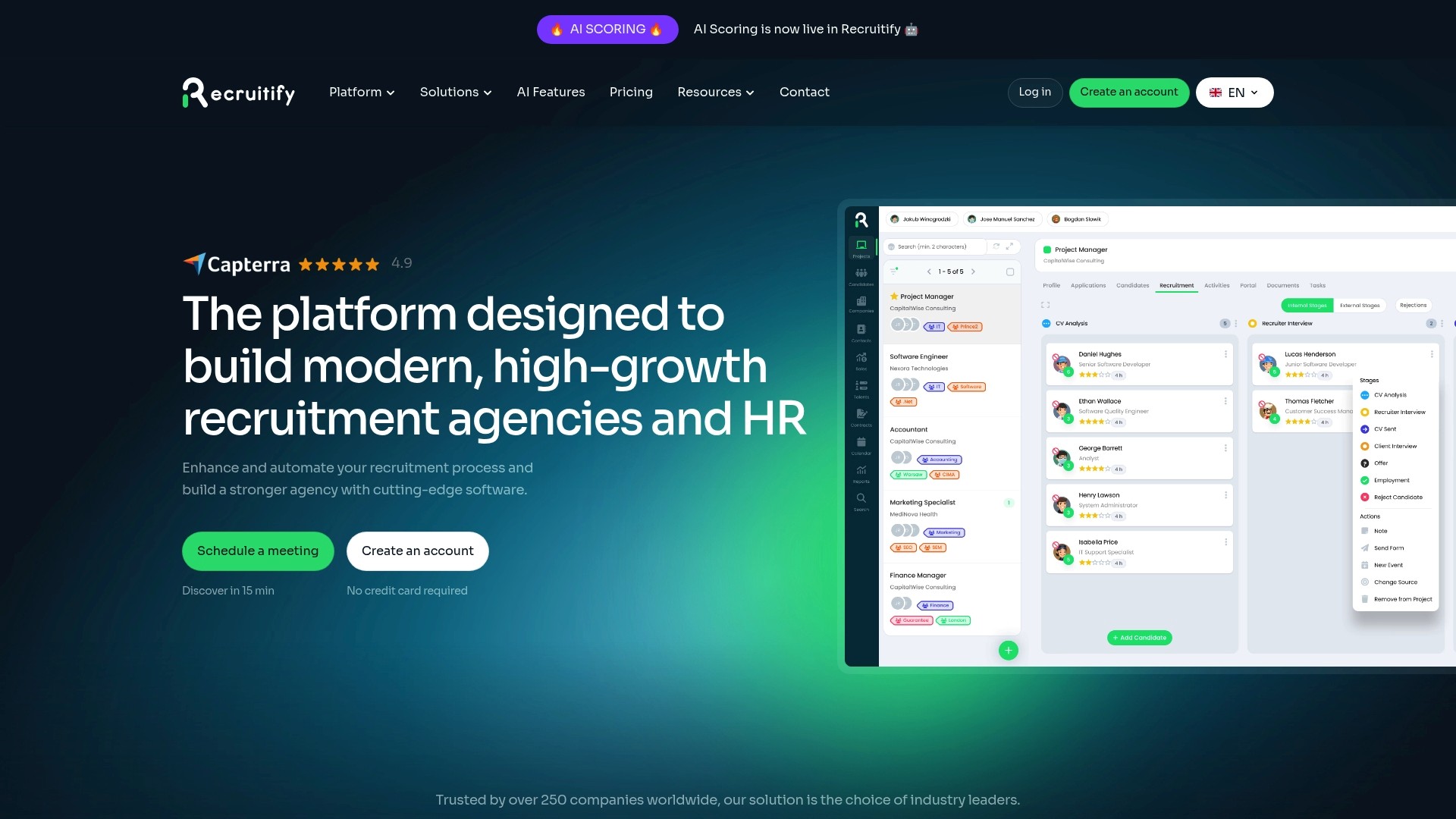
Blind CV AI generates anonymized candidate profiles automatically, supporting blind review without manual redaction.
Contextual Matching AI & Scoring evaluates candidates against project requirements rather than keyword proxies, producing a percentage match score reviewers can question and override.
GDPR consent management with a total audit trail gives every record digital proof, which supports the documentation regulators expect.
Workflow automation across the ATS and CRM reduces the manual handoffs where inconsistent rubrics and human error tend to creep in.
Teams that want to see these controls in a live workflow can review plans and pricing, starting with the HR Team plan at €69 per month per user or the Recruitment Agencies plan at €79 per month per user, both listed on the pricing page.
Sources
AI Hiring Tools Can Yield Racial Bias and Systemic Rejection | Stanford HAI
Artificial Intelligence Risk Management Framework: Generative Artificial Intelligence Profile
EEOC meeting materials on navigating employment discrimination, AI, and automated systems
FAQ
Does AI actually cause bias in hiring, or just reflect it?
AI screening systems can introduce new bias and amplify existing patterns from historical hiring data. Stanford HAI research found that 26% of Black applicants and 15% of Asian applicants applied to roles where the system discriminated against their group, even when the training data reflected past human decisions rather than intentional discrimination.
What is the four-fifths rule and why does it matter?
It should be applied per job posting rather than as a company-wide average, since pooled statistics can hide the exact disparities the rule is meant to catch.
Are employers legally responsible for bias in a vendor’s AI tool?
Yes. EEOC guidance holds employers accountable for validating that any automated selection tool is job-related, regardless of who built it, and the ADA requires reasonable accommodations throughout automated hiring stages.
How often should HR audit its AI recruiting tools?
Audits should run at least once per hiring cycle for each job category, since bias patterns can differ by role even within the same system. Escalating to an independent third-party audit is worth considering whenever internal testing repeatedly flags the same position or vendor.
Can human reviewers reduce bias introduced by AI?
Human oversight helps only when it is structured, since unstructured review can lead reviewers to mirror the AI’s own biases rather than correct them, according to findings from the University of Washington. Independent scoring before viewing AI recommendations, paired with standardized rubrics, gives human review a better chance of catching what the model missed.
Recommended


News & Updates
Stay up-to-date with the latest innovations, features, and tips about Recruitify!
By providing your email address within the newsletter sign-up form, you confirm its processing to send marketing information regarding the Administrator’s products and services. The Administrator of your personal data processed for the abovementioned purposes is Recruitify Spółka z o.o., based in Warsaw, Poland (KRS 0000709889). For more information on the principles of personal data processing and the rights of data subjects, please check the Privacy Policy.

Last updated:
3.4M Applicants Show AI Recruiting Bias: HR Per Job Audit Plan
Innovations
The Recruitify Team
AI screening tools can and do produce measurable bias against protected groups, according to large-scale research from Stanford HAI, and both the National Institute of Standards and Technology and the Equal Employment Opportunity Commission treat this as an active compliance risk rather than a hypothetical one. HR teams should not wait for a complaint to test their systems. The immediate action is straightforward: run per-job audits of AI outputs and keep a human reviewer in the decision loop before any automated screen becomes the final word.
TL;DR:
AI screening tools can produce bias against protected groups that magnifies at scale, leading to thousands of unfair rejections across millions of applications.
Bias often results from training data gaps, proxy variables, shortcut learning, human-AI configuration issues, and interface accessibility failures.
Employers must validate AI models with per-job impact tests, keep detailed records, and maintain human oversight in every hiring stage to stay compliant and reduce bias risks.
Regular audits using metrics like selection rates and disparate impact ratios are essential since pooled statistics can mask role-specific disparities.
Implementing bias mitigation practices, such as anonymized reviews, explainable scoring, and continuous testing, helps build fair and responsible AI-driven hiring workflows.
RecruitifyBuild More Auditable Recruiting WorkflowsRecruitify brings anonymized profiles, GDPR consent management, and a total audit trail into one recruitment platform.Explore Recruitify
Table of Contents
What the Evidence Shows About Scale and Impact
How Bias Arises in AI Recruiting Systems
Legal and Compliance Implications HR Must Consider
A Practical Mitigation Checklist for HR Teams
Measuring and Auditing Bias: Metrics and Method
How Recruitment Platforms Can Reduce Bias in Practice
Where the Industry Still Gets This Wrong
Building Bias-Aware Workflows With Recruitify
Sources
FAQ
What the Evidence Shows About Scale and Impact
The clearest data point comes from a Stanford HAI study tracking 3.4 million people submitting 4 million applications, which applied the EEOC’s four-fifths rule to flag adverse impact across AI screening systems.
A significant proportion of Black and Asian applicants applied to positions where the system discriminated against their group, and researchers estimate that many additional applications would have advanced had under-recommended groups been treated the same as the most-favored group.
Separate experimental simulations reinforce the pattern. Two findings matter operationally for HR:
Pooled, company-wide averages can look acceptable while individual job postings hide serious adverse impact.
The effect compounds at scale: a small per-application bias multiplies into thousands of rejected candidates once a system screens millions of resumes, a pattern researchers describe as algorithmic monoculture.
The downstream cost is not abstract. Lost candidate flow shrinks the applicant pool for a role, and repeated disparities damage both diversity outcomes and an employer’s reputation with the exact talent pools it is trying to reach.
How Bias Arises in AI Recruiting Systems
Bias rarely enters a hiring pipeline through one obvious flaw. It usually comes from several smaller mechanisms stacking together, each traceable if HR knows where to look.
Training-data gaps: models trained on a company’s historical hires inherit whatever demographic skew existed in those past decisions.
Proxy variables: features like zip code, college name, or employment gaps correlate with race, gender, or disability status even when no protected category is used directly.
Shortcut learning: models latch onto spurious patterns, such as a name format or a resume template, instead of job-relevant skills.
Human-AI configuration risks: recruiters who see an AI score before forming their own judgment are prone to automation bias, where they defer to the machine even when their own read of the candidate differs.
Accessibility failure modes: chatbots and video-based assessments can penalize candidates with speech differences, visual impairments, or motor disabilities who cannot interact with the interface as designed.
The NIST AI Risk Management Framework categorizes this range of failure points as systemic, computational, and human-cognitive bias, and recommends managing all three rather than treating bias as a single fixable bug in the model.
Pro Tip: Run an “automation bias drill”: give reviewers a batch of AI-scored resumes and ask them to score independently first, then compare how often their judgment shifted after seeing the AI recommendation.
Legal and Compliance Implications HR Must Consider
Automated screening does not get a pass from anti-discrimination law simply because a vendor built the model. The EEOC’s guidance on AI and automated systems makes job-relatedness the central test: any feature the model relies on must connect to the actual tasks of the role, or the employer risks a disparate-impact claim.
Several obligations follow directly from that principle:
Validate that any AI-derived score or ranking predicts job performance for that specific role, not a generic proxy for “fit.”
Apply the four-fifths rule per job posting, since a system can pass in aggregate while failing for a specific opening.
Provide reasonable accommodations throughout automated stages, since the Americans with Disabilities Act applies to chatbots and video assessments the same way it applies to in-person interviews.
Retain records of model versions, scoring criteria, and audit results, since documentation is what turns a compliance policy into a defensible one.
Employers operating in the European Union face an added layer under the EU’s high-risk AI classification for employment tools, which requires documentation of the system’s logic and human oversight measures before deployment.
A Practical Mitigation Checklist for HR Teams
Reducing bias is not a one-time fix. It is a sequence of checks built into vendor selection, deployment, and daily operations.
Ask vendors for validation evidence before signing: request adverse-impact test results broken down by job category, not company-wide averages.
Require explainability, meaning the vendor can show which features drove a candidate’s score and why.
Keep a human in the loop at every stage where the AI narrows the pool, and give that reviewer authority to override the score.
Use anonymized or blind shortlisting so reviewers see qualifications before names, photos, or other identifying details.
Set and recalibrate score thresholds per role instead of applying one cutoff across every job.
Standardize interview rubrics so human judgment downstream does not reintroduce the same bias the AI was meant to remove.
Log every model version and configuration change, since a silent vendor update can shift outcomes without anyone noticing.
Assign a named owner for bias audits and put a recurring date on the calendar rather than leaving it to whoever remembers.
Pro Tip: Treat every new job requisition as a fresh audit trigger. A model that passed testing for a software engineering role can behave differently once applied to a sales or support posting with a different applicant mix.
Measuring and Auditing Bias: Metrics and Method
Aggregate statistics flatter almost every hiring system. The Stanford HAI research makes this explicit: pooled averages across many job postings can mask adverse impact that shows up clearly once you isolate a single role, which is why per-job evaluation, not company-wide reporting, is the standard HR teams should hold vendors to.
A few metrics do most of the work:
Selection rate by demographic group for each specific job posting.
Disparate impact ratio, comparing the selection rate of one group against the most-favored group, with anything below 80% flagging a four-fifths rule concern.
Equal opportunity and demographic parity, which measure whether qualified candidates from different groups have comparable odds of advancing, though each metric has limits and none captures fairness completely on its own.
A workable audit cycle looks like this: define the sample for the role, establish a baseline selection rate, run the statistical test, remediate any flagged gap, then retest before the next hiring cycle. When an internal audit repeatedly flags the same role or vendor, escalate to an independent third-party review rather than relying solely on internal sign-off.
How Recruitment Platforms Can Reduce Bias in Practice
Platform design choices affect how much bias survives into a shortlist. Blind review features that strip names and photos before human evaluation, paired with contextual matching that evaluates a candidate’s actual tech stack instead of keyword proxies, reduce two of the mechanisms described earlier: proxy-variable leakage and shortcut learning.
Audit logs and consent management matter for a different reason: they create the documentation trail regulators and internal auditors ask for after the fact. Integrating applicant tracking, sourcing, and workflow automation into one system also lowers the odds of the kind of human error, a missed override, an inconsistent rubric, a lost record, that quietly compounds algorithmic bias.
When evaluating any vendor, ask for anonymized profile options, a clear explanation of scoring logic, and exportable audit trails before signing a contract.
Where the Industry Still Gets This Wrong
The comfortable assumption is that AI removes human bias from hiring. The evidence points the other way: research from the University of Washington found that human reviewers often mirror the biases an AI system already shows, which means an unaudited tool does not neutralize human bias, it launders it. The bigger blind spot is companies that treat a single vendor certification as proof of fairness, when the same tool can pass a general audit and still fail badly on one specific job posting. Fairness in hiring AI is not a fixed property of the software. It is a per-role, ongoing measurement, and the moment HR stops testing is the moment risk starts accumulating quietly.
- Recruitify Team
Building Bias-Aware Workflows With Recruitify
Recruitify gives HR and agency teams the operational pieces this article describes, in one system rather than several disconnected tools.
Blind CV AI generates anonymized candidate profiles automatically, supporting blind review without manual redaction.
Contextual Matching AI & Scoring evaluates candidates against project requirements rather than keyword proxies, producing a percentage match score reviewers can question and override.
GDPR consent management with a total audit trail gives every record digital proof, which supports the documentation regulators expect.
Workflow automation across the ATS and CRM reduces the manual handoffs where inconsistent rubrics and human error tend to creep in.
Teams that want to see these controls in a live workflow can review plans and pricing, starting with the HR Team plan at €69 per month per user or the Recruitment Agencies plan at €79 per month per user, both listed on the pricing page.
Sources
AI Hiring Tools Can Yield Racial Bias and Systemic Rejection | Stanford HAI
Artificial Intelligence Risk Management Framework: Generative Artificial Intelligence Profile
EEOC meeting materials on navigating employment discrimination, AI, and automated systems
FAQ
Does AI actually cause bias in hiring, or just reflect it?
AI screening systems can introduce new bias and amplify existing patterns from historical hiring data. Stanford HAI research found that 26% of Black applicants and 15% of Asian applicants applied to roles where the system discriminated against their group, even when the training data reflected past human decisions rather than intentional discrimination.
What is the four-fifths rule and why does it matter?
It should be applied per job posting rather than as a company-wide average, since pooled statistics can hide the exact disparities the rule is meant to catch.
Are employers legally responsible for bias in a vendor’s AI tool?
Yes. EEOC guidance holds employers accountable for validating that any automated selection tool is job-related, regardless of who built it, and the ADA requires reasonable accommodations throughout automated hiring stages.
How often should HR audit its AI recruiting tools?
Audits should run at least once per hiring cycle for each job category, since bias patterns can differ by role even within the same system. Escalating to an independent third-party audit is worth considering whenever internal testing repeatedly flags the same position or vendor.
Can human reviewers reduce bias introduced by AI?
Human oversight helps only when it is structured, since unstructured review can lead reviewers to mirror the AI’s own biases rather than correct them, according to findings from the University of Washington. Independent scoring before viewing AI recommendations, paired with standardized rubrics, gives human review a better chance of catching what the model missed.
Recommended
News & Updates
Stay up-to-date with the latest innovations, features, and tips about Recruitify!
By providing your email address within the newsletter sign-up form, you confirm its processing to send marketing information regarding the Administrator’s products and services. The Administrator of your personal data processed for the abovementioned purposes is Recruitify Spółka z o.o., based in Warsaw, Poland (KRS 0000709889). For more information on the principles of personal data processing and the rights of data subjects, please check the Privacy Policy.
Last updated:
3.4M Applicants Show AI Recruiting Bias: HR Per Job Audit Plan
Innovations
The Recruitify Team
AI screening tools can and do produce measurable bias against protected groups, according to large-scale research from Stanford HAI, and both the National Institute of Standards and Technology and the Equal Employment Opportunity Commission treat this as an active compliance risk rather than a hypothetical one. HR teams should not wait for a complaint to test their systems. The immediate action is straightforward: run per-job audits of AI outputs and keep a human reviewer in the decision loop before any automated screen becomes the final word.
TL;DR:
AI screening tools can produce bias against protected groups that magnifies at scale, leading to thousands of unfair rejections across millions of applications.
Bias often results from training data gaps, proxy variables, shortcut learning, human-AI configuration issues, and interface accessibility failures.
Employers must validate AI models with per-job impact tests, keep detailed records, and maintain human oversight in every hiring stage to stay compliant and reduce bias risks.
Regular audits using metrics like selection rates and disparate impact ratios are essential since pooled statistics can mask role-specific disparities.
Implementing bias mitigation practices, such as anonymized reviews, explainable scoring, and continuous testing, helps build fair and responsible AI-driven hiring workflows.
RecruitifyBuild More Auditable Recruiting WorkflowsRecruitify brings anonymized profiles, GDPR consent management, and a total audit trail into one recruitment platform.Explore Recruitify
Table of Contents
What the Evidence Shows About Scale and Impact
How Bias Arises in AI Recruiting Systems
Legal and Compliance Implications HR Must Consider
A Practical Mitigation Checklist for HR Teams
Measuring and Auditing Bias: Metrics and Method
How Recruitment Platforms Can Reduce Bias in Practice
Where the Industry Still Gets This Wrong
Building Bias-Aware Workflows With Recruitify
Sources
FAQ
What the Evidence Shows About Scale and Impact
The clearest data point comes from a Stanford HAI study tracking 3.4 million people submitting 4 million applications, which applied the EEOC’s four-fifths rule to flag adverse impact across AI screening systems.
A significant proportion of Black and Asian applicants applied to positions where the system discriminated against their group, and researchers estimate that many additional applications would have advanced had under-recommended groups been treated the same as the most-favored group.
Separate experimental simulations reinforce the pattern. Two findings matter operationally for HR:
Pooled, company-wide averages can look acceptable while individual job postings hide serious adverse impact.
The effect compounds at scale: a small per-application bias multiplies into thousands of rejected candidates once a system screens millions of resumes, a pattern researchers describe as algorithmic monoculture.
The downstream cost is not abstract. Lost candidate flow shrinks the applicant pool for a role, and repeated disparities damage both diversity outcomes and an employer’s reputation with the exact talent pools it is trying to reach.
How Bias Arises in AI Recruiting Systems
Bias rarely enters a hiring pipeline through one obvious flaw. It usually comes from several smaller mechanisms stacking together, each traceable if HR knows where to look.
Training-data gaps: models trained on a company’s historical hires inherit whatever demographic skew existed in those past decisions.
Proxy variables: features like zip code, college name, or employment gaps correlate with race, gender, or disability status even when no protected category is used directly.
Shortcut learning: models latch onto spurious patterns, such as a name format or a resume template, instead of job-relevant skills.
Human-AI configuration risks: recruiters who see an AI score before forming their own judgment are prone to automation bias, where they defer to the machine even when their own read of the candidate differs.
Accessibility failure modes: chatbots and video-based assessments can penalize candidates with speech differences, visual impairments, or motor disabilities who cannot interact with the interface as designed.
The NIST AI Risk Management Framework categorizes this range of failure points as systemic, computational, and human-cognitive bias, and recommends managing all three rather than treating bias as a single fixable bug in the model.
Pro Tip: Run an “automation bias drill”: give reviewers a batch of AI-scored resumes and ask them to score independently first, then compare how often their judgment shifted after seeing the AI recommendation.
Legal and Compliance Implications HR Must Consider
Automated screening does not get a pass from anti-discrimination law simply because a vendor built the model. The EEOC’s guidance on AI and automated systems makes job-relatedness the central test: any feature the model relies on must connect to the actual tasks of the role, or the employer risks a disparate-impact claim.
Several obligations follow directly from that principle:
Validate that any AI-derived score or ranking predicts job performance for that specific role, not a generic proxy for “fit.”
Apply the four-fifths rule per job posting, since a system can pass in aggregate while failing for a specific opening.
Provide reasonable accommodations throughout automated stages, since the Americans with Disabilities Act applies to chatbots and video assessments the same way it applies to in-person interviews.
Retain records of model versions, scoring criteria, and audit results, since documentation is what turns a compliance policy into a defensible one.
Employers operating in the European Union face an added layer under the EU’s high-risk AI classification for employment tools, which requires documentation of the system’s logic and human oversight measures before deployment.
A Practical Mitigation Checklist for HR Teams
Reducing bias is not a one-time fix. It is a sequence of checks built into vendor selection, deployment, and daily operations.
Ask vendors for validation evidence before signing: request adverse-impact test results broken down by job category, not company-wide averages.
Require explainability, meaning the vendor can show which features drove a candidate’s score and why.
Keep a human in the loop at every stage where the AI narrows the pool, and give that reviewer authority to override the score.
Use anonymized or blind shortlisting so reviewers see qualifications before names, photos, or other identifying details.
Set and recalibrate score thresholds per role instead of applying one cutoff across every job.
Standardize interview rubrics so human judgment downstream does not reintroduce the same bias the AI was meant to remove.
Log every model version and configuration change, since a silent vendor update can shift outcomes without anyone noticing.
Assign a named owner for bias audits and put a recurring date on the calendar rather than leaving it to whoever remembers.
Pro Tip: Treat every new job requisition as a fresh audit trigger. A model that passed testing for a software engineering role can behave differently once applied to a sales or support posting with a different applicant mix.
Measuring and Auditing Bias: Metrics and Method
Aggregate statistics flatter almost every hiring system. The Stanford HAI research makes this explicit: pooled averages across many job postings can mask adverse impact that shows up clearly once you isolate a single role, which is why per-job evaluation, not company-wide reporting, is the standard HR teams should hold vendors to.
A few metrics do most of the work:
Selection rate by demographic group for each specific job posting.
Disparate impact ratio, comparing the selection rate of one group against the most-favored group, with anything below 80% flagging a four-fifths rule concern.
Equal opportunity and demographic parity, which measure whether qualified candidates from different groups have comparable odds of advancing, though each metric has limits and none captures fairness completely on its own.
A workable audit cycle looks like this: define the sample for the role, establish a baseline selection rate, run the statistical test, remediate any flagged gap, then retest before the next hiring cycle. When an internal audit repeatedly flags the same role or vendor, escalate to an independent third-party review rather than relying solely on internal sign-off.
How Recruitment Platforms Can Reduce Bias in Practice
Platform design choices affect how much bias survives into a shortlist. Blind review features that strip names and photos before human evaluation, paired with contextual matching that evaluates a candidate’s actual tech stack instead of keyword proxies, reduce two of the mechanisms described earlier: proxy-variable leakage and shortcut learning.
Audit logs and consent management matter for a different reason: they create the documentation trail regulators and internal auditors ask for after the fact. Integrating applicant tracking, sourcing, and workflow automation into one system also lowers the odds of the kind of human error, a missed override, an inconsistent rubric, a lost record, that quietly compounds algorithmic bias.
When evaluating any vendor, ask for anonymized profile options, a clear explanation of scoring logic, and exportable audit trails before signing a contract.
Where the Industry Still Gets This Wrong
The comfortable assumption is that AI removes human bias from hiring. The evidence points the other way: research from the University of Washington found that human reviewers often mirror the biases an AI system already shows, which means an unaudited tool does not neutralize human bias, it launders it. The bigger blind spot is companies that treat a single vendor certification as proof of fairness, when the same tool can pass a general audit and still fail badly on one specific job posting. Fairness in hiring AI is not a fixed property of the software. It is a per-role, ongoing measurement, and the moment HR stops testing is the moment risk starts accumulating quietly.
- Recruitify Team
Building Bias-Aware Workflows With Recruitify
Recruitify gives HR and agency teams the operational pieces this article describes, in one system rather than several disconnected tools.
Blind CV AI generates anonymized candidate profiles automatically, supporting blind review without manual redaction.
Contextual Matching AI & Scoring evaluates candidates against project requirements rather than keyword proxies, producing a percentage match score reviewers can question and override.
GDPR consent management with a total audit trail gives every record digital proof, which supports the documentation regulators expect.
Workflow automation across the ATS and CRM reduces the manual handoffs where inconsistent rubrics and human error tend to creep in.
Teams that want to see these controls in a live workflow can review plans and pricing, starting with the HR Team plan at €69 per month per user or the Recruitment Agencies plan at €79 per month per user, both listed on the pricing page.
Sources
AI Hiring Tools Can Yield Racial Bias and Systemic Rejection | Stanford HAI
Artificial Intelligence Risk Management Framework: Generative Artificial Intelligence Profile
EEOC meeting materials on navigating employment discrimination, AI, and automated systems
FAQ
Does AI actually cause bias in hiring, or just reflect it?
AI screening systems can introduce new bias and amplify existing patterns from historical hiring data. Stanford HAI research found that 26% of Black applicants and 15% of Asian applicants applied to roles where the system discriminated against their group, even when the training data reflected past human decisions rather than intentional discrimination.
What is the four-fifths rule and why does it matter?
It should be applied per job posting rather than as a company-wide average, since pooled statistics can hide the exact disparities the rule is meant to catch.
Are employers legally responsible for bias in a vendor’s AI tool?
Yes. EEOC guidance holds employers accountable for validating that any automated selection tool is job-related, regardless of who built it, and the ADA requires reasonable accommodations throughout automated hiring stages.
How often should HR audit its AI recruiting tools?
Audits should run at least once per hiring cycle for each job category, since bias patterns can differ by role even within the same system. Escalating to an independent third-party audit is worth considering whenever internal testing repeatedly flags the same position or vendor.
Can human reviewers reduce bias introduced by AI?
Human oversight helps only when it is structured, since unstructured review can lead reviewers to mirror the AI’s own biases rather than correct them, according to findings from the University of Washington. Independent scoring before viewing AI recommendations, paired with standardized rubrics, gives human review a better chance of catching what the model missed.
Recommended
News & Updates
Stay up-to-date with the latest innovations, features, and tips about Recruitify!
By providing your email address within the newsletter sign-up form, you confirm its processing to send marketing information regarding the Administrator’s products and services. The Administrator of your personal data processed for the abovementioned purposes is Recruitify Spółka z o.o., based in Warsaw, Poland (KRS 0000709889). For more information on the principles of personal data processing and the rights of data subjects, please check the Privacy Policy.

Discover More

Acquiring Talent
Plan Integrations First: 3 Recruiting Tech Stack Architectures
Plan integrations before you buy. A practical guide to three integration architectures, a five step rollout, and evaluating Recruitify.
5 Oct 2026
Discover More

Recruitment Process
Recruiters: Compliant Automated Candidate Outreach in 3–4 Touches
A compliance-first playbook for recruiters: build auditable automated outreach with 3–4-touch sequences, personalization rules, consent logging, KPIs, and...
4 Oct 2026
Discover More

Recruitment Process
Recruiters: AI Ready, GDPR Safe Candidate Communication Automation
Hands on playbook for recruiters to deploy candidate communication automation with AI personalization and GDPR guardrails. 30–90 day checklist
3 Oct 2026
Discover More
Acquiring Talent
Plan Integrations First: 3 Recruiting Tech Stack Architectures
Plan integrations before you buy. A practical guide to three integration architectures, a five step rollout, and evaluating Recruitify.
5 Oct 2026
Discover More
Recruitment Process
Recruiters: Compliant Automated Candidate Outreach in 3–4 Touches
A compliance-first playbook for recruiters: build auditable automated outreach with 3–4-touch sequences, personalization rules, consent logging, KPIs, and...
4 Oct 2026
Discover More