

Last updated:
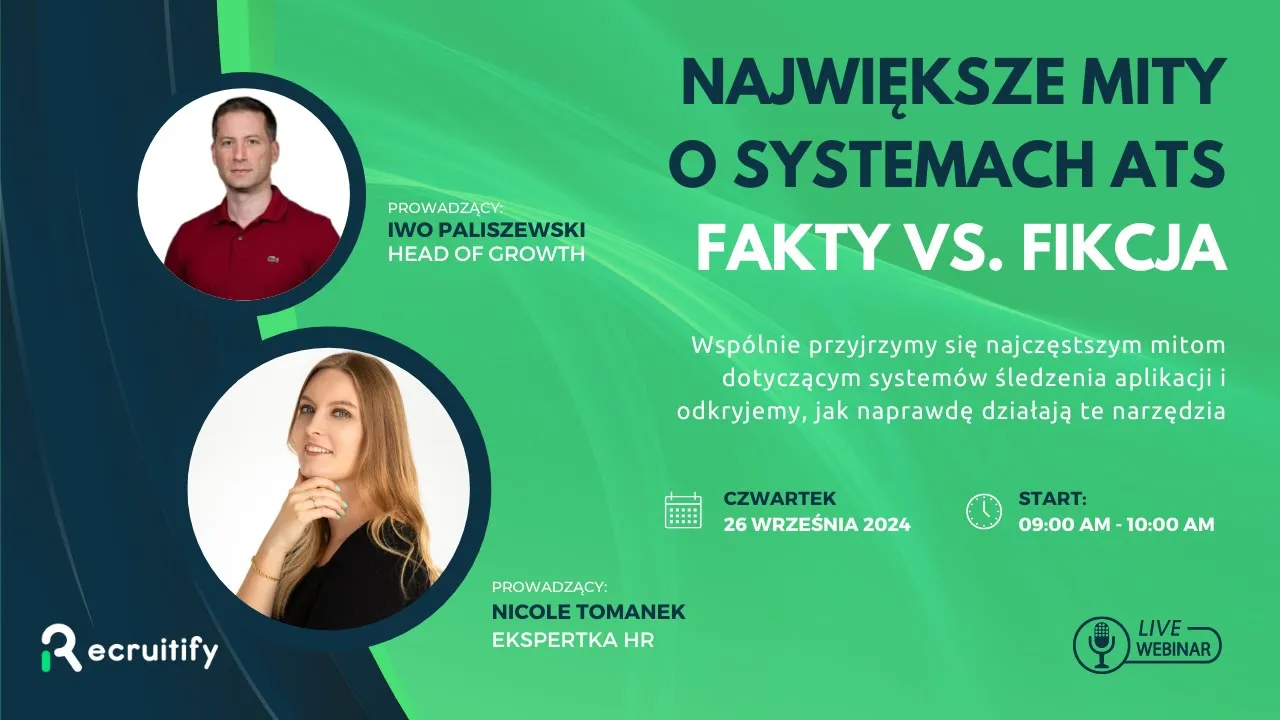
How does the ATS system work? The biggest myths about ATS systems - Facts vs. Fiction.

Innovations

Nicole Tomanek
ATS systems (Applicant Tracking System) are an integral part of modern recruitment processes. However, as their popularity grows, a number of myths and misunderstandings have emerged, causing worry among candidates, recruiters, and business decision-makers implementing ATS systems in their companies.
“Will the system reject my application before a human even reads it?”
“Should I include white font sentences in my CV to secure an interview?”
“Are ATS systems designed only for large organisations?"
“Do all ATS systems work the same way and have the same features?”
“How do I choose the best one for my company?”
These are just some of the questions posed by the recruitment community, candidates, and managers.
So, is an ATS a recruiter's ally or foe? What are the facts, and what remains in the realm of myth?
In a conversation with experts - Nicole Tomanek, HR and EB specialist and author of the HRismatic blog, and Iwo Paliszewski, Head of Growth at Recruitify, we invite you to join us in debunking the most common myths about ATS systems.
Does an ATS system automatically reject CVs before a human reads them?
“This is an urban legend,” explains Iwo Paliszewski, Recruitify.
"ATS systems do not automatically reject candidates’ applications. There are, however, features that can categorise candidates based on specific criteria. For instance, if a driving licence is required for a position and the candidate indicates in the application form that they do not possess one, the system may automatically assign them to a group of candidates not meeting this requirement. Theoretically, this could be seen as rejection, but in practice, such candidates would not qualify for the next recruitment stage anyway, which is worth remembering,” continues Iwo.
The expert emphasises that most ATS systems do not have advanced algorithms for automatically rejecting applications. Their primary role is to collect CVs, categorise them and facilitate the work of recruiters. Ultimately, it is the human recruiter who decides on the next steps in the recruitment process, and the ATS serves as a supporting tool rather than replacing human judgement.
Should keywords be included in CVs in white font?
Some candidates employ the tactic of adding keywords in white font to their CV, believing this will improve their positioning in ATS systems or their assignment to appropriate projects. Experts unanimously dispel this myth, emphasising that such practices are ineffective and can indeed harm the candidate during the recruitment process.
“Ultimately, the success of an application rests with a human,” highlights Iwo Paliszewski, Recruitify.
Nicole Tomanek warns, however, that these practices can indeed harm a candidate, as applications still go through the hands of a recruiter who personally verifies the process.
“Attempts to artificially fit a CV to multiple job offers by adding false keywords may result in a negative note on the candidate's profile in the recruitment system. The key to success is rather to precisely tailor the CV to a specific job offer, using appropriate, genuine keywords that do not need to be in white font but should be effectively highlighted in the CV to demonstrate suitability,” explains Nicole.
Experts unanimously suggest using the language of the job advertisement and utilising modern tools that help better align CVs with the requirements of a given position.
Iwo recommends: "Instead of including keywords in white font in your CV, it’s better to use AI technology to have your CV well-matched to the offer which genuinely increases the likelihood of getting an interview invitation."
Are ATS systems only for corporations?
Another frequently asked question concerns when it’s worth considering the implementation of an ATS, in terms of the scale of recruitment or number of employees. Iwo Paliszewski debunks the myth that ATS systems are meant exclusively for large corporations.
"ATS systems are available to companies of all sizes and can bring benefits even to smaller organisations," explains Iwo. The main advantages of implementing an ATS system include:
Automation of repetitive tasks
Better organisation of applications
Easier communication with candidates
Creation of a talent pool for the future
“Candidates should remember that ATS systems are often their ally, as they provide feedback on the status of their application or the reasons for not qualifying for subsequent stages,” says Nicole.
Iwo Paliszewski emphasises that the key is to match the ATS to the needs and scale of the company’s operations. Even small and medium-sized enterprises can benefit from such solutions, optimising their recruitment processes and talent management.
“ATS systems differ in functionalities and modules, from basic application management to advanced solutions involving sales modules, integrations with other tools, analytical functions, customisation, support for various types of recruitment, employer branding tools, and handling international recruitment. The choice of the right system should be driven by the specific needs of the organisation,” explains Iwo.
If, therefore, you are considering implementing an ATS, it’s worth thinking about what you expect from it and not assuming that every offer from a system provider includes the same modules and functionalities.
What is a CV parser and what is its role in recruitment?
A CV parser helps recruiters review applications faster by extracting key information like contact details, skills, or job experience. However, due to misunderstanding its role and methods of operation, it is often accused of automatically rejecting candidates’ applications.
A CV parser is a technology designed to extract key information from a candidate’s CV. By retaining the original document, which is available to the recruiter, the system allows us to find something by keywords from this CV at any time, explains Iwo.
“CV parser, which is worth remembering, is often used to promote bias-free recruitment. An ATS generates standardised candidate CVs, removing information that may lead to discrimination, such as age or photo. This way, only the candidate’s competences and experience are evaluated, rather than personal characteristics, which promotes an objective assessment of applications,” adds Nicole.
How do you get an interview?
Experts stress that the quality of the application itself is most important.
Nicole advises: "Personalise your CV, use keywords that can interest the recipient, such as the recruiter responsible for a particular recruitment process.”
Iwo adds: "The golden rule, instead of thinking about white fonts, is to spend a moment making sure your CV speaks the language of the advertisement.”
These are all the myths and facts about ATS systems we encountered. Want to ask about how our system works and how it can elevate your recruitment to the next level? Leave your contact information in our contact form!
Below is the full recording of the event: The Greatest Myths about ATS Systems. Enjoy :)


News & Updates
Stay up-to-date with the latest innovations, features, and tips about Recruitify!
By providing your email address within the newsletter sign-up form, you confirm its processing to send marketing information regarding the Administrator’s products and services. The Administrator of your personal data processed for the abovementioned purposes is Recruitify Spółka z o.o., based in Warsaw, Poland (KRS 0000709889). For more information on the principles of personal data processing and the rights of data subjects, please check the Privacy Policy.

Last updated:
How does the ATS system work? The biggest myths about ATS systems - Facts vs. Fiction.
Innovations
Nicole Tomanek
ATS systems (Applicant Tracking System) are an integral part of modern recruitment processes. However, as their popularity grows, a number of myths and misunderstandings have emerged, causing worry among candidates, recruiters, and business decision-makers implementing ATS systems in their companies.
“Will the system reject my application before a human even reads it?”
“Should I include white font sentences in my CV to secure an interview?”
“Are ATS systems designed only for large organisations?"
“Do all ATS systems work the same way and have the same features?”
“How do I choose the best one for my company?”
These are just some of the questions posed by the recruitment community, candidates, and managers.
So, is an ATS a recruiter's ally or foe? What are the facts, and what remains in the realm of myth?
In a conversation with experts - Nicole Tomanek, HR and EB specialist and author of the HRismatic blog, and Iwo Paliszewski, Head of Growth at Recruitify, we invite you to join us in debunking the most common myths about ATS systems.
Does an ATS system automatically reject CVs before a human reads them?
“This is an urban legend,” explains Iwo Paliszewski, Recruitify.
"ATS systems do not automatically reject candidates’ applications. There are, however, features that can categorise candidates based on specific criteria. For instance, if a driving licence is required for a position and the candidate indicates in the application form that they do not possess one, the system may automatically assign them to a group of candidates not meeting this requirement. Theoretically, this could be seen as rejection, but in practice, such candidates would not qualify for the next recruitment stage anyway, which is worth remembering,” continues Iwo.
The expert emphasises that most ATS systems do not have advanced algorithms for automatically rejecting applications. Their primary role is to collect CVs, categorise them and facilitate the work of recruiters. Ultimately, it is the human recruiter who decides on the next steps in the recruitment process, and the ATS serves as a supporting tool rather than replacing human judgement.
Should keywords be included in CVs in white font?
Some candidates employ the tactic of adding keywords in white font to their CV, believing this will improve their positioning in ATS systems or their assignment to appropriate projects. Experts unanimously dispel this myth, emphasising that such practices are ineffective and can indeed harm the candidate during the recruitment process.
“Ultimately, the success of an application rests with a human,” highlights Iwo Paliszewski, Recruitify.
Nicole Tomanek warns, however, that these practices can indeed harm a candidate, as applications still go through the hands of a recruiter who personally verifies the process.
“Attempts to artificially fit a CV to multiple job offers by adding false keywords may result in a negative note on the candidate's profile in the recruitment system. The key to success is rather to precisely tailor the CV to a specific job offer, using appropriate, genuine keywords that do not need to be in white font but should be effectively highlighted in the CV to demonstrate suitability,” explains Nicole.
Experts unanimously suggest using the language of the job advertisement and utilising modern tools that help better align CVs with the requirements of a given position.
Iwo recommends: "Instead of including keywords in white font in your CV, it’s better to use AI technology to have your CV well-matched to the offer which genuinely increases the likelihood of getting an interview invitation."
Are ATS systems only for corporations?
Another frequently asked question concerns when it’s worth considering the implementation of an ATS, in terms of the scale of recruitment or number of employees. Iwo Paliszewski debunks the myth that ATS systems are meant exclusively for large corporations.
"ATS systems are available to companies of all sizes and can bring benefits even to smaller organisations," explains Iwo. The main advantages of implementing an ATS system include:
Automation of repetitive tasks
Better organisation of applications
Easier communication with candidates
Creation of a talent pool for the future
“Candidates should remember that ATS systems are often their ally, as they provide feedback on the status of their application or the reasons for not qualifying for subsequent stages,” says Nicole.
Iwo Paliszewski emphasises that the key is to match the ATS to the needs and scale of the company’s operations. Even small and medium-sized enterprises can benefit from such solutions, optimising their recruitment processes and talent management.
“ATS systems differ in functionalities and modules, from basic application management to advanced solutions involving sales modules, integrations with other tools, analytical functions, customisation, support for various types of recruitment, employer branding tools, and handling international recruitment. The choice of the right system should be driven by the specific needs of the organisation,” explains Iwo.
If, therefore, you are considering implementing an ATS, it’s worth thinking about what you expect from it and not assuming that every offer from a system provider includes the same modules and functionalities.
What is a CV parser and what is its role in recruitment?
A CV parser helps recruiters review applications faster by extracting key information like contact details, skills, or job experience. However, due to misunderstanding its role and methods of operation, it is often accused of automatically rejecting candidates’ applications.
A CV parser is a technology designed to extract key information from a candidate’s CV. By retaining the original document, which is available to the recruiter, the system allows us to find something by keywords from this CV at any time, explains Iwo.
“CV parser, which is worth remembering, is often used to promote bias-free recruitment. An ATS generates standardised candidate CVs, removing information that may lead to discrimination, such as age or photo. This way, only the candidate’s competences and experience are evaluated, rather than personal characteristics, which promotes an objective assessment of applications,” adds Nicole.
How do you get an interview?
Experts stress that the quality of the application itself is most important.
Nicole advises: "Personalise your CV, use keywords that can interest the recipient, such as the recruiter responsible for a particular recruitment process.”
Iwo adds: "The golden rule, instead of thinking about white fonts, is to spend a moment making sure your CV speaks the language of the advertisement.”
These are all the myths and facts about ATS systems we encountered. Want to ask about how our system works and how it can elevate your recruitment to the next level? Leave your contact information in our contact form!
Below is the full recording of the event: The Greatest Myths about ATS Systems. Enjoy :)
News & Updates
Stay up-to-date with the latest innovations, features, and tips about Recruitify!
By providing your email address within the newsletter sign-up form, you confirm its processing to send marketing information regarding the Administrator’s products and services. The Administrator of your personal data processed for the abovementioned purposes is Recruitify Spółka z o.o., based in Warsaw, Poland (KRS 0000709889). For more information on the principles of personal data processing and the rights of data subjects, please check the Privacy Policy.
Last updated:
How does the ATS system work? The biggest myths about ATS systems - Facts vs. Fiction.
Innovations
Nicole Tomanek
ATS systems (Applicant Tracking System) are an integral part of modern recruitment processes. However, as their popularity grows, a number of myths and misunderstandings have emerged, causing worry among candidates, recruiters, and business decision-makers implementing ATS systems in their companies.
“Will the system reject my application before a human even reads it?”
“Should I include white font sentences in my CV to secure an interview?”
“Are ATS systems designed only for large organisations?"
“Do all ATS systems work the same way and have the same features?”
“How do I choose the best one for my company?”
These are just some of the questions posed by the recruitment community, candidates, and managers.
So, is an ATS a recruiter's ally or foe? What are the facts, and what remains in the realm of myth?
In a conversation with experts - Nicole Tomanek, HR and EB specialist and author of the HRismatic blog, and Iwo Paliszewski, Head of Growth at Recruitify, we invite you to join us in debunking the most common myths about ATS systems.
Does an ATS system automatically reject CVs before a human reads them?
“This is an urban legend,” explains Iwo Paliszewski, Recruitify.
"ATS systems do not automatically reject candidates’ applications. There are, however, features that can categorise candidates based on specific criteria. For instance, if a driving licence is required for a position and the candidate indicates in the application form that they do not possess one, the system may automatically assign them to a group of candidates not meeting this requirement. Theoretically, this could be seen as rejection, but in practice, such candidates would not qualify for the next recruitment stage anyway, which is worth remembering,” continues Iwo.
The expert emphasises that most ATS systems do not have advanced algorithms for automatically rejecting applications. Their primary role is to collect CVs, categorise them and facilitate the work of recruiters. Ultimately, it is the human recruiter who decides on the next steps in the recruitment process, and the ATS serves as a supporting tool rather than replacing human judgement.
Should keywords be included in CVs in white font?
Some candidates employ the tactic of adding keywords in white font to their CV, believing this will improve their positioning in ATS systems or their assignment to appropriate projects. Experts unanimously dispel this myth, emphasising that such practices are ineffective and can indeed harm the candidate during the recruitment process.
“Ultimately, the success of an application rests with a human,” highlights Iwo Paliszewski, Recruitify.
Nicole Tomanek warns, however, that these practices can indeed harm a candidate, as applications still go through the hands of a recruiter who personally verifies the process.
“Attempts to artificially fit a CV to multiple job offers by adding false keywords may result in a negative note on the candidate's profile in the recruitment system. The key to success is rather to precisely tailor the CV to a specific job offer, using appropriate, genuine keywords that do not need to be in white font but should be effectively highlighted in the CV to demonstrate suitability,” explains Nicole.
Experts unanimously suggest using the language of the job advertisement and utilising modern tools that help better align CVs with the requirements of a given position.
Iwo recommends: "Instead of including keywords in white font in your CV, it’s better to use AI technology to have your CV well-matched to the offer which genuinely increases the likelihood of getting an interview invitation."
Are ATS systems only for corporations?
Another frequently asked question concerns when it’s worth considering the implementation of an ATS, in terms of the scale of recruitment or number of employees. Iwo Paliszewski debunks the myth that ATS systems are meant exclusively for large corporations.
"ATS systems are available to companies of all sizes and can bring benefits even to smaller organisations," explains Iwo. The main advantages of implementing an ATS system include:
Automation of repetitive tasks
Better organisation of applications
Easier communication with candidates
Creation of a talent pool for the future
“Candidates should remember that ATS systems are often their ally, as they provide feedback on the status of their application or the reasons for not qualifying for subsequent stages,” says Nicole.
Iwo Paliszewski emphasises that the key is to match the ATS to the needs and scale of the company’s operations. Even small and medium-sized enterprises can benefit from such solutions, optimising their recruitment processes and talent management.
“ATS systems differ in functionalities and modules, from basic application management to advanced solutions involving sales modules, integrations with other tools, analytical functions, customisation, support for various types of recruitment, employer branding tools, and handling international recruitment. The choice of the right system should be driven by the specific needs of the organisation,” explains Iwo.
If, therefore, you are considering implementing an ATS, it’s worth thinking about what you expect from it and not assuming that every offer from a system provider includes the same modules and functionalities.
What is a CV parser and what is its role in recruitment?
A CV parser helps recruiters review applications faster by extracting key information like contact details, skills, or job experience. However, due to misunderstanding its role and methods of operation, it is often accused of automatically rejecting candidates’ applications.
A CV parser is a technology designed to extract key information from a candidate’s CV. By retaining the original document, which is available to the recruiter, the system allows us to find something by keywords from this CV at any time, explains Iwo.
“CV parser, which is worth remembering, is often used to promote bias-free recruitment. An ATS generates standardised candidate CVs, removing information that may lead to discrimination, such as age or photo. This way, only the candidate’s competences and experience are evaluated, rather than personal characteristics, which promotes an objective assessment of applications,” adds Nicole.
How do you get an interview?
Experts stress that the quality of the application itself is most important.
Nicole advises: "Personalise your CV, use keywords that can interest the recipient, such as the recruiter responsible for a particular recruitment process.”
Iwo adds: "The golden rule, instead of thinking about white fonts, is to spend a moment making sure your CV speaks the language of the advertisement.”
These are all the myths and facts about ATS systems we encountered. Want to ask about how our system works and how it can elevate your recruitment to the next level? Leave your contact information in our contact form!
Below is the full recording of the event: The Greatest Myths about ATS Systems. Enjoy :)
News & Updates
Stay up-to-date with the latest innovations, features, and tips about Recruitify!
By providing your email address within the newsletter sign-up form, you confirm its processing to send marketing information regarding the Administrator’s products and services. The Administrator of your personal data processed for the abovementioned purposes is Recruitify Spółka z o.o., based in Warsaw, Poland (KRS 0000709889). For more information on the principles of personal data processing and the rights of data subjects, please check the Privacy Policy.

Discover More

Applicant Tracking System
Contractor Onboarding Checklist for IT Staffing Agencies
A contractor onboarding checklist for agencies and HR teams: classification, US tax forms, GDPR, least-privilege access and gates that stop work before approval.
20 Oct 2026
Discover More

Acquiring Talent
Boolean Search Strings: Operators, Examples and Templates
Learn how to write Boolean search strings for recruiting: operators, LinkedIn and Google X-ray examples, developer templates and mistakes to avoid.
19 Oct 2026
Discover More

Recruitment Process
Recruiter Productivity Metrics: 3 Measures That Expose Funnel Leaks
Choose recruiter productivity metrics that expose funnel leaks, track hiring quality and candidate experience, and show where stage delays hurt results.
18 Oct 2026
Discover More
Applicant Tracking System
Contractor Onboarding Checklist for IT Staffing Agencies
A contractor onboarding checklist for agencies and HR teams: classification, US tax forms, GDPR, least-privilege access and gates that stop work before approval.
20 Oct 2026
Discover More
Acquiring Talent
Boolean Search Strings: Operators, Examples and Templates
Learn how to write Boolean search strings for recruiting: operators, LinkedIn and Google X-ray examples, developer templates and mistakes to avoid.
19 Oct 2026
Discover More