
Last updated:
7 Steps to a Recruiting Source of Truth for HR: Centralize or Federate

Applicant Tracking System

The Recruitify Team
A single source of truth for recruiting is a unified, governed view of candidate and hiring data drawn from every system a team touches, from the applicant tracking system to the CRM and HRIS. It replaces scattered spreadsheets and conflicting reports with one trusted dataset, giving recruiting and HR teams consistent metrics and faster decisions. Building it requires integrations, data governance, and ongoing observability working together.
A single source of truth consolidates candidate and hiring data through integrations, governance, and observability, replacing fragmented spreadsheets and conflicting reports.
It includes key records such as candidate profiles, application statuses, interview notes, offers, and contractor data, with architecture choices between monolithic or federated systems based on organization size.
Building it involves auditing data sources, defining identifiers, mapping integrations, cleansing data, and testing with a pilot team before scaling up.
Effective governance on accuracy, completeness, and privacy, along with data observability tools, is critical to maintaining trust and compliance over time.
Most organizations face challenges like duplicate records, low user adoption, integration complexity, and misaligned metrics, which can be mitigated with clear ownership and early stakeholder involvement.
RecruitifyBring Recruiting Data TogetherRecruitify.ai combines ATS, Sales CRM, and IT contracting workflows in one operational ecosystem for modern recruitment agencies.Visit Recruitify.ai
Table of Contents
What counts as a recruiting single source of truth
Why a unified data view matters for hiring outcomes
How to build a single source of truth, step by step
Data governance, quality, and risk controls
KPIs and metrics to track from your single source of truth
Common roadblocks when centralizing recruiting data
How Recruitify.ai applies a source-of-truth approach
When to centralize versus federate: an editorial checklist
Where Recruitify.ai fits in your rollout
FAQ
Sources
What counts as a recruiting single source of truth
A recruiting single source of truth is not simply a bigger database. It is a governed, canonical view of every record that matters in the hiring process, accessible consistently no matter which system a recruiter or hiring manager opens.
The record types that typically belong in that view include:
Candidate profiles, including contact details, skills, and work history
Application records tied to specific job requisitions
Interview notes and structured feedback from hiring panels
Offer details, including compensation and start dates
Contractor or body leasing records for agencies handling IT staffing
Two architectural philosophies compete here. A monolithic approach consolidates all of this data inside one platform or data warehouse, which simplifies reporting but can create a single point of failure and slows down teams that need specialized tools. A federated approach keeps data distributed across systems of origin but layers a governance standard on top, so each domain owner, say the recruiting team for ATS data and the sales team for CRM data, maintains their own records while following shared identifiers, naming conventions, and refresh rules.
Monolithic centralization tends to fit smaller organizations running on two or three core systems. Federated governance works better for larger agencies or enterprises juggling many specialized tools, where forcing everything into one database would mean losing functionality those tools provide. Most mature recruiting operations land somewhere between the two, centralizing reporting while federating operational ownership.
Why a unified data view matters for hiring outcomes
Centralizing recruiting data pays off on two levels. Operationally, it removes the manual re-entry and reconciliation work that eats recruiter time, speeds up pipeline movement because status updates propagate instantly, and cuts the administrative drag that comes from chasing the same candidate record across three systems.
Strategically, a trusted dataset changes how recruiting earns credibility with the rest of the business. Workforce planning becomes more accurate when headcount and pipeline data agree with finance’s numbers, and executives are far more willing to act on metrics they know came from one consistent source rather than a patchwork of exports.
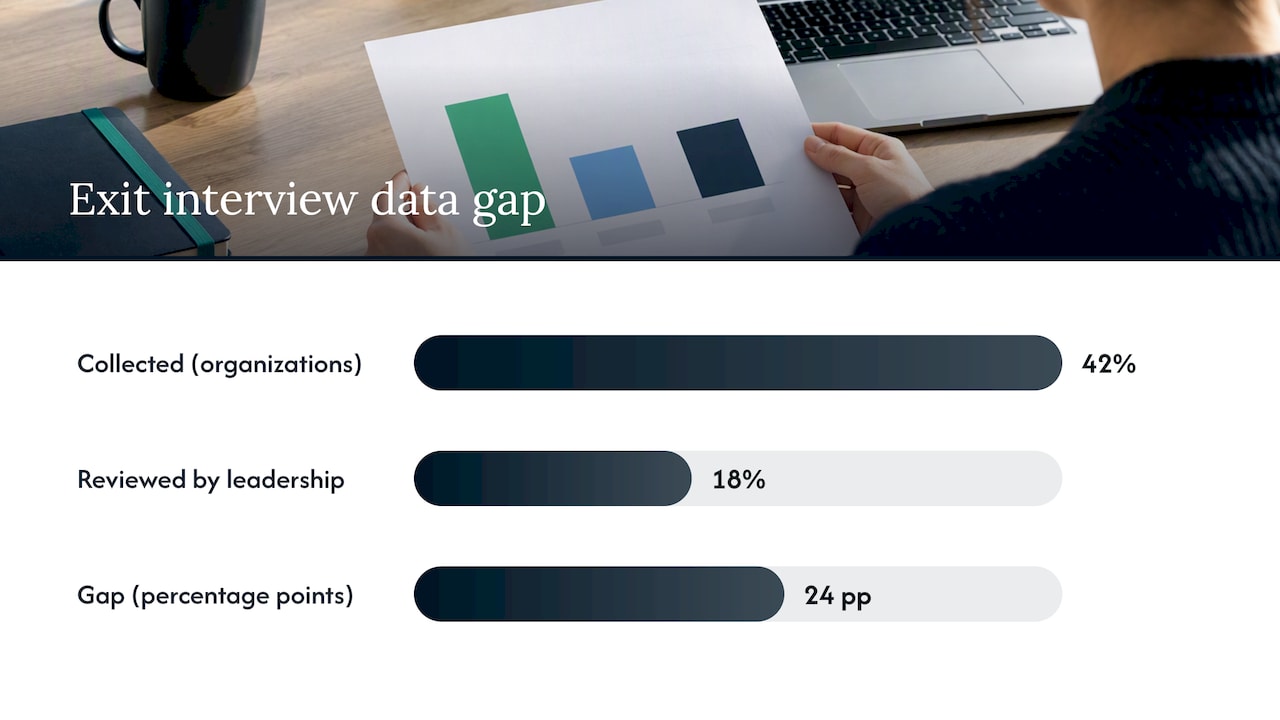
The scale of the problem is measurable. Research from CIPD found that 42% of organizations collect exit interview data, but only 18% report that senior leadership actually reviews it, a 24 percentage point gap between data collected and data used. That gap illustrates the opportunity cost of fragmented systems: organizations often gather the right information but lack the governed, visible structure that turns it into a decision. A recruiting single source of truth closes that same gap by making data not just collected, but consistently reported and reviewed.
How to build a single source of truth, step by step
Building a recruiting single source of truth is a sequence, not a single project milestone. Skipping steps tends to produce a system that looks unified on the surface but breaks down the first time two departments disagree on a definition.
Audit every existing data source. List every system holding candidate or hiring data, then run a stakeholder consultation with heads of talent, recruitment leads, and HR business partners to agree on which metrics actually matter. CIPD’s guidance on improving people data recommends this consultation step specifically to avoid dashboards full of numbers nobody uses.
Define canonical identifiers and a data model. Decide how a candidate record stays the same person across systems, usually through a unique ID, then choose whether the architecture will be monolithic, federated, or a hybrid of both based on team size and system count.
Map integrations and choose a pattern. Match each system to an integration approach: a unified API layer for ATS platforms, middleware for systems without direct connectors, or direct webhooks where real-time accuracy matters most.
Clean, deduplicate, and set a refresh cadence. Remove duplicate candidate records, standardize field formats, and decide how often each data type needs to update, daily for most reporting, near real-time for active pipeline stages.
Deploy observability and monitoring. Put tools in place that flag broken syncs, stale records, or fields that silently stop populating, since a single source of truth that goes quietly wrong is worse than no centralization at all.
Pilot with one function or team. Roll the system out to a single recruiting team or business unit first, measure the KPIs that matter against the old process, and fix what breaks before expanding further.
Iterate, then scale. Apply the lessons from the pilot to the broader rollout, adjusting governance rules and integration mappings as new systems or teams join.
Pro Tip: Run the pilot on your highest-volume requisition category first. Problems with duplicate records or stale data show up fastest where application volume is heaviest.
Teams that already run an ATS built to capture and surface recruiter knowledge tend to move through this roadmap faster, since much of the candidate history already lives in one place rather than scattered across inboxes and personal notes.
Data governance, quality, and risk controls
A single source of truth is only as reliable as the governance behind it. Without clear rules for ownership, quality, and access, a unified dataset drifts out of accuracy within months.
Strong governance programs typically track these quality dimensions:
Accuracy, whether a field reflects reality, like a candidate’s current employment status
Completeness, whether required fields are populated rather than left blank
Consistency, whether the same data point matches across every system it appears in
Timeliness, whether records update on the cadence the use case requires
SHRM’s reporting on clean data in HR points out that poor data quality undermines AI adoption specifically, and recommends data observability tools to check accuracy, completeness, and consistency before that data ever reaches an AI system. Data observability platforms are increasingly treated as a baseline control for HR analytics, not an optional add-on.
Federated governance offers a practical middle path for organizations with many specialized systems: Atlan’s analysis of federated data governance describes a model where domain owners keep control of their own data while following organization-wide standards for identifiers and refresh cadences, which tends to reduce the resistance that comes with forcing every team onto one centralized platform.
Privacy and consent management deserve equal weight. Recruiting data includes personal information subject to regulations like GDPR, so any centralized system needs consent tracking and an audit trail that proves when and how a candidate agreed to have their data processed. The NIST Data Governance and Management Profile concept paper maps governance objectives directly to privacy, cybersecurity, and AI risk domains, and recommends organizations evaluate their systems against all three regularly rather than treating them as separate concerns.
KPIs and metrics to track from your single source of truth
A centralized dataset only earns its keep when the metrics it produces stay stable and comparable over time. That means agreeing on definitions before pulling numbers, not after a disagreement surfaces in a leadership meeting.
The operational metrics worth tracking first are:
Time-to-fill, measuring days from requisition opening to accepted offer
Time-to-offer, isolating how long the internal process takes once a candidate is identified
Pipeline conversion rates, tracking how many candidates move from one stage to the next
Quality and cost metrics round out the picture:
Quality-of-hire, often measured through manager satisfaction scores or early performance reviews
Cost-per-hire, covering sourcing, tooling, and time investment per placement
Source effectiveness, comparing which channels produce hires who stay longest
Retention, tracking whether hires remain past the first year
Every one of these needs a stable definition, a fixed cohort window, and an agreed refresh cycle, otherwise month-over-month comparisons become meaningless. Teams looking to automate this layer can review practical approaches to automating KPI tracking and piloting the process in a short timeframe.
Common roadblocks when centralizing recruiting data
Most implementations hit the same handful of problems. Knowing them in advance saves weeks of troubleshooting.
Duplicate and stale records creep in when candidates apply through multiple channels. Canonical identifiers and automated deduplication rules catch most of these before they distort reporting.
User adoption lags when recruiters see the new system as extra work rather than less. Role-based views, automation that removes manual steps, and incentives tied to actual usage tend to fix this faster than mandates alone.
Integration complexity grows with every additional system. A normalized schema and mapping templates, or a unified API layer where one is available, keep the engineering burden from compounding with each new connector, a complexity documented in LinkedIn’s own Recruiter System Connect integration requirements.
Misaligned metrics happen when departments define the same KPI differently. Bringing stakeholders into the metric definition process early avoids building dashboards full of numbers that look impressive but don’t drive any decision.
Pro Tip: Assign one owner per data domain before launch. Ambiguous ownership is the single fastest way for a centralized dataset to drift out of accuracy.
How Recruitify.ai applies a source-of-truth approach
Recruitify.ai consolidates an applicant tracking system, a sales CRM, and an IT contracting module into one operational tab, which removes the need to reconcile candidate and client data across separate platforms. That structure reflects the core idea behind a recruiting single source of truth: one governed view instead of several disconnected ones.
AI CV parsing extracts structured candidate data from PDFs, scans, and photos in seconds and flags duplicates automatically, addressing one of the most common data quality failures teams run into. Contextual matching AI scores candidates against project requirements beyond simple keyword search, and a GDPR consent management module maintains a full audit trail for every record, pairing automation with the governance controls centralized recruiting data requires.
Teams evaluating this approach can review the recruitment projects and hiring process controls module as a concrete example of centralized data in practice before requesting a demo or starting a pilot.
When to centralize versus federate: an editorial checklist
The right architecture depends less on ambition and more on scale. Small teams running two or three systems usually get more value from monolithic centralization, since there is little to coordinate. Larger organizations with many specialized tools, a wide compliance surface, or advanced analytics ambitions tend to do better with federated governance, keeping domain ownership intact while standardizing identifiers.
A useful first move: run a one-day governance workshop before buying anything. If the systems in play are few and the compliance surface is narrow, pilot a centralized platform instead.
- Recruitify Team
Where Recruitify.ai fits in your rollout
If you are weighing whether to build this centralization in-house or adopt a platform already built for it, our system gives you the ATS, CRM, and contracting data in one place from day one, instead of months of integration work across separate tools. That means less engineering overhead for recruiting agencies that need results now, not after a year of middleware projects.
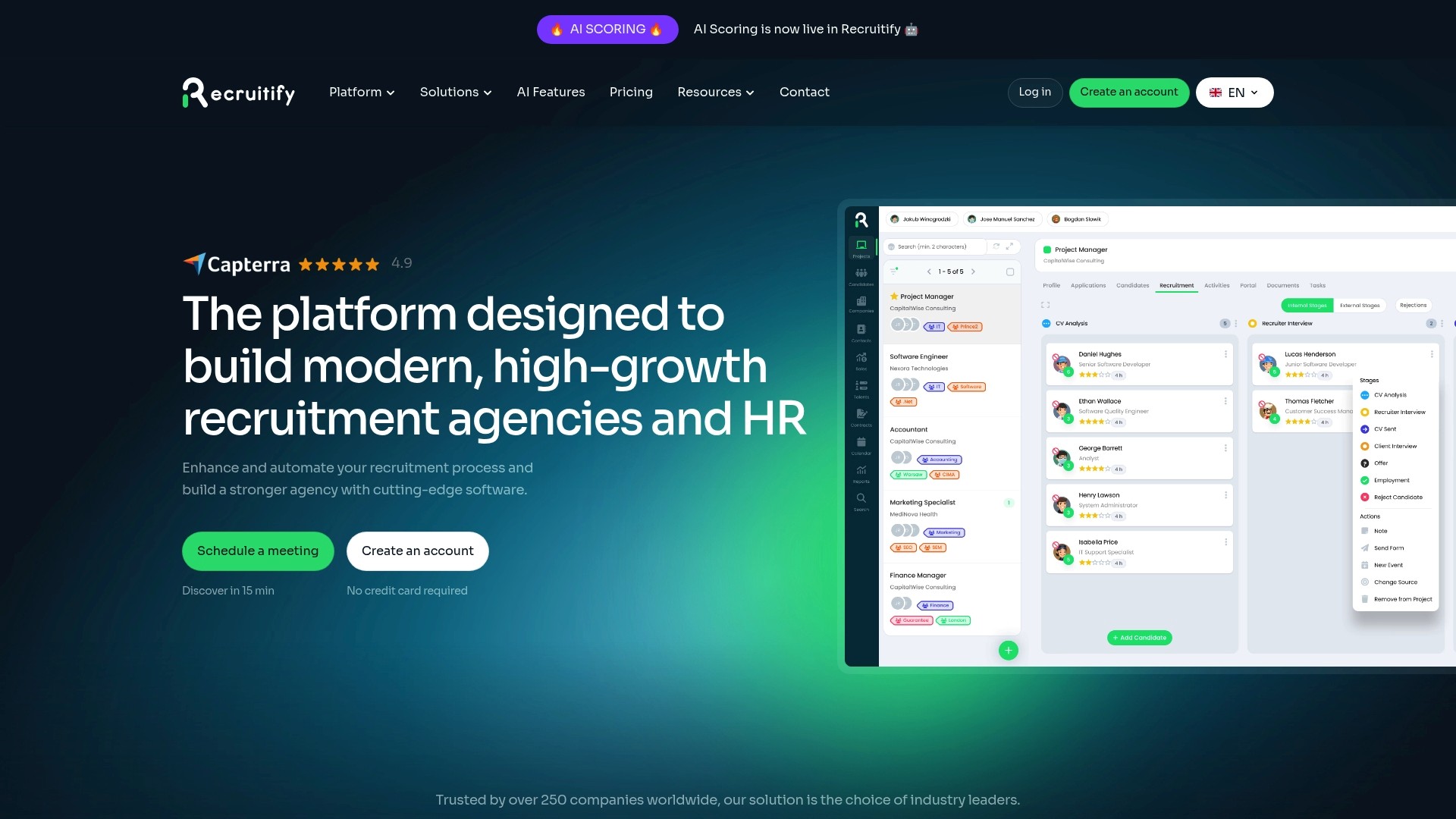
Our HR Team plan runs 69 EUR per month per user, and our Recruitment Agencies plan runs 79 EUR per month per user, both on our pricing page. An Enterprise plan is also available, with pricing on request. Review the automation capabilities that cut admin time, or request a demo to see how a unified recruiting dataset performs against your current process.
FAQ
What does a single source of truth mean?
A single source of truth means one governed, trusted dataset or view that every team references instead of pulling conflicting numbers from separate systems. In recruiting, that means candidate, application, and hiring data agree across the ATS, CRM, and HRIS rather than drifting apart in spreadsheets.
What is the 80/20 rule in recruiting?
The principle in recruiting generally refers to the idea that a small share of sourcing channels or recruiter effort produces most of the quality hires, though the exact split varies by organization and is not a fixed statistic. It is best treated as a principle for prioritizing source effectiveness tracking, not a precise ratio to target.
What is the most effective source for recruitment?
There is no single universally most effective recruitment source. The source that performs best depends on role type, industry, and candidate pool, which is exactly why tracking source effectiveness inside a centralized dataset matters more than assuming one channel works everywhere.
What are the 5 C’s of recruitment?
Definitions of the “5 C’s of recruitment” vary across sources, and no single authoritative version applies universally. Common versions reference competency, consistency, customer focus, communication, and culture fit, but teams should treat this as a general framework rather than a fixed standard.
Sources
Most recruiting operations run on a handful of systems that each hold a piece of the hiring picture. Bringing them together starts with knowing exactly which ones carry data worth consolidating.
The systems most teams need to include are:
Connecting these systems generally follows one of a few integration patterns. A unified ATS API approach, such as the kind documented by Knit’s unified ATS API, normalizes data models across multiple ATS platforms through one interface, which cuts the engineering burden of maintaining separate connectors. Middleware and ETL pipelines move data in batches, useful when systems do not expose real-time webhooks or when transformation logic is complex. Real-time webhooks keep records current the moment a status changes, but they demand more engineering investment and more careful error handling than batch jobs.
The trade-off between real-time and batch sync usually comes down to how fast decisions need to happen. Reporting dashboards can tolerate a daily batch refresh. Recruiter-facing views, where a hiring manager might otherwise reach out to a candidate who already dropped out of the pipeline, benefit from near real-time updates. Whichever pattern a team chooses, data normalization, mapping every system’s field names and formats to one shared schema, has to happen before any of it is trustworthy.
Recommended


News & Updates
Stay up-to-date with the latest innovations, features, and tips about Recruitify!
By providing your email address within the newsletter sign-up form, you confirm its processing to send marketing information regarding the Administrator’s products and services. The Administrator of your personal data processed for the abovementioned purposes is Recruitify Spółka z o.o., based in Warsaw, Poland (KRS 0000709889). For more information on the principles of personal data processing and the rights of data subjects, please check the Privacy Policy.

Last updated:
7 Steps to a Recruiting Source of Truth for HR: Centralize or Federate
Applicant Tracking System
The Recruitify Team
A single source of truth for recruiting is a unified, governed view of candidate and hiring data drawn from every system a team touches, from the applicant tracking system to the CRM and HRIS. It replaces scattered spreadsheets and conflicting reports with one trusted dataset, giving recruiting and HR teams consistent metrics and faster decisions. Building it requires integrations, data governance, and ongoing observability working together.
A single source of truth consolidates candidate and hiring data through integrations, governance, and observability, replacing fragmented spreadsheets and conflicting reports.
It includes key records such as candidate profiles, application statuses, interview notes, offers, and contractor data, with architecture choices between monolithic or federated systems based on organization size.
Building it involves auditing data sources, defining identifiers, mapping integrations, cleansing data, and testing with a pilot team before scaling up.
Effective governance on accuracy, completeness, and privacy, along with data observability tools, is critical to maintaining trust and compliance over time.
Most organizations face challenges like duplicate records, low user adoption, integration complexity, and misaligned metrics, which can be mitigated with clear ownership and early stakeholder involvement.
RecruitifyBring Recruiting Data TogetherRecruitify.ai combines ATS, Sales CRM, and IT contracting workflows in one operational ecosystem for modern recruitment agencies.Visit Recruitify.ai
Table of Contents
What counts as a recruiting single source of truth
Why a unified data view matters for hiring outcomes
How to build a single source of truth, step by step
Data governance, quality, and risk controls
KPIs and metrics to track from your single source of truth
Common roadblocks when centralizing recruiting data
How Recruitify.ai applies a source-of-truth approach
When to centralize versus federate: an editorial checklist
Where Recruitify.ai fits in your rollout
FAQ
Sources
What counts as a recruiting single source of truth
A recruiting single source of truth is not simply a bigger database. It is a governed, canonical view of every record that matters in the hiring process, accessible consistently no matter which system a recruiter or hiring manager opens.
The record types that typically belong in that view include:
Candidate profiles, including contact details, skills, and work history
Application records tied to specific job requisitions
Interview notes and structured feedback from hiring panels
Offer details, including compensation and start dates
Contractor or body leasing records for agencies handling IT staffing
Two architectural philosophies compete here. A monolithic approach consolidates all of this data inside one platform or data warehouse, which simplifies reporting but can create a single point of failure and slows down teams that need specialized tools. A federated approach keeps data distributed across systems of origin but layers a governance standard on top, so each domain owner, say the recruiting team for ATS data and the sales team for CRM data, maintains their own records while following shared identifiers, naming conventions, and refresh rules.
Monolithic centralization tends to fit smaller organizations running on two or three core systems. Federated governance works better for larger agencies or enterprises juggling many specialized tools, where forcing everything into one database would mean losing functionality those tools provide. Most mature recruiting operations land somewhere between the two, centralizing reporting while federating operational ownership.
Why a unified data view matters for hiring outcomes
Centralizing recruiting data pays off on two levels. Operationally, it removes the manual re-entry and reconciliation work that eats recruiter time, speeds up pipeline movement because status updates propagate instantly, and cuts the administrative drag that comes from chasing the same candidate record across three systems.
Strategically, a trusted dataset changes how recruiting earns credibility with the rest of the business. Workforce planning becomes more accurate when headcount and pipeline data agree with finance’s numbers, and executives are far more willing to act on metrics they know came from one consistent source rather than a patchwork of exports.
The scale of the problem is measurable. Research from CIPD found that 42% of organizations collect exit interview data, but only 18% report that senior leadership actually reviews it, a 24 percentage point gap between data collected and data used. That gap illustrates the opportunity cost of fragmented systems: organizations often gather the right information but lack the governed, visible structure that turns it into a decision. A recruiting single source of truth closes that same gap by making data not just collected, but consistently reported and reviewed.
How to build a single source of truth, step by step
Building a recruiting single source of truth is a sequence, not a single project milestone. Skipping steps tends to produce a system that looks unified on the surface but breaks down the first time two departments disagree on a definition.
Audit every existing data source. List every system holding candidate or hiring data, then run a stakeholder consultation with heads of talent, recruitment leads, and HR business partners to agree on which metrics actually matter. CIPD’s guidance on improving people data recommends this consultation step specifically to avoid dashboards full of numbers nobody uses.
Define canonical identifiers and a data model. Decide how a candidate record stays the same person across systems, usually through a unique ID, then choose whether the architecture will be monolithic, federated, or a hybrid of both based on team size and system count.
Map integrations and choose a pattern. Match each system to an integration approach: a unified API layer for ATS platforms, middleware for systems without direct connectors, or direct webhooks where real-time accuracy matters most.
Clean, deduplicate, and set a refresh cadence. Remove duplicate candidate records, standardize field formats, and decide how often each data type needs to update, daily for most reporting, near real-time for active pipeline stages.
Deploy observability and monitoring. Put tools in place that flag broken syncs, stale records, or fields that silently stop populating, since a single source of truth that goes quietly wrong is worse than no centralization at all.
Pilot with one function or team. Roll the system out to a single recruiting team or business unit first, measure the KPIs that matter against the old process, and fix what breaks before expanding further.
Iterate, then scale. Apply the lessons from the pilot to the broader rollout, adjusting governance rules and integration mappings as new systems or teams join.
Pro Tip: Run the pilot on your highest-volume requisition category first. Problems with duplicate records or stale data show up fastest where application volume is heaviest.
Teams that already run an ATS built to capture and surface recruiter knowledge tend to move through this roadmap faster, since much of the candidate history already lives in one place rather than scattered across inboxes and personal notes.
Data governance, quality, and risk controls
A single source of truth is only as reliable as the governance behind it. Without clear rules for ownership, quality, and access, a unified dataset drifts out of accuracy within months.
Strong governance programs typically track these quality dimensions:
Accuracy, whether a field reflects reality, like a candidate’s current employment status
Completeness, whether required fields are populated rather than left blank
Consistency, whether the same data point matches across every system it appears in
Timeliness, whether records update on the cadence the use case requires
SHRM’s reporting on clean data in HR points out that poor data quality undermines AI adoption specifically, and recommends data observability tools to check accuracy, completeness, and consistency before that data ever reaches an AI system. Data observability platforms are increasingly treated as a baseline control for HR analytics, not an optional add-on.
Federated governance offers a practical middle path for organizations with many specialized systems: Atlan’s analysis of federated data governance describes a model where domain owners keep control of their own data while following organization-wide standards for identifiers and refresh cadences, which tends to reduce the resistance that comes with forcing every team onto one centralized platform.
Privacy and consent management deserve equal weight. Recruiting data includes personal information subject to regulations like GDPR, so any centralized system needs consent tracking and an audit trail that proves when and how a candidate agreed to have their data processed. The NIST Data Governance and Management Profile concept paper maps governance objectives directly to privacy, cybersecurity, and AI risk domains, and recommends organizations evaluate their systems against all three regularly rather than treating them as separate concerns.
KPIs and metrics to track from your single source of truth
A centralized dataset only earns its keep when the metrics it produces stay stable and comparable over time. That means agreeing on definitions before pulling numbers, not after a disagreement surfaces in a leadership meeting.
The operational metrics worth tracking first are:
Time-to-fill, measuring days from requisition opening to accepted offer
Time-to-offer, isolating how long the internal process takes once a candidate is identified
Pipeline conversion rates, tracking how many candidates move from one stage to the next
Quality and cost metrics round out the picture:
Quality-of-hire, often measured through manager satisfaction scores or early performance reviews
Cost-per-hire, covering sourcing, tooling, and time investment per placement
Source effectiveness, comparing which channels produce hires who stay longest
Retention, tracking whether hires remain past the first year
Every one of these needs a stable definition, a fixed cohort window, and an agreed refresh cycle, otherwise month-over-month comparisons become meaningless. Teams looking to automate this layer can review practical approaches to automating KPI tracking and piloting the process in a short timeframe.
Common roadblocks when centralizing recruiting data
Most implementations hit the same handful of problems. Knowing them in advance saves weeks of troubleshooting.
Duplicate and stale records creep in when candidates apply through multiple channels. Canonical identifiers and automated deduplication rules catch most of these before they distort reporting.
User adoption lags when recruiters see the new system as extra work rather than less. Role-based views, automation that removes manual steps, and incentives tied to actual usage tend to fix this faster than mandates alone.
Integration complexity grows with every additional system. A normalized schema and mapping templates, or a unified API layer where one is available, keep the engineering burden from compounding with each new connector, a complexity documented in LinkedIn’s own Recruiter System Connect integration requirements.
Misaligned metrics happen when departments define the same KPI differently. Bringing stakeholders into the metric definition process early avoids building dashboards full of numbers that look impressive but don’t drive any decision.
Pro Tip: Assign one owner per data domain before launch. Ambiguous ownership is the single fastest way for a centralized dataset to drift out of accuracy.
How Recruitify.ai applies a source-of-truth approach
Recruitify.ai consolidates an applicant tracking system, a sales CRM, and an IT contracting module into one operational tab, which removes the need to reconcile candidate and client data across separate platforms. That structure reflects the core idea behind a recruiting single source of truth: one governed view instead of several disconnected ones.
AI CV parsing extracts structured candidate data from PDFs, scans, and photos in seconds and flags duplicates automatically, addressing one of the most common data quality failures teams run into. Contextual matching AI scores candidates against project requirements beyond simple keyword search, and a GDPR consent management module maintains a full audit trail for every record, pairing automation with the governance controls centralized recruiting data requires.
Teams evaluating this approach can review the recruitment projects and hiring process controls module as a concrete example of centralized data in practice before requesting a demo or starting a pilot.
When to centralize versus federate: an editorial checklist
The right architecture depends less on ambition and more on scale. Small teams running two or three systems usually get more value from monolithic centralization, since there is little to coordinate. Larger organizations with many specialized tools, a wide compliance surface, or advanced analytics ambitions tend to do better with federated governance, keeping domain ownership intact while standardizing identifiers.
A useful first move: run a one-day governance workshop before buying anything. If the systems in play are few and the compliance surface is narrow, pilot a centralized platform instead.
- Recruitify Team
Where Recruitify.ai fits in your rollout
If you are weighing whether to build this centralization in-house or adopt a platform already built for it, our system gives you the ATS, CRM, and contracting data in one place from day one, instead of months of integration work across separate tools. That means less engineering overhead for recruiting agencies that need results now, not after a year of middleware projects.
Our HR Team plan runs 69 EUR per month per user, and our Recruitment Agencies plan runs 79 EUR per month per user, both on our pricing page. An Enterprise plan is also available, with pricing on request. Review the automation capabilities that cut admin time, or request a demo to see how a unified recruiting dataset performs against your current process.
FAQ
What does a single source of truth mean?
A single source of truth means one governed, trusted dataset or view that every team references instead of pulling conflicting numbers from separate systems. In recruiting, that means candidate, application, and hiring data agree across the ATS, CRM, and HRIS rather than drifting apart in spreadsheets.
What is the 80/20 rule in recruiting?
The principle in recruiting generally refers to the idea that a small share of sourcing channels or recruiter effort produces most of the quality hires, though the exact split varies by organization and is not a fixed statistic. It is best treated as a principle for prioritizing source effectiveness tracking, not a precise ratio to target.
What is the most effective source for recruitment?
There is no single universally most effective recruitment source. The source that performs best depends on role type, industry, and candidate pool, which is exactly why tracking source effectiveness inside a centralized dataset matters more than assuming one channel works everywhere.
What are the 5 C’s of recruitment?
Definitions of the “5 C’s of recruitment” vary across sources, and no single authoritative version applies universally. Common versions reference competency, consistency, customer focus, communication, and culture fit, but teams should treat this as a general framework rather than a fixed standard.
Sources
Most recruiting operations run on a handful of systems that each hold a piece of the hiring picture. Bringing them together starts with knowing exactly which ones carry data worth consolidating.
The systems most teams need to include are:
Connecting these systems generally follows one of a few integration patterns. A unified ATS API approach, such as the kind documented by Knit’s unified ATS API, normalizes data models across multiple ATS platforms through one interface, which cuts the engineering burden of maintaining separate connectors. Middleware and ETL pipelines move data in batches, useful when systems do not expose real-time webhooks or when transformation logic is complex. Real-time webhooks keep records current the moment a status changes, but they demand more engineering investment and more careful error handling than batch jobs.
The trade-off between real-time and batch sync usually comes down to how fast decisions need to happen. Reporting dashboards can tolerate a daily batch refresh. Recruiter-facing views, where a hiring manager might otherwise reach out to a candidate who already dropped out of the pipeline, benefit from near real-time updates. Whichever pattern a team chooses, data normalization, mapping every system’s field names and formats to one shared schema, has to happen before any of it is trustworthy.
Recommended
News & Updates
Stay up-to-date with the latest innovations, features, and tips about Recruitify!
By providing your email address within the newsletter sign-up form, you confirm its processing to send marketing information regarding the Administrator’s products and services. The Administrator of your personal data processed for the abovementioned purposes is Recruitify Spółka z o.o., based in Warsaw, Poland (KRS 0000709889). For more information on the principles of personal data processing and the rights of data subjects, please check the Privacy Policy.
Last updated:
7 Steps to a Recruiting Source of Truth for HR: Centralize or Federate
Applicant Tracking System
The Recruitify Team
A single source of truth for recruiting is a unified, governed view of candidate and hiring data drawn from every system a team touches, from the applicant tracking system to the CRM and HRIS. It replaces scattered spreadsheets and conflicting reports with one trusted dataset, giving recruiting and HR teams consistent metrics and faster decisions. Building it requires integrations, data governance, and ongoing observability working together.
A single source of truth consolidates candidate and hiring data through integrations, governance, and observability, replacing fragmented spreadsheets and conflicting reports.
It includes key records such as candidate profiles, application statuses, interview notes, offers, and contractor data, with architecture choices between monolithic or federated systems based on organization size.
Building it involves auditing data sources, defining identifiers, mapping integrations, cleansing data, and testing with a pilot team before scaling up.
Effective governance on accuracy, completeness, and privacy, along with data observability tools, is critical to maintaining trust and compliance over time.
Most organizations face challenges like duplicate records, low user adoption, integration complexity, and misaligned metrics, which can be mitigated with clear ownership and early stakeholder involvement.
RecruitifyBring Recruiting Data TogetherRecruitify.ai combines ATS, Sales CRM, and IT contracting workflows in one operational ecosystem for modern recruitment agencies.Visit Recruitify.ai
Table of Contents
What counts as a recruiting single source of truth
Why a unified data view matters for hiring outcomes
How to build a single source of truth, step by step
Data governance, quality, and risk controls
KPIs and metrics to track from your single source of truth
Common roadblocks when centralizing recruiting data
How Recruitify.ai applies a source-of-truth approach
When to centralize versus federate: an editorial checklist
Where Recruitify.ai fits in your rollout
FAQ
Sources
What counts as a recruiting single source of truth
A recruiting single source of truth is not simply a bigger database. It is a governed, canonical view of every record that matters in the hiring process, accessible consistently no matter which system a recruiter or hiring manager opens.
The record types that typically belong in that view include:
Candidate profiles, including contact details, skills, and work history
Application records tied to specific job requisitions
Interview notes and structured feedback from hiring panels
Offer details, including compensation and start dates
Contractor or body leasing records for agencies handling IT staffing
Two architectural philosophies compete here. A monolithic approach consolidates all of this data inside one platform or data warehouse, which simplifies reporting but can create a single point of failure and slows down teams that need specialized tools. A federated approach keeps data distributed across systems of origin but layers a governance standard on top, so each domain owner, say the recruiting team for ATS data and the sales team for CRM data, maintains their own records while following shared identifiers, naming conventions, and refresh rules.
Monolithic centralization tends to fit smaller organizations running on two or three core systems. Federated governance works better for larger agencies or enterprises juggling many specialized tools, where forcing everything into one database would mean losing functionality those tools provide. Most mature recruiting operations land somewhere between the two, centralizing reporting while federating operational ownership.
Why a unified data view matters for hiring outcomes
Centralizing recruiting data pays off on two levels. Operationally, it removes the manual re-entry and reconciliation work that eats recruiter time, speeds up pipeline movement because status updates propagate instantly, and cuts the administrative drag that comes from chasing the same candidate record across three systems.
Strategically, a trusted dataset changes how recruiting earns credibility with the rest of the business. Workforce planning becomes more accurate when headcount and pipeline data agree with finance’s numbers, and executives are far more willing to act on metrics they know came from one consistent source rather than a patchwork of exports.
The scale of the problem is measurable. Research from CIPD found that 42% of organizations collect exit interview data, but only 18% report that senior leadership actually reviews it, a 24 percentage point gap between data collected and data used. That gap illustrates the opportunity cost of fragmented systems: organizations often gather the right information but lack the governed, visible structure that turns it into a decision. A recruiting single source of truth closes that same gap by making data not just collected, but consistently reported and reviewed.
How to build a single source of truth, step by step
Building a recruiting single source of truth is a sequence, not a single project milestone. Skipping steps tends to produce a system that looks unified on the surface but breaks down the first time two departments disagree on a definition.
Audit every existing data source. List every system holding candidate or hiring data, then run a stakeholder consultation with heads of talent, recruitment leads, and HR business partners to agree on which metrics actually matter. CIPD’s guidance on improving people data recommends this consultation step specifically to avoid dashboards full of numbers nobody uses.
Define canonical identifiers and a data model. Decide how a candidate record stays the same person across systems, usually through a unique ID, then choose whether the architecture will be monolithic, federated, or a hybrid of both based on team size and system count.
Map integrations and choose a pattern. Match each system to an integration approach: a unified API layer for ATS platforms, middleware for systems without direct connectors, or direct webhooks where real-time accuracy matters most.
Clean, deduplicate, and set a refresh cadence. Remove duplicate candidate records, standardize field formats, and decide how often each data type needs to update, daily for most reporting, near real-time for active pipeline stages.
Deploy observability and monitoring. Put tools in place that flag broken syncs, stale records, or fields that silently stop populating, since a single source of truth that goes quietly wrong is worse than no centralization at all.
Pilot with one function or team. Roll the system out to a single recruiting team or business unit first, measure the KPIs that matter against the old process, and fix what breaks before expanding further.
Iterate, then scale. Apply the lessons from the pilot to the broader rollout, adjusting governance rules and integration mappings as new systems or teams join.
Pro Tip: Run the pilot on your highest-volume requisition category first. Problems with duplicate records or stale data show up fastest where application volume is heaviest.
Teams that already run an ATS built to capture and surface recruiter knowledge tend to move through this roadmap faster, since much of the candidate history already lives in one place rather than scattered across inboxes and personal notes.
Data governance, quality, and risk controls
A single source of truth is only as reliable as the governance behind it. Without clear rules for ownership, quality, and access, a unified dataset drifts out of accuracy within months.
Strong governance programs typically track these quality dimensions:
Accuracy, whether a field reflects reality, like a candidate’s current employment status
Completeness, whether required fields are populated rather than left blank
Consistency, whether the same data point matches across every system it appears in
Timeliness, whether records update on the cadence the use case requires
SHRM’s reporting on clean data in HR points out that poor data quality undermines AI adoption specifically, and recommends data observability tools to check accuracy, completeness, and consistency before that data ever reaches an AI system. Data observability platforms are increasingly treated as a baseline control for HR analytics, not an optional add-on.
Federated governance offers a practical middle path for organizations with many specialized systems: Atlan’s analysis of federated data governance describes a model where domain owners keep control of their own data while following organization-wide standards for identifiers and refresh cadences, which tends to reduce the resistance that comes with forcing every team onto one centralized platform.
Privacy and consent management deserve equal weight. Recruiting data includes personal information subject to regulations like GDPR, so any centralized system needs consent tracking and an audit trail that proves when and how a candidate agreed to have their data processed. The NIST Data Governance and Management Profile concept paper maps governance objectives directly to privacy, cybersecurity, and AI risk domains, and recommends organizations evaluate their systems against all three regularly rather than treating them as separate concerns.
KPIs and metrics to track from your single source of truth
A centralized dataset only earns its keep when the metrics it produces stay stable and comparable over time. That means agreeing on definitions before pulling numbers, not after a disagreement surfaces in a leadership meeting.
The operational metrics worth tracking first are:
Time-to-fill, measuring days from requisition opening to accepted offer
Time-to-offer, isolating how long the internal process takes once a candidate is identified
Pipeline conversion rates, tracking how many candidates move from one stage to the next
Quality and cost metrics round out the picture:
Quality-of-hire, often measured through manager satisfaction scores or early performance reviews
Cost-per-hire, covering sourcing, tooling, and time investment per placement
Source effectiveness, comparing which channels produce hires who stay longest
Retention, tracking whether hires remain past the first year
Every one of these needs a stable definition, a fixed cohort window, and an agreed refresh cycle, otherwise month-over-month comparisons become meaningless. Teams looking to automate this layer can review practical approaches to automating KPI tracking and piloting the process in a short timeframe.
Common roadblocks when centralizing recruiting data
Most implementations hit the same handful of problems. Knowing them in advance saves weeks of troubleshooting.
Duplicate and stale records creep in when candidates apply through multiple channels. Canonical identifiers and automated deduplication rules catch most of these before they distort reporting.
User adoption lags when recruiters see the new system as extra work rather than less. Role-based views, automation that removes manual steps, and incentives tied to actual usage tend to fix this faster than mandates alone.
Integration complexity grows with every additional system. A normalized schema and mapping templates, or a unified API layer where one is available, keep the engineering burden from compounding with each new connector, a complexity documented in LinkedIn’s own Recruiter System Connect integration requirements.
Misaligned metrics happen when departments define the same KPI differently. Bringing stakeholders into the metric definition process early avoids building dashboards full of numbers that look impressive but don’t drive any decision.
Pro Tip: Assign one owner per data domain before launch. Ambiguous ownership is the single fastest way for a centralized dataset to drift out of accuracy.
How Recruitify.ai applies a source-of-truth approach
Recruitify.ai consolidates an applicant tracking system, a sales CRM, and an IT contracting module into one operational tab, which removes the need to reconcile candidate and client data across separate platforms. That structure reflects the core idea behind a recruiting single source of truth: one governed view instead of several disconnected ones.
AI CV parsing extracts structured candidate data from PDFs, scans, and photos in seconds and flags duplicates automatically, addressing one of the most common data quality failures teams run into. Contextual matching AI scores candidates against project requirements beyond simple keyword search, and a GDPR consent management module maintains a full audit trail for every record, pairing automation with the governance controls centralized recruiting data requires.
Teams evaluating this approach can review the recruitment projects and hiring process controls module as a concrete example of centralized data in practice before requesting a demo or starting a pilot.
When to centralize versus federate: an editorial checklist
The right architecture depends less on ambition and more on scale. Small teams running two or three systems usually get more value from monolithic centralization, since there is little to coordinate. Larger organizations with many specialized tools, a wide compliance surface, or advanced analytics ambitions tend to do better with federated governance, keeping domain ownership intact while standardizing identifiers.
A useful first move: run a one-day governance workshop before buying anything. If the systems in play are few and the compliance surface is narrow, pilot a centralized platform instead.
- Recruitify Team
Where Recruitify.ai fits in your rollout
If you are weighing whether to build this centralization in-house or adopt a platform already built for it, our system gives you the ATS, CRM, and contracting data in one place from day one, instead of months of integration work across separate tools. That means less engineering overhead for recruiting agencies that need results now, not after a year of middleware projects.
Our HR Team plan runs 69 EUR per month per user, and our Recruitment Agencies plan runs 79 EUR per month per user, both on our pricing page. An Enterprise plan is also available, with pricing on request. Review the automation capabilities that cut admin time, or request a demo to see how a unified recruiting dataset performs against your current process.
FAQ
What does a single source of truth mean?
A single source of truth means one governed, trusted dataset or view that every team references instead of pulling conflicting numbers from separate systems. In recruiting, that means candidate, application, and hiring data agree across the ATS, CRM, and HRIS rather than drifting apart in spreadsheets.
What is the 80/20 rule in recruiting?
The principle in recruiting generally refers to the idea that a small share of sourcing channels or recruiter effort produces most of the quality hires, though the exact split varies by organization and is not a fixed statistic. It is best treated as a principle for prioritizing source effectiveness tracking, not a precise ratio to target.
What is the most effective source for recruitment?
There is no single universally most effective recruitment source. The source that performs best depends on role type, industry, and candidate pool, which is exactly why tracking source effectiveness inside a centralized dataset matters more than assuming one channel works everywhere.
What are the 5 C’s of recruitment?
Definitions of the “5 C’s of recruitment” vary across sources, and no single authoritative version applies universally. Common versions reference competency, consistency, customer focus, communication, and culture fit, but teams should treat this as a general framework rather than a fixed standard.
Sources
Most recruiting operations run on a handful of systems that each hold a piece of the hiring picture. Bringing them together starts with knowing exactly which ones carry data worth consolidating.
The systems most teams need to include are:
Connecting these systems generally follows one of a few integration patterns. A unified ATS API approach, such as the kind documented by Knit’s unified ATS API, normalizes data models across multiple ATS platforms through one interface, which cuts the engineering burden of maintaining separate connectors. Middleware and ETL pipelines move data in batches, useful when systems do not expose real-time webhooks or when transformation logic is complex. Real-time webhooks keep records current the moment a status changes, but they demand more engineering investment and more careful error handling than batch jobs.
The trade-off between real-time and batch sync usually comes down to how fast decisions need to happen. Reporting dashboards can tolerate a daily batch refresh. Recruiter-facing views, where a hiring manager might otherwise reach out to a candidate who already dropped out of the pipeline, benefit from near real-time updates. Whichever pattern a team chooses, data normalization, mapping every system’s field names and formats to one shared schema, has to happen before any of it is trustworthy.
Recommended
News & Updates
Stay up-to-date with the latest innovations, features, and tips about Recruitify!
By providing your email address within the newsletter sign-up form, you confirm its processing to send marketing information regarding the Administrator’s products and services. The Administrator of your personal data processed for the abovementioned purposes is Recruitify Spółka z o.o., based in Warsaw, Poland (KRS 0000709889). For more information on the principles of personal data processing and the rights of data subjects, please check the Privacy Policy.

Discover More

Recruitment Process
Pipeline Forecasting for Recruiting: 8 Steps to Trust the Numbers
Recruiting pipeline forecasting predicts fill dates and hiring odds from pipeline data. See the inputs, limits, and eight steps for a reliable forecast.
10 Oct 2026
Discover More

Innovations
60 - 90 Day Pilot to Turn Hiring Signals Into Staffing Lead Generation
Run a 60 - 90 day pilot to convert hiring signals into qualified conversations. Use LinkedIn, targeted outbound, and ATS/CRM automation to measure cost per...
9 Oct 2026
Discover More

Recruitment Process
HR Teams: 3 Priorities and an RFP Checklist for Branded Career Portals
Three research backed priorities and an RFP checklist HR teams can use to build a branded career portal that converts candidates, meets WCAG 2.1 AA, and...
8 Oct 2026
Discover More
Recruitment Process
Pipeline Forecasting for Recruiting: 8 Steps to Trust the Numbers
Recruiting pipeline forecasting predicts fill dates and hiring odds from pipeline data. See the inputs, limits, and eight steps for a reliable forecast.
10 Oct 2026
Discover More
Innovations
60 - 90 Day Pilot to Turn Hiring Signals Into Staffing Lead Generation
Run a 60 - 90 day pilot to convert hiring signals into qualified conversations. Use LinkedIn, targeted outbound, and ATS/CRM automation to measure cost per...
9 Oct 2026
Discover More